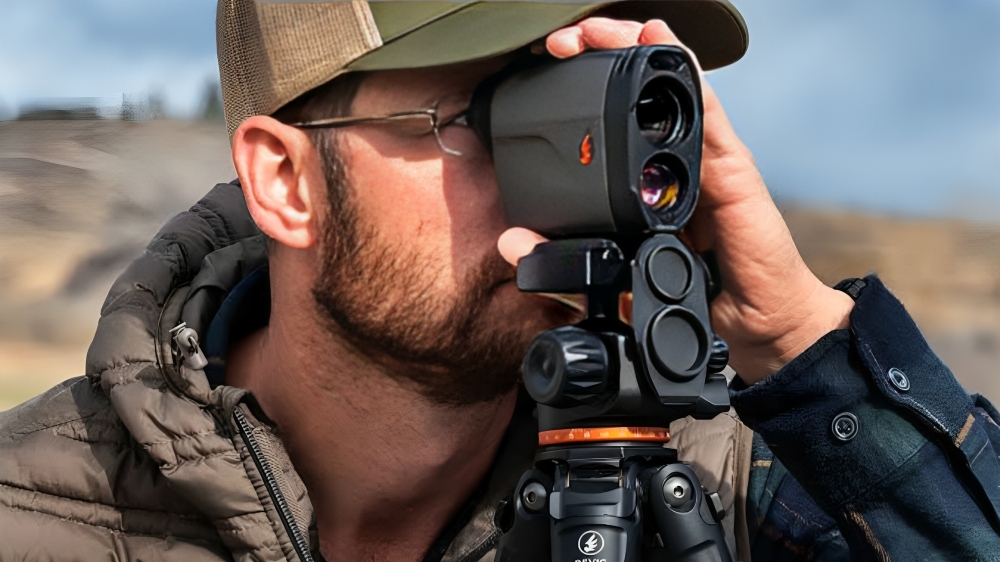
Golf is a game of inches, but it’s also a game of yards. So what is a rangefinder, and why does almost every serious golfer carry one today? Simply put, a rangefinder is a handheld tool that tells you exactly how far you are from the flag, a hazard, or the edge of the fairway. Instead of guessing your distance or pacing off yardage markers, you get a precise number in seconds. As a result, your club selection improves, your confidence grows, and your scorecard usually thanks you for it.
Golfers used to rely on sprinkler heads, yardage books, or a caddie’s experience. However, technology changed that completely. Today, a rangefinder gives instant, accurate feedback so you can focus on your swing instead of your math skills. Whether you’re a weekend player or a competitive amateur, understanding what is a rangefinder and how it works will help you buy smarter and play better.
Quick Facts
Before we go deeper, here’s a fast summary table so you can compare the basics in one glance.
| Type | How It Measures Distance | Best For | Average Price Range |
| Laser Rangefinder | Bounces a laser beam off the target | Precision and pin accuracy | ₹22,000 to ₹65,000 |
| GPS Rangefinder | Uses satellite course maps | Full-course distance planning | ₹15,000 to ₹40,000 |
| Hybrid Rangefinder | Combines laser optics with GPS overlays | Golfers who want both accuracy and data | ₹80,000 and above |
Now, let’s break down what is a rangefinder in more detail, along with how each type actually functions on the course.
What Is a Rangefinder in Golf?
In golf, a rangefinder is a distance measuring device used by players and caddies to find the exact yardage from the ball to the flagstick, a bunker, or a water hazard. Consequently, golfers can commit to a shot with confidence instead of relying on rough estimates.
Generally speaking, golf rangefinders fall into three main categories. Each one uses a different method to calculate distance, yet all three share the same goal: accuracy.
Laser Rangefinders
Laser rangefinders remain the most popular choice among serious golfers. Here’s how they work. You look through an optical lens, aim a small reticle directly at the flag, and press a button to fire an invisible laser pulse. Because light travels at a constant, measurable speed, the device calculates the exact distance almost instantly.
Additionally, most laser units include angle or slope compensation. This feature adjusts your yardage based on elevation changes, so an uphill or downhill shot doesn’t throw off your club choice.
GPS Rangefinders
Unlike laser models, GPS rangefinders don’t rely on line of sight at all. Instead, they use preloaded satellite maps of the course to calculate yardages to the front, middle, and back of the green. Therefore, you always know your position relative to the entire hole, not just the flag.
Since GPS units don’t require aiming, they tend to be faster in everyday casual rounds. On the other hand, they typically lack the pinpoint precision that laser technology offers.
Hybrid Rangefinders
For golfers who want the best of both worlds, hybrid rangefinders combine laser accuracy with GPS course data. As a result, you get a live optical view of the target while also seeing digital overlays like hazard positions, wind conditions, and green shape. Although these models cost more, many low handicap players consider the extra investment worthwhile.
Key Features Every Golf Rangefinder Should Have
Golf rangefinders aren’t just simplified versions of hunting or military tools. In fact, they include specific features designed around the mechanics of the sport itself.
Pin-Locking Technology
Since a flagstick is thin and often surrounded by trees or background clutter, golf rangefinders use pin-locking algorithms to ignore everything except the target. Once the device locks onto the flag, it usually confirms this with a screen flash or a small vibration pulse. Because of this, you can trust the yardage even from a cluttered or distant angle.
Slope Compensation
Slope compensation uses an internal tilt sensor to measure elevation changes between you and the hole. Consequently, it provides a “plays like” distance, meaning it adjusts your yardage upward for uphill shots and downward for downhill ones.
Tournament Rules and Slope Mode
That said, slope compensation isn’t always allowed. Official USGA rules permit straight line distance readings during competition, but they completely ban slope adjusted numbers. For this reason, most tournament legal rangefinders include a physical switch or LED indicator that proves slope mode is disabled, so officials can verify compliance instantly.
Laser vs GPS Rangefinders: Which One Should You Choose?
Choosing between a laser and a GPS rangefinder ultimately depends on your playing style. The table below breaks down the main differences.
| Factor | Laser Rangefinder | GPS Rangefinder |
| Accuracy | Extremely precise, pin specific | Good, but based on preset map points |
| Speed of Use | Slightly slower, requires aiming | Very fast, no aiming needed |
| Tournament Legal | Yes, if slope is switched off | Yes, since it never includes slope |
| Learning Curve | Moderate | Beginner friendly |
If pinpoint precision matters most to you, a laser model is generally the better pick. Meanwhile, if speed and simplicity matter more, a GPS device might suit your game better.
Popular Golf Rangefinder Models Compared
Here’s a quick look at some well known options currently available in the market.
| Model | Type | Standout Feature | Approx. Price |
| Bushnell Tour V6 Shift | Laser | 6x magnification with a visual pin lock ring | ₹64,840 |
| Garmin Approach Z82 | Hybrid | Full color course maps with wind tracking | ₹87,490 |
| Shot Scope Pro L5 | Laser | OLED display for low light visibility | ₹22,795 |
| Precision Pro NX10 | Laser | Swappable faceplates and tournament toggle | ₹44,858 |
Tips for Getting the Most Out of Your Rangefinder
Once you understand what is a rangefinder and how it functions, using it effectively becomes much easier. Here are a few practical tips.
- Always steady your hands or use a tripod mount for longer distances, since shaking reduces accuracy.
- Practice locking onto flags during casual rounds before relying on it in competition.
- Check your local rules first, because some tournaments restrict rangefinders entirely.
- Keep spare batteries in your bag, since cold weather can drain power faster than expected.
- Clean the lens regularly, as dust or fingerprints can affect laser accuracy.
Conclusion
So, what is a rangefinder at the end of the day? It’s a small piece of technology that solves a big problem on the golf course, which is uncertainty. Whether you choose a laser model for precision, a GPS device for speed, or a hybrid unit for the best of both, a rangefinder ultimately helps you play smarter golf. Once you know your exact yardage, club selection becomes easier, and confidence naturally follows. If you’re serious about lowering your scores, investing in a reliable rangefinder is one of the simplest upgrades you can make to your game.
Also Read About: How to Clean Golf Clubs: Step-by-Step Guide
Frequently Asked Questions
- What is a rangefinder used for in golf?
It measures the exact distance between your ball and a target, such as the flagstick, so you can choose the right club with confidence.
- Is a laser or GPS rangefinder better for beginners?
GPS rangefinders are generally easier for beginners, since they don’t require careful aiming like laser devices do.
- Are rangefinders legal in golf tournaments?
Yes, most tournaments allow rangefinders as long as slope compensation is switched off during play.
- How accurate is a golf rangefinder?
Laser rangefinders are typically accurate within a yard, while GPS units are generally accurate within a few yards depending on the course mapping.
- Do rangefinders work in bad weather?
Yes, although heavy fog or rain can occasionally reduce laser accuracy slightly compared to clear conditions.
- What is the difference between a hybrid rangefinder and a regular one?
A hybrid rangefinder combines laser precision with GPS course data, giving you both an optical view and digital overlays in one device.
- How far can a golf rangefinder measure?
Most models measure comfortably up to several hundred yards, though pin-locking accuracy is usually strongest within typical playing distances.
- Do I need slope compensation if I only play casual rounds?
Not necessarily, but it can be helpful for practice rounds, since it gives you a more realistic sense of how elevation affects your shots.