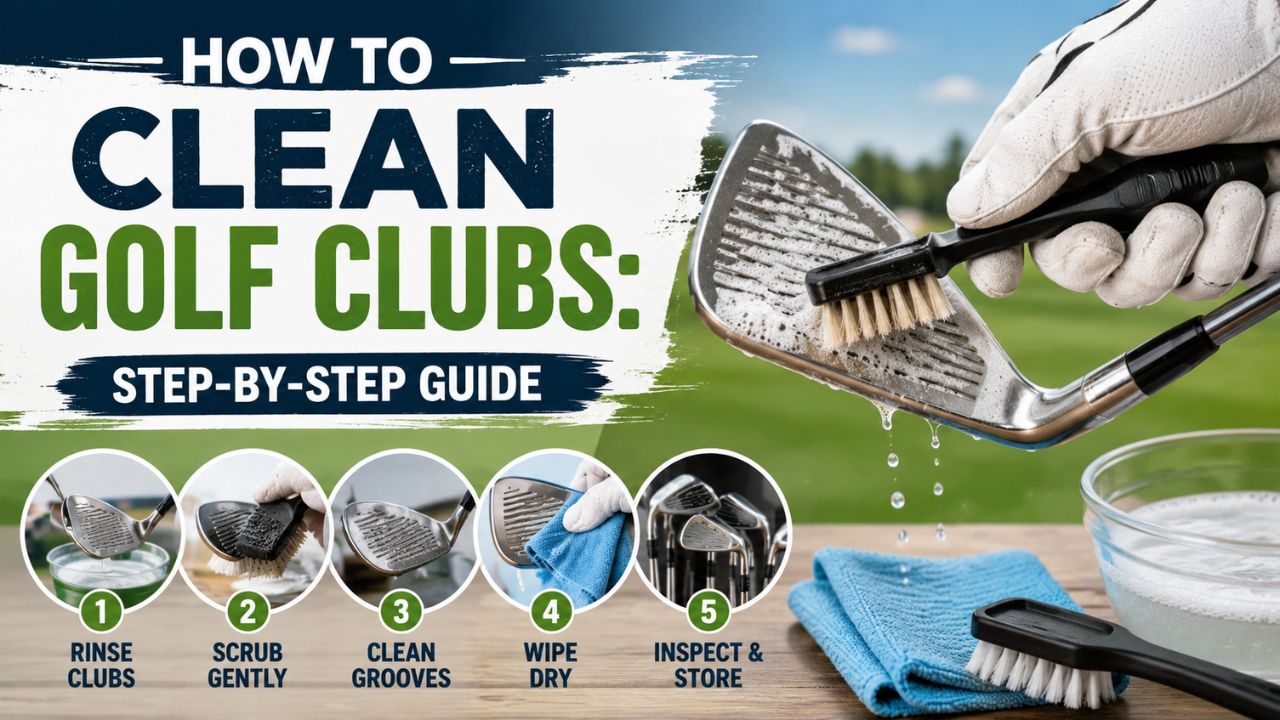
Dirty clubs cost you more than looks. They cost you spin, distance, and control. If you want crisp contact every round, you need to know how to clean golf clubs the right way. It’s not complicated. It just takes the right steps, the right tools, and a few minutes after each round.
Most golfers skip this part. They rinse the head with a hose and call it done. But dirt, grass stains, and sand build up fast inside the grooves. That buildup changes how the ball reacts off the face. So instead of guessing, follow a routine that actually works for every club type – irons, woods, wedges, putters, and grips.
This guide breaks down exactly how to clean golf clubs at home, using items you probably already have. No fancy gear. No guesswork. Just a clear process you can repeat after every round.
Quick Facts Table
| Category | Irons & Wedges | Drivers, Woods & Hybrids | Putters | Grips |
| Cleaning Method | Soak clubheads only | Wipe with damp cloth | Wipe with damp cloth | Wipe with damp cloth |
| Water Exposure | 5–10 minute soak | Never submerge | Never submerge | Never submerge |
| Best Tool | Soft toothbrush | Microfiber cloth | Microfiber cloth | Microfiber cloth |
| Soap Type | Mild dish soap | Mild dish soap | Mild dish soap | Mild dish soap |
| Drying Rule | Towel dry immediately | Towel dry immediately | Towel dry immediately | Air dry completely |
| Risk Factor | Rusting grooves | Scratched paint / loose inserts | Damaged inserts / alignment | Slippage / dry rotting |
Why Cleaning Golf Clubs Actually Matters
The ball has clean grooves and grips it better. The spin is created by such a grip, and such spin governs the path. As soon as you fill those grooves with dirt, your shots are lower and roll out during the initial phase of action. The approach shots are an issue, and in this case, spin assists the ball to land close to the pin.
Being on top of performance, cleaning keeps your investment intact. Clubs are an expensive investment, and wear is hastened by negligence. Exposed steel rusts easily. PAINT The grit on the finish speeds up the paint chipping. Five minutes of cleaning will give your set a lifespan of years.
What You’ll Need Before You Start
Pre-get your supplies. This will save time and avoid breakages during cleaning.
- A bucket or sink filled with warm water
- Some drops of light dishwasher soap.
- A brush with soft bristles, Toothy old.
- Two microfiber pieces of cloth—one dry, one wet.
- An immediate drying towel.
Use no wire brushes. They have metal, scratch and paint finishes. Use soft brushes, which clean grooves without damaging the surface.
How to Clean Golf Clubs: Step-by-Step Process
Here’s the full method. Follow these steps in order for the best results, and don’t rush the drying stage.
Step 1: Soak the Iron and Wedge Heads
Fill your bucket with warm water. Add a small amount of dish soap and mix gently. Submerge only the clubheads – never the shaft or ferrule. Let them soak for five to ten minutes. This loosens dirt trapped deep in the grooves.
Step 2: Scrub the Grooves Thoroughly
After soaking, take your soft brush and scrub each groove carefully. Work in short strokes across the face. Focus on the grooves closest to the center, since that’s where most contact happens. Rinse the brush often to avoid pushing dirt back in.
Step 3: Wipe Down Woods, Drivers, and Hybrids
Never soak these clubs. Water can loosen glue around the hosel and damage internal components. Instead, dampen a microfiber cloth in soapy water and wipe the crown, face, and sole. Keep moisture away from painted surfaces, since those finishes are more delicate.
Step 4: Clean Your Putter Carefully
Putters often contain glued inserts or alignment aids. Submerging one risks loosening these parts permanently. Wipe the putter head with a damp cloth instead, paying attention to the face where ball contact leaves residue.
Step 5: Clean the Grips
Grips collect sweat, oil, and dirt over time, which reduces traction. Dampen a clean microfiber cloth and wipe each grip from top to bottom. Never soak grips, because water can travel down into the shaft and cause long-term damage. Let them air dry fully before storing your clubs.
Step 6: Rinse and Dry Everything Immediately
Once you’ve scrubbed the heads, rinse them under clean water to remove leftover soap. Dry each clubhead right away with a towel. Skipping this step invites rust, especially on chrome and steel surfaces. Air-drying alone isn’t enough—moisture left sitting causes water spots and corrosion over time.
How to Clean Golf Club Grooves for Maximum Spin
Special attention must be given to groove cleaning, as it has a direct influence on the ball flight. The dirt that is concealed in these minute crevices decreases the friction between the face and the ball. Less friction leads to less spin; less spin leads to less control on the greens.
Apply a brush carefully with the groove pattern and scrub. Do not rub over the cavities at right angles, as this action may cut the sides at a more rapid rate. Wash regularly and check the grooves with sufficient light to ensure that the grooves are completely clear.
How Often Should You Clean Golf Clubs
Frequency is determined by the frequency in which you play and under what circumstances. Clean your clubs, as a rule, after each round, when you play on wet grass or in the sand or mud. In drier climates, even after each round, a quick wipe-down is beneficial and then a more intensive soak-and-scrub once a week.
Players who golf several days a week need to incorporate cleaning in their post-game practice. It is rapid and automatic as a routine, and it can be prevented from leaving dirt between sessions when it is a habit.
Common Mistakes to Avoid When Cleaning Your Clubs
Many golfers unintentionally damage their clubs while trying to clean them. Avoid these common errors:
- Soaking woods, hybrids, or putters in water
- Using wire brushes or abrasive scrubbers on clubfaces
- Letting clubheads air-dry instead of towel-drying immediately
- Scrubbing grips with excess water that seeps into the shaft
- Using harsh chemicals instead of mild dish soap
- Ignoring the grooves during a quick wipe-down
Each mistake seems minor at first, but repeated over time, they shorten your equipment’s lifespan significantly.
Tips to Keep Your Clubs Cleaner for Longer
Minimal habits can make big impacts on ensuring reduced cleaning and saving your set in the long-run.
Wipe your clubhead with a bag towel after each shot. This helps in ensuring that the dirt does not harden before you arrive home. Keep your clubs in a well-ventilated place and not in a fortified garage, as the weather creates rust very fast. And lastly, spend money on a groove cleaning brush that fits in tight grooves, particularly in golf clubs—a regular toothbrush does not fit the grooves so well.
Cleaning Reference by Club Material
| Club Material | Recommended Cleaning Method | Special Care Notes |
| Forged Steel Irons | Soak and scrub | Dry immediately to prevent rust |
| Stainless Steel Wedges | Soak and scrub | Check grooves for embedded debris |
| Graphite Shafts | Wipe only | Avoid soaking near the shaft joint |
| Titanium Drivers | Wipe only | Protect the crown finish from scratching |
| Rubber Grips | Wipe with damp cloth | Air dry fully before storage |
Conclusion
Learning how to clean golf clubs properly protects your equipment and keeps your performance sharp. Soak iron and wedge heads for five to ten minutes, scrub the grooves gently, and always avoid submerging woods, hybrids, and putters. Wipe grips with a damp cloth, then dry every clubhead immediately to prevent rust. Build this process into your regular routine, and your clubs will stay in top condition for years. A few extra minutes after each round is all it takes to protect your investment and keep every shot performing the way it should.
Also Read About: PGA Tour Schedule 2026: Complete Calendar, Majors, Playoffs & Key Events
FAQs
How often should I clean my golf clubs?
Clean them after every round played in wet or sandy conditions. Otherwise, a weekly deep clean works well alongside quick wipe-downs.
Can I soak my driver in water?
No, Soaking a driver can loosen internal components and damage the crown finish. Wipe it with a damp cloth instead.
What soap should I use to clean golf clubs?
Mild dish soap mixed with warm water works best. Avoid harsh chemicals or degreasers, since they can damage finishes.
Is it safe to use a wire brush on clubfaces?
No, Wire brushes scratch metal surfaces and wear down grooves faster. Stick to a soft-bristled brush instead.
How do I clean golf club grips without damaging them?
Wipe grips with a damp microfiber cloth. Never submerge them, since water can seep into the shaft and cause damage.
Why do my clubs rust so quickly?
Rust usually forms when clubheads air-dry instead of being towel-dried right after cleaning. Always dry them immediately.
Can I clean my putter the same way as my irons?
No, Putters often have glued inserts, so wipe them down instead of soaking them in water.
Does cleaning golf clubs really improve performance?
Yes, Clean grooves grip the ball better, which improves spin, control, and shot consistency.