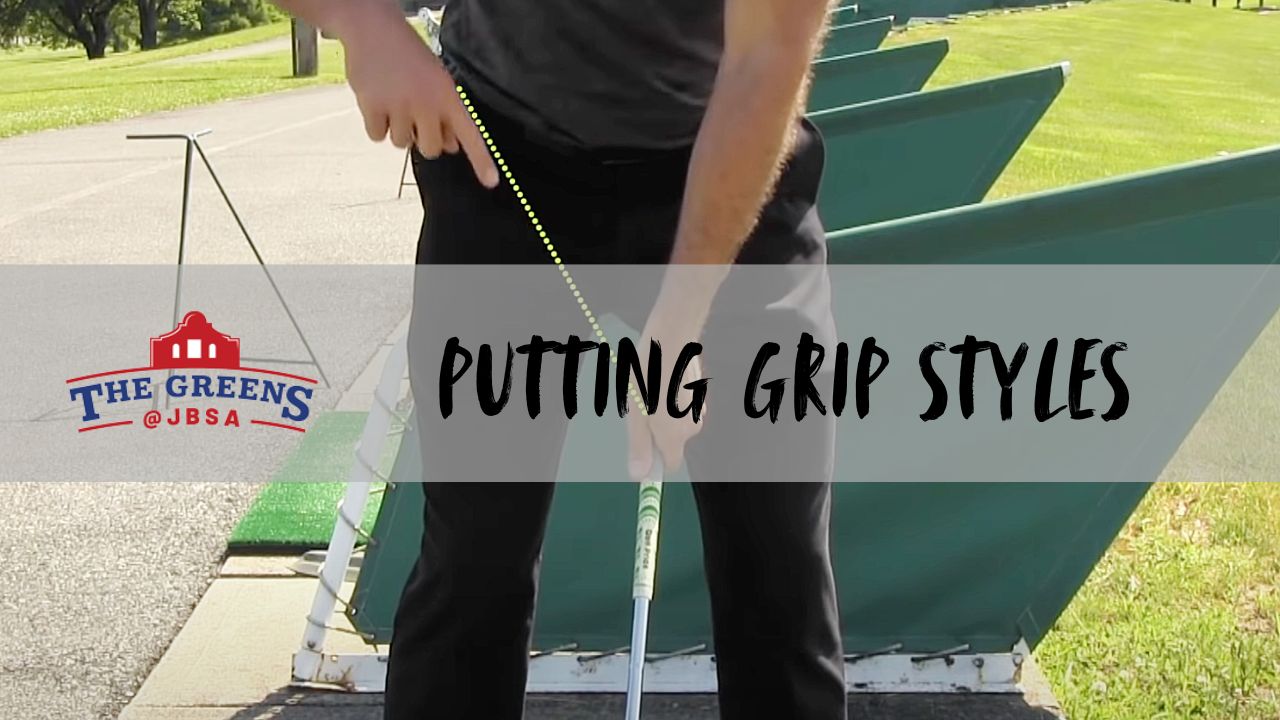
Any golfer would wish to make more putts. Nevertheless, most players waste hours and hours in mastering the stroke and fail to pay attention to one of the most fundamental aspects in golf: the grip. The grip of putter has a direct impact on face control, stroke path, distance control and consistency at the point of pressure. Be it a beginner struggling to learn to grasp a golf club, or an expert wanting to decrease his or her score lines and enjoy confidence on each and every green, knowledge of various putting grip styles can assist you to reduce your total scores and be certain of walking off with a trophy.
Proper putting grip enables the putter to get back to the target and minimizes unnecessary movements of the wrist. A slightly different positioning of your hands may make a major difference in your golf skills.
Quick Comparison of the Most Popular Putting Grip Styles
Out of the five best styles of putting grip, a brief overview of each style is presented before delving into a more detailed study of each technique.
Why Your Putting Grip Has Such a Big Impact on Performance
The only point between your body and the putter is the putting grip. When the grip causes tension, instability or too much action with the hand, the putter face will not come back to meet the ball square.
A proper putting grip will assist golfers:
Improve face control
Reduce wrist breakdown
Do not change grip pressure.
Improve distance control
Become confident putting short.
Make a repeated line.
Most golfers waste money buying new putters and training tools and ignore the grip that determines all putts struck.
How to Grip a Golf Club for Better Putting
The skill of being able to hold a golf club correctly is the initial approach to becoming a more successful putter. Whether you use a conventional or a modern type of the putting grip, there are a handful of elements that are applicable to all golfers.
Your putter must be in position without a lot of tension. The pressure you put on the grip should not be too strong as to feel that the putter head has been released but may be solid so that the gesture remains under control during the stroke.
The hands ought to act as a unit, not to fight over its control. In case the hand that is dominant is used, the face of the putter tends to overturn excessively upon strike.
Fundamental Rules for a Proper Putting Grip
Common Putting Grip Mistakes
Another reason most golfers develop putting problems is due to bad habit of gripping.
Common mistakes include:
Holding the putter too firmly.
Leaving the dominant hand to play.
Alteration of grip pressure part of stroke.
Excessive wrist movement
Inconsistent hand placement
When these problems are rectified, they can bring instant results on the greens.
Reverse Overlap Grip: The Traditional Choice for Consistent Putting
The most used putting grip of all level golfers is the reverse overlap grip. This method has helped many of the greatest players in the game as it brings together a combination of simplicity, feel and control.
Using this grasp, the index finger of the lead hand rests above the lead putter with the rest of the fingers of the trailing hand resting over the other fingers. The two thumb points are opposite at the shaft, and assist the hands to act together in the stroke.
A natural feel is one reason why this grip has continued to be popular. Players who are familiar with a traditional golf grip when making full swings easily make the transition due to familiarity with the positioning of the hands.
The cross overlap is also very desirable in terms of feedback. Feel The putter head enabled players to feel the putter head during the stroke and it assisted in control of the pace on longer putts and better skill around the greens.
Key Benefits of the Reverse Overlap Grip
Easy to learn
Natural hand positioning
Excellent feel and feedback
Close relation between the two hands.
Beloved by many professional golfers.
Potential Limitations
This grip does not limit the motion of the wrist much as do some of the modern varieties, though it is quite effective. Golfers that have difficulty in flipping their wrists during a blow might need one that is more stable.
Best Suited For
Beginners
Intermediate golfers
Players who are touch-sensitive.
Golfers who have a good basis of putting.
Cross-Handed Grip: A Proven Method for Better Face Control
One of the most popular substitutes of the conventional reverse overlap is the cross-handed grip. This method is adopted by many golfers, who are experiencing problems with breaking down their wrists and lack consistent control of their faces.
On the right-hand side, the grip is in the right-hand position, i.e. the right hand is raised above the left hand by the golfers. This is a straightforward modification that causes a relationship with the putter shaft and the lead arm to be straight.
Stability is one of the greatest benefits of a cross-handed grip. Due to the inactivity of the dominant hand, golfers have usually greater consistency, and misplaced short putts have been reduced.
The arrangement also enhances optimal shoulder positioning. Free shoulders achieve a more flowing pendulum swing and this assists a golfer to remain with the face of the putter square at impact.
Key Benefits of the Cross-Handed Grip
Reduces wrist breakdown
Improves shoulder alignment
Promotes a swing of a pendulum.
Enhances face control
Limits dominant-hand interference
Potential Limitations
Distance control might be awkward at first since the dominant hand is a part of the stroke to a lesser extent.
Best Suited For
Turnstiles of golfers.
Players with a problem with short putts.
Individuals looking to achieve greater stability in golf.
Players are against missing due to pressure.
Claw Grip: A Popular Solution for Hand Dominance and the Yips
One of the best solutions that have been developed to help golfers who have a problem with excessive hand action is the claw grip. Even though this grip feels unconventional, lots of professional golfers have managed to overcome putting problems with the use of this grip.
A claw grip position is held between the fingers and the side of the grip and the trailing hand is not wrapped around the putter as in a conventional grip. The lead hand is traditional, and the lead hand primarily regulates the stroke.
This position goes a long way in eliminating the effect of the dominant hand. Consequently, it is not uncommon to find golfers who have better face steadiness, and a more controlled and smoother putting movement. The claw grip is well known to being effective in assisting golfers to reduce the undesirable hand action in the swing.
Another significant advantage is decreased grip tension. Golfers tend to have less pressure on the trailing hand and hence may feel more relaxed and confident when making important putts.
Key Benefits of the Claw Grip
Limits dominant-hand action
Reduces wrist movement
Improves face stability
Encourages shoulder-driven motion
Decreases grip tension
Potential Limitations
The position of the hands may be uncomfortable in the initial few practice sessions.
Best Suited For
Golfers with mild/moderate yips.
Players who pull putts
Players who are overactive with their hands.
Grippers who hold on too tight to the putter.
Prayer Grip: Creating Balance and Symmetry Throughout the Stroke
The prayer grip is different, as the palms are simply placed opposing one another on the putter. This keeps the hands in balance, thus providing a more symmetrical putting stroke.
Most golfers find it difficult as one of the hands takes over the movement. The prayer grip is an answer to this problem, as it generates equal pressure on both hands.
The biped configuration results in better face control, as the hands do not strive to execute hand control on the putter by hitting it. Golfers have documented even fewer missed straight putts and enhanced consistency upon making the change.
Comfort is another benefit. The grip is not too stiff to hold on making golfers to grip it in extreme position as compared to some other forms of putting.
Major Advantages of the Prayer Grip
Equal pressure in the two hands.
Improved face awareness
Better stroke balance
Reduced hand dominance
Greater consistency
Potential Limitations
Prayer grip is most ergonomic with large or flat-sided putter grips.
Best Suited For
Golfers who push putts
Golfers who pull putts
Players seeking a balanced setup
Golfers wanting more consistency
Pencil Grip: Maximum Stability for Golfers Seeking Complete Control
The pencil grip goes a step further to take into account the concept of decreasing the level of hand involvement. Although, like the claw grip, it reduces the contribution of the trailing hand to an even greater extent.
The lead hand is used to hold the putter like one would use a normal putter; the trailing hand ensures that the shaft is held by the thumb and forefinger like grasping a pencil.
This makes the shoulders the main source of movement given that little force is exerted by the trailing hand. This provides a very consistent and predictable stroke.
This pencil grip has proved immensely helpful to golfers with serious cases of the yips since they have very minimal chances of making unintended motions with the hands. Though that might lower the feel on long putts, it is excellent in creating consistency with short and medium-range putts.
Key Benefits of the Pencil Grip
Maximum wrist restriction
Extremely stable stroke
Minimal hand interference
Consistent face control
Reduced grip pressure
Potential Limitations
Distance control may be time-consuming to learn, as the trailing hand has less feedback.
Best Suited For
Severe yips sufferers
Over movers in golfers.
Players who want the greatest stability.
Golfers with excessive grip on the putter.
Which Putting Grip Style Is Best for You?
The optimal putting grip is all about the issue you wish to resolve. Rather than imitating a professional golfer and his or her swing, take the time to pinpoint what your number one weakness is and then take a grip that can help improve it.
The possibility to find a grip that fits your needs is usually more efficient and quicker to achieve.
Tips for Switching to a New Putting Grip
It takes patience and practice to change your putting grip. Majority of golfers drop a new grip before it can turn into a natural grip.
For the best results:
Always practice at least two weeks.
Use very short putts.
Progressively practice longer putts.
Track your performance
Do not change grips frequently.
Concentrate on comfort and consistency.
Something that feels awkward now might be your best weapon in a few practice hours.
Final Thoughts
The correct right-handed putting grip styles is capable of significantly increasing your economics on the greens. Although each golfer has his or her tendencies and preferences, being knowledgeable on the strengths and weaknesses of each type of a putting grip it becomes easier to discover the best grip that suits your game.
Could it be the classic reverse overlap, the steadiness of the cross-handed grip, the authority of the claw grip, or the consistency of the pencil grip, getting used to how to hold a golf club can enable you to enjoy more putts, which will build confidence and also reduce your overall scores as time goes by.
Frequently Asked Questions About Putting Grip Styles
Which putting grip is most popular among professional golfers?
Reverse overlap grip is the most frequently used putting grip as it provides an excellent balance of feel, control and consistency.
Which putting grip is best for golfers with the yips?
The most widely accepted grip types, which can benefit golfers having difficulty with the yips tend to be the claw grip and pencil grip.
Can changing my putting grip improve my putting statistics?
Yes, Face control, consistency, confidence, and distance control can be enhanced by a grip change, which in most cases leads to reduced scores.
How tightly should I hold the putter?
Light grip pressure is advised by most teachers. The putter must not be something to worry about in terms of causing tension in the hands, wrists, or forearms.
How long should I test a new putting grip?
Golfers are advised to take two or three weeks of practicing with a new grip before they can judge its effectiveness.