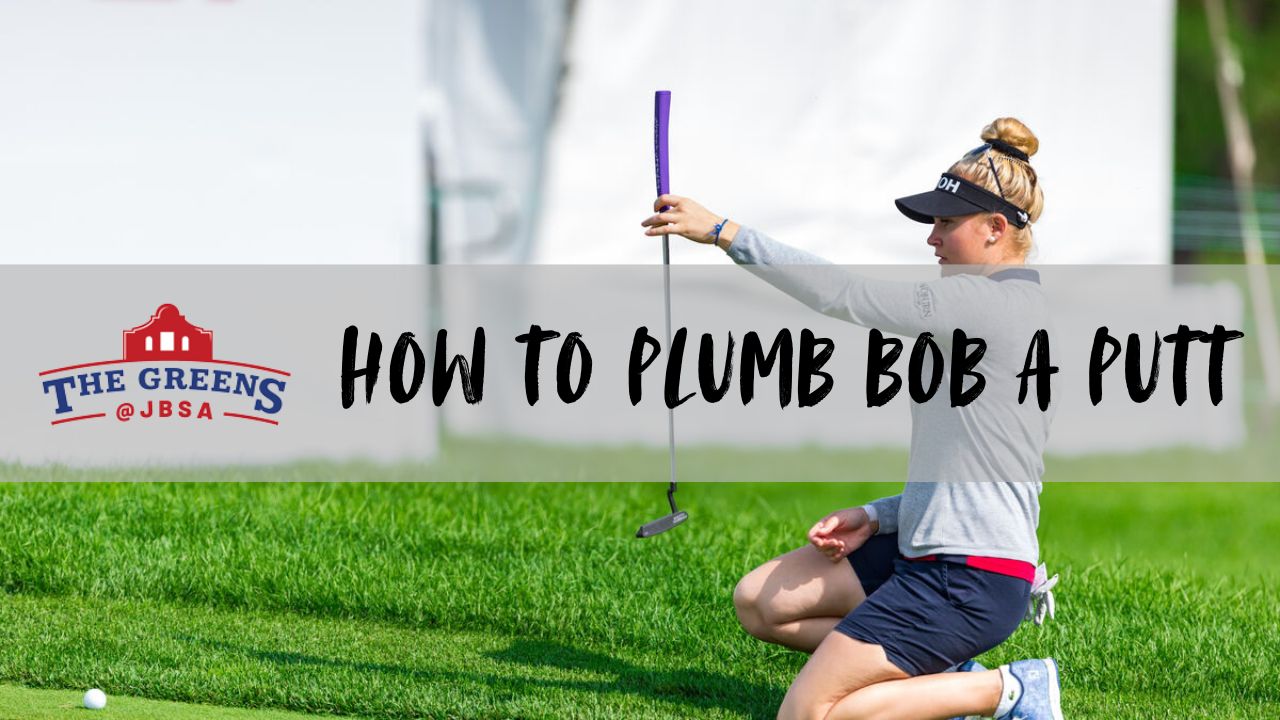
Any golfer has been over a putt which one day seemed to look straight and the next day seemed to curve. The greens is always one of the most difficult aspects of golf. A good read cannot be saved by even a perfect putting stroke. That is why there is a lot of golfers seeking reputable methods of knowing how to study green slopes prior to pulling the trigger. The way of plumbing a putt has remained a topic of attention. This conventional method of green reading has long been in use by both recreational and professional golfers. Despite the recent popularity of modern green-reading systems, how to plumb bob a putt is still relevant as it is free, simple and easy to learn. When properly done, it can assist you figure out the direction of a break and make more confident putting choices.
What Is Plumb Bob Putting and Does It Really Work?
Green reading Plumb bob putting is a green-reading method that relies on a vertically suspended putter shaft, which is used to tell whether a putt shaves off to left-to-right or right-to-left. The technique is originated in the construction sector when people traditionally employed a plumb bob in order to create a true vertical line.
The putter shaft in golf performs that role. You can get very useful information about the green slope by placing your shaft parallel to the golf ball and seeing where the hole is placed in relation to the shaft.
A lot of golfers anticipate that the technique would unveil all about a putt. Nevertheless, it is not so. The plumb bob putting is used to help mark the direction of the break, and is not used to mark the speed of the putt, the exact amount of break, or whether the putt is a huge uphill or downhill putt or not.
Quick Facts About Plumb Bob Putting
Golf players who practice long enough are inclined to employ the approach as a single bit of data as opposed to the reliance.
How to Plumb Bob a Putt Step by Step?
To plumb a putt, you should always have a procedure that you follow. The slightest set up errors would influence the precision of your reading.
Get on the other end of your ball on the target line. Shoehorn yourself to line the ball and hole so that you see a straight line. Remember you have to hold your head straight and keep your body straight.
Then, use your putter by taking it lightly in your thumb and forefinger on the top of the grip. Allow the putter to drift downwards with the force of gravity in a position so that the shaft rests in natural position.
Shut the non-dominant eye and open with the dominant-eyed one in order to have the shaft aligned to the golf ball. As soon as the shaft has reached the ball, look up at the hole and see where it is in relation to the shaft.
Step-by-Step Process
When the hole is seen on the left of the shaft, the putt will tend to curve left to right. Also, When the hole seems to be situated to the right of the shaft, the putt will tend to break right-to-left.
When the shaft surrounds the ball as well as the hole then the putt is probably straight. It is completed in just a few seconds when you are used to the procedure.
Finding Your Dominant Eye Before Reading a Putt
Eye dominance is an important factor that is disregarded by many golfers, yet it is critical in the art of successfully reading the green. Seeing something the wrong eye causes a total transformation and a total change in making incorrect conclusions.
The leading visual reference point is your dominant eye. Since plumb bob putting requires fairly high accuracy, it is important to law down which eye you are dominant in. Luckily, the test is easy.
Form a little circle by thumb and index finger. Look at an object at a great distance using the opening. Close one eye and then the other. Your dominant eye is your eye which holds the object in the centre of focus.
As soon as you know what eye is dominant, employ it on all occasions when you plumb bob a putt.
Why Eye Dominance Matters?
Many golfers who possess problems with plumb bob putting just use the wrong eye unconsciously.
Understanding What the Putter Shaft Is Actually Showing You
Among the greatest misconceptions of plumb bob putting, there is the misconception that winning the game is all about predicting the exact line of the golf ball. It does not.
The shaft forms a vertical reference point with the slope of the terrain. Whenever you are standing on an uneven surface, then the body is used to balance itself. The correlation between shaft and the hole produces an indication of side to side slopes of the ground. Consider a shaft as a guide but not a calculator.
Suppose that you see a fifteen-foot putt and think it is nearly straight. Upon your completion of the plumb bob read, you observe that the hole is a little to the right of the shaft. According to that observation there must be a right-left break which it might be difficult to notice upon your original perspective.
When gathered with visual images of several angles of the hole, this information is frequently combined with those experienced golfers.
What Plumb Bob Putting Can and Cannot Tell You
Being aware of these limitations assists golfers to employ the technique better.
Common Plumb Bob Putting Mistakes Most Golfers Make
Quite a number of golfers attempt plumb body putting one or two times and soon conclude that it is not working. In the vast majority of instances, the poor execution is the issue and not the method. A frequent bad habit is gripping the putter too firmly. The tight grip may cause the shaft to not hang freely and establish an artificial vertical reference.
The other error is leaning the head. A single tilt of the head can change your field of view and give the wrong readings. Another common mistake is to use both parts of the brain. The method involves a 1-eye alignment, and this explains why it is important to determine the eye that you are the most dominant.
Mistakes That Reduce Accuracy
Holding putter too tight.
Lying on one side of the head.
Using both eyes
Being beyond the target line.
Ignoring shaft balance
Rushing the process
Using the wrong eye
However, before assuming the technique on a green where you are already aware of the break, practice it on the green.
When You Should and Should Not Use Plumb Bob Putting
Supplies like any other golf skill, plumb bob putting is more effective than others in a given situation. This knowledge of such circumstances can work wonders on your performances. The method is illuminating the shallow slopes where visual indications are hard to spot. Numerous golfers use it in swift greens, in long putts, and in tournament situations where accuracy is the most essential.
It is less effective, however, when there are several breaks in the greens or drastic rises in the elevation.
Best Situations for Plumb Bob Putting
Subtle breaking putts
Fast greens
Long-distance putts
Championship-style greens
Difficult-to-read surfaces
Situations Where Other Methods May Be Better
Double-breaking putts
Severe slopes
Extremely downhill putts
Large elevation changes
Multi- contour greens.
Top golfers seldom use a single approach. Rather, they get information through multiple sources and then make a selection regarding a line.
Practice Drills That Improve Your Green Reading Skills
The only first step is learning the technique. Training enables golfers to gain confidence and accuracy. Begin with straight putts. Read plumb bob and ensure that the shaft is straight with the ball and the hole. The drill will help establish trust in the process.
Then proceed to softly side slopes. Alternate before plumb bobbing and compare the two observations. You will know to pick up on gentle slopes with time.
The other good exercise is to set tees around a course practice hole and practice up-and down the putts and reading them in various directions. This practice enhances general green consciousness.
Recommended Practice Routine
Golfers who take time to practise green-reading activities tend to reduce their scores without having to make any significant swing adjustment.
Why Some Tour Professionals Still Use Plumb Bob Putting?
There is no more information in modern golf than there was. Players are provided with green books, high-end statistics and advanced green-reading systems. Although these developments are made, there are still some professionals who use plumb bob putting due to the alternate view of the green.
Professional golfers know that success in putting goes by way of accumulating information and wise decisions. Although the technique may prove to be true, what they already observe, such confirmation can give extra courage during a vital putt.
One more aspect of great putting which has been underestimated is confidence. When a player has confidence in the read, he/she is more invested in the stroke. This is just one, of the reasons why plumb bob putting has not died in golf today.
Conclusion
Another tool that may be included in your green-reading toolbox is learning how to plumb bob a putt. The method assists golfers to detect slight side slopes, validate the eye reads, and be more assured when making judgments on the greens. Although it does not model all putt, it can give valuable data not to be ignored by numerous golfers.
The key of success is to know what the approach is capable of and not in what it cannot accomplish. Plumb bob putting: Add some solid green-reading principles, solid speed control, and frequent practice. With time, you will have a better sense of slopes, have a much stronger sense of confidence and will have additional chances to hole putts when they really matter.
Frequently Asked Questions About Plumb Bob Putting
What is plumb bob putting?
Plumb bob putting is a technique to determine the left-to-right or right-to-left break of a putt by using a putter shaft vertically suspended.
How far behind the ball should you stand?
Most golfers would score the highest when they are within the range of five to ten feet behind the ball and at the same time they are directly facing the target line.
Does plumb bob putting really work?
Yes. When carried out properly it can assist golfers in determining the slope direction. But it must be used in addition to other green-reading techniques and not usurp them.
Can plumb bob putting tell how much a putt will break?
No, The technique shows the direction of the break but does not determine the actual amount of break.
Do professional golfers use plumb bob putting?
Yes. The technique has also been applied by various professional golfers during play in tournaments especially in reading breaks that are not very obvious.
Does plumb bob putting work on every green?
No. It is most effective on small and easy slopes. Multicolored greens with various breaks can also be hard to read and might need supplementary green reading.
Which eye should I use when plumb bobbing?
Your dominant eye is the one that should be used all the time as far as it will be the best eye to get visual alignment.
Is plumb bob putting better than AimPoint?
Both strategies are not universally superior. The information given at AimPoint is more detailed, and the plumb bob putting is a simple equipment-free method of knowing the direction of a break.
Also Read About: