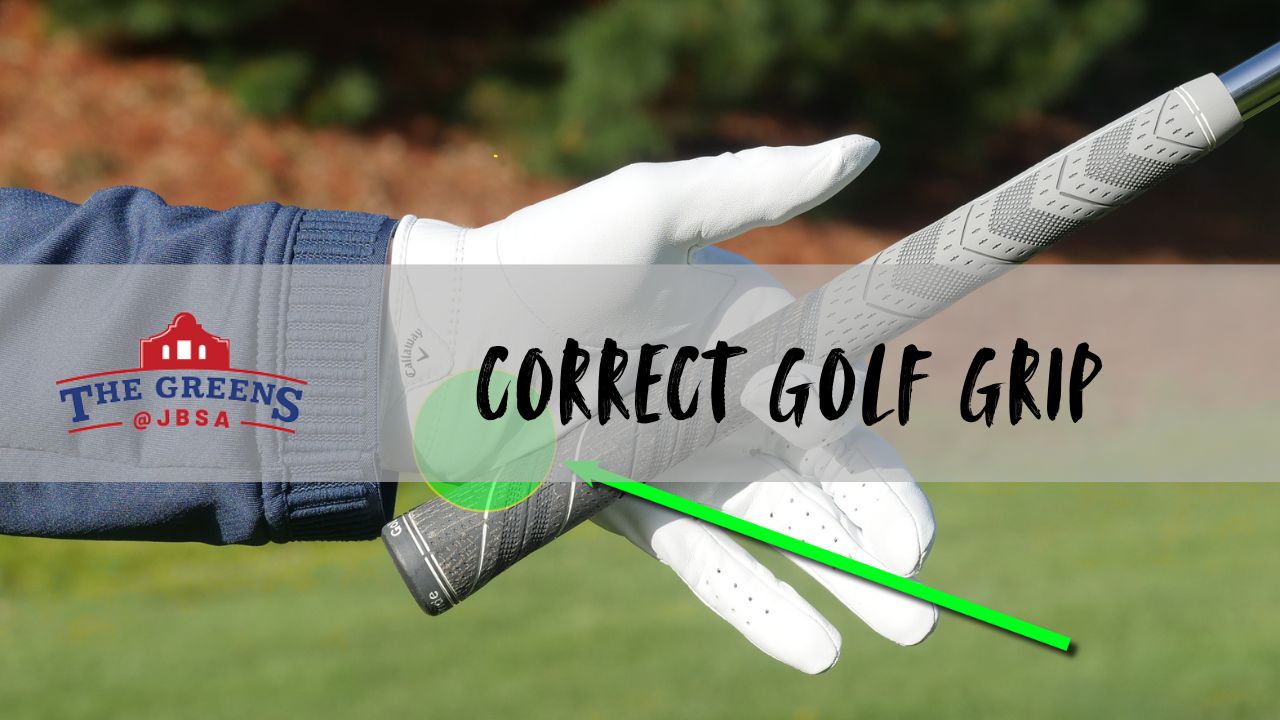
Most golfers spend months chasing a better backswing, a smoother tempo, or a faster hip turn. Then they finally fix their grip and everything else falls into place. That's not a coincidence. Your grip is the only part of your body that actually touches the club, so every ounce of control, power, and accuracy you have starts right there in your hands. This guide walks you through exactly how to build a correct golf grip, why it matters more than most players realize, and how to keep it consistent round after round.
A correct golf grip places the club diagonally across the fingers of your lead hand, not the palm. Your trail hand wraps in below it, both thumbs running down the shaft, and the V shapes formed by each thumb and forefinger point toward your trail shoulder. Pressure stays light throughout, never tight. That's the fundamental shape. Now let's build it properly, piece by piece.
Grip Basics
Who Actually Needs To Fix Their Grip?
Everyone from first-time players to scratch golfers should check their grip every so often. If you're slicing, hooking, or losing distance without an obvious cause, your hands are usually the hidden reason.
Coaches see this pattern constantly. A player will spend an entire lesson trying to fix their downswing when the real issue was set the moment they picked up the club. Correcting the grip first often clears up two or three swing faults at once, without touching anything else.
Why The Grip Carries So Much Weight
Think of your grip as the steering wheel of your swing. Everything downstream depends on how well it's set.
A solid grip gives you three things: control over the clubface, repeatability from one swing to the next, and protection for your wrists and forearms over time. Without it, even a technically sound swing can send the ball off line. Wind, uneven lies, and pressure situations all expose a weak grip faster than a quiet range session ever will.
It Shapes Your Swing Plane
A steady grip keeps the club traveling the same path every time. That repeatability is what separates golfers who keep improving from golfers who plateau.
The moment your hands shift mid-swing, the clubface opens or closes without warning. That one change alone can turn a straight shot into a slice within a single round.
It Protects You From Injury
Tension travels. Squeeze the club too hard and that tightness climbs from your hands into your wrists, forearms, and shoulders. Over a season of play, that repeated strain adds up to real injuries.
A correct grip keeps your joints relaxed through impact, which lowers your injury risk significantly.
Building The Correct Golf Grip, Step By Step
Treat this as a sequence rather than one single motion, and it becomes far easier to get right.
Step 1: Start With A Club You Trust
Your grip shifts slightly depending on the club in your hands. A driver needs a hold built for speed. A putter needs something softer and more controlled.
Pick a club you already feel comfortable with first. That way you can focus purely on hand position instead of fighting the club itself.
Step 2: Set Your Lead Hand
Lay the club diagonally across the base of your fingers. Keep it out of your palm, since that alone cuts your control significantly.
Your lead thumb should run straight down the shaft, forming a V between your thumb and index finger. That V should point toward your trail shoulder or ear. Check this position often, since small errors here compound as the swing continues.
Step 3: Bring In Your Trail Hand
With your lead hand set, add your trail hand just below it. Again, the club should sit at the base of your fingers, not in your palm.
Your trail thumb runs down the shaft as well, with its V also aimed at your trail shoulder. Your lead thumb tucks under the lifeline of your trail hand, so both hands work as one connected unit instead of two separate grips.
Step 4: Pick A Grip Style
Neither style beats the other outright. Try both on the range and stick with whichever one repeats most naturally for you.
Step 5: Dial In Your Pressure
This step trips up more golfers than any other part of the grip. Too tight, and your wrists stiffen, costing you swing speed. Too loose, and the club twists in your hands right at impact.
Picture holding a small bird. Enough pressure to keep it secure, not enough to hurt it. That's the exact feeling you want in your hands throughout the swing.
Take a few practice swings and pay attention to any tension building in your forearms. If you feel it, ease off and reset.
Step 6: Repeat Until It's Automatic
Muscle memory only comes from repetition. Stand in front of a mirror and rebuild your grip from scratch several times a week until your hands find the position without thinking.
Practicing across different clubs helps too, since it trains your hands to adjust naturally instead of locking into one fixed feel.
Mistakes That Quietly Wreck A Good Grip
Even experienced players fall into these habits without realizing it.
Squeezing Too Hard
A tight grip sends tension through your entire upper body, which slows your swing speed and often leads to weaker, less accurate shots. Recheck your pressure before every shot, and if your knuckles look strained or pale, loosen up immediately.
Letting The Club Sink Into Your Palm
A club that sits too deep in your palm limits wrist movement, and that's a common cause of slices and hooks. Keep the club diagonally across your fingers, right at the point where your fingers meet your palm.
Forgetting About Pressure Mid-Round
Most golfers set their hand position once and never think about pressure again. Over eighteen holes, fatigue quietly changes how tightly you're holding the club without you noticing. Run a quick pressure check between holes, especially later in your round.
Keeping Your Grip Consistent Long-Term
A good grip isn't something you fix once and forget. It needs the same upkeep as any other part of your game.
Recheck it often: Fatigue, stress, and plain habit can shift your hand position over weeks of play without you noticing. Make a habit of checking your grip before every range session.
Adjust for each club: Your driver, irons, and putter all call for slightly different grip adjustments. Spend time with each one individually instead of assuming a single grip works everywhere.
Practice with intention: Set aside sessions focused purely on your hands, separate from full swing work. That isolated repetition is what builds a grip that holds up under real pressure.
Pre-Round Grip Checklist
Club sits diagonally across fingers, not palm
Lead thumb points straight down the shaft
Trail thumb sits slightly left of center
Both V shapes point toward trail shoulder
Grip pressure feels light, not tense
Two to three knuckles visible on lead hand
Overlap or ten-finger style feels comfortable
No tension felt in wrists or forearms
Final Thoughts
Your grip is the foundation everything else in your swing gets built on top of. A few small adjustments to hand placement and pressure can noticeably sharpen your accuracy, distance, and consistency on the course. Whether you've played for twenty years or picked up a club for the first time last week, getting this right now will save you plenty of frustration later. Recheck your form often, stay patient with the repetition, and it will eventually feel completely natural.
Also Read About: How to Break 100 in Golf | Scottie Scheffler Driver Setup | Open Club Face | How to Hit Irons
Frequently Asked Questions
1. What is the correct golf grip for beginners?
Beginners should start with the club sitting diagonally across their fingers, not their palm. Both thumbs point down the shaft, and the V shapes should point toward the trail shoulder.
2. How tight should my golf grip pressure be?
Your grip should feel light, similar to holding a small bird. Too tight causes tension, while too loose causes the club to twist during impact.
3. What's the difference between an overlap and ten-finger grip?
An overlap grip links the trail hand's pinkie with the lead hand's index finger. A ten-finger grip keeps all fingers separate on the handle. Both are valid choices.
4. Why does my golf grip cause a slice?
A slice often comes from gripping the club too deep in your palm instead of your fingers, which limits proper wrist rotation through impact.
5. How many knuckles should I see on my lead hand?
Most coaches recommend seeing two to three knuckles on your lead hand when looking down at your grip during setup.