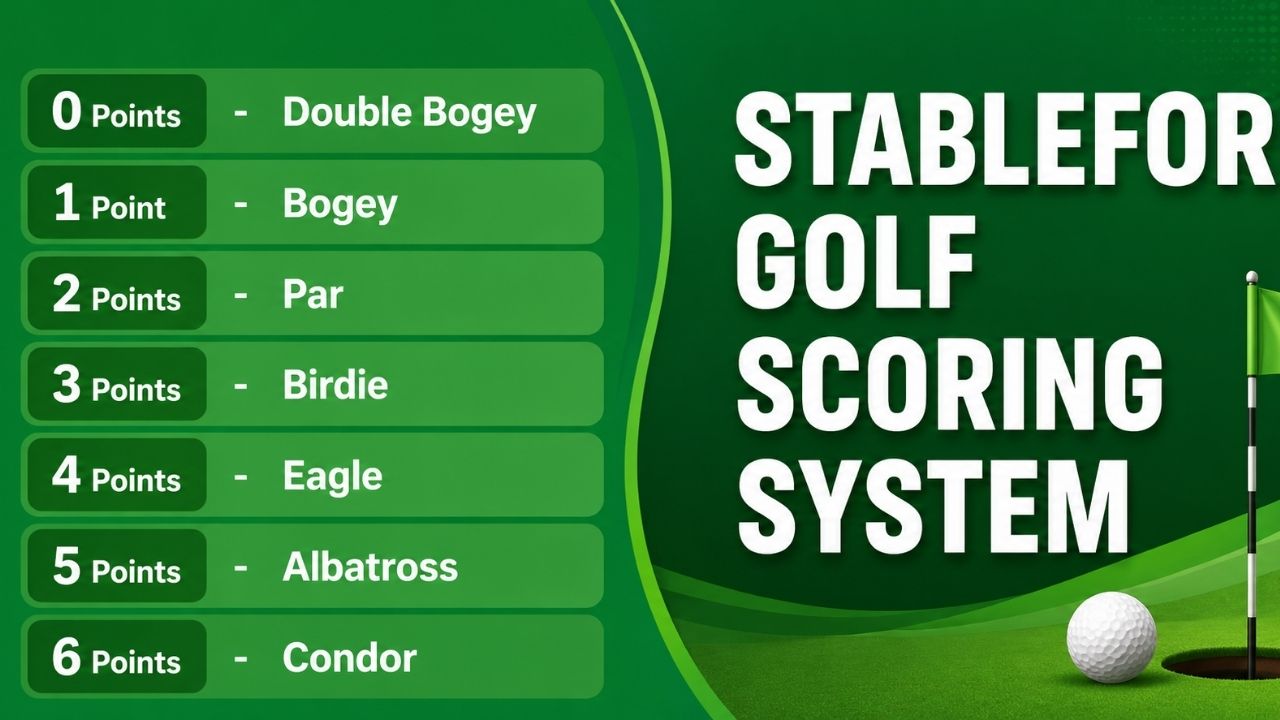
Stableford scoring turns your score on every hole into points instead of counting total strokes. You earn more points for birdies and eagles. You earn fewer points for bogeys. This system rewards aggressive play and keeps one bad hole from ruining your entire round.
Golf offers many formats beyond stroke play. Match play, best ball, scramble, and stableford scoring all bring something different to the table. Among these, stableford scoring stands out as one of the most enjoyable ways to play a casual round or a club tournament. Below, you’ll find everything you need to understand this format, calculate your points correctly and walk into your next stableford tournament with confidence.
What Is Stableford Scoring?
Stableford scoring is a point-based golf format. Instead of adding up every stroke you take, you convert your performance on each hole into points. The better you play a hole, the more points you collect.
This format was created by Dr. Frank Stableford. His goal was simple. He wanted to stop golfers from giving up after one or two rough holes. Since 1898, stableford scoring has given players a reason to keep pushing, even after a tough start.
Because of this structure, stableford scoring feels less punishing than traditional stroke play. A double bogey on one hole won’t wreck your whole card. That alone makes it a favorite among club golfers and weekend players.
Key reasons golfers prefer stableford scoring:
- One bad hole doesn’t ruin the entire round
- Play moves faster since you can pick up once out of contention on a hole
- Encourages bold, aggressive shot-making
- Works well for mixed skill level events
How Does Stableford Scoring Work?
Instead of writing down your total strokes at the end of 18 holes, you track points hole by hole. Your score on each hole gets converted using a points chart set before the round begins.
The tournament committee decides how many points each result is worth. However, most rounds follow a standard structure. Once your round wraps up, you add all your hole by hole points together. That total becomes your final Stableford score.
Standard Stableford Points Chart
| Result | Points Earned |
| Double Eagle (Albatross) | 5 |
| Eagle | 4 |
| Birdie | 3 |
| Par | 2 |
| Bogey | 1 |
| Double Bogey or worse | 0 |
As you can see, Stableford scoring rewards low scores heavily while still giving you credit for an average hole. This structure encourages players to take smart risks rather than play it safe every time.
What Is Modified Stableford Scoring?
Modified Stableford scoring adjusts the point values based on the strength of the field. This version works well for tournaments with higher handicap players or for professional events where the committee wants to reward aggressive play even more.
In a modified format, a bogey might still earn one point, or it could drop to zero depending on the rules set that day. Some modified formats even introduce negative points for bogeys and double bogeys. You’ll often see this structure used on the PGA Tour, especially in events built around scoring drama rather than steady stroke totals.
Common modified stableford adjustments:
- Bogeys can score zero points instead of one
- Double bogeys or worse may carry negative points
- Birdies and eagles can be weighted even higher than standard
- Point values shift based on field strength and event goals
If you want the official breakdown, Rule 21 in the USGA Rulebook covers Stableford formats in detail.
Net Stableford vs Gross Stableford
Stableford scoring can run as either a net or gross competition. Understanding the difference matters if you want to compete fairly against golfers with different skill levels.
Gross Stableford Scoring
Gross stableford scoring uses your actual score on each hole without any handicap adjustment. This version suits scratch golfers or low handicap fields where everyone competes on equal footing.
Net Stableford Scoring
Net stableford scoring factors in your course handicap. For example, a 15 handicap golfer receives a stroke on the 15 hardest holes on the course. Keep in mind that many events adjust handicaps to 95 percent specifically for stableford scoring.
| Format Type | Handicap Used | Best Suited For |
| Gross Stableford | No | Scratch or low handicap fields |
| Net Stableford | Yes, adjusted to 95% | Mixed handicap fields, club events |
Once your round ends, you’ll record both your gross score and your adjusted net score for every hole. Then you calculate stableford points based on whichever version the tournament requires. Expect your scorecard to fill up quickly with numbers by the time you finish.
One major perk of stableford scoring is the ability to pick up your ball. If you can’t make a point-scoring result on a hole, there’s no reason to keep playing it out. Just mark it down and move to the next tee.
Stableford Scoring vs Traditional Stroke Play
These two formats differ in more than just how you keep score. Pace of play, strategy and even handicap use shift depending on which format you’re playing.
| Aspect | Stableford Scoring | Traditional Stroke Play |
| Scoring Method | Points awarded per hole result | Total strokes counted for the round |
| Focus | Rewards aggressive play, limits damage from bad holes | Consistency matters most; one bad hole hurts the whole round |
| Speed of Play | Faster, since players can pick up once no points are possible | Slower, since every hole must be finished |
| Handicap Use | Adjusts points earned per hole | Adjusts total strokes at the end |
| Risk Taking | Encourages bold shots for birdies and eagles | Risky shots can backfire and inflate your score |
| Common Setting | Club events, fun tournaments, events like the Barracuda Championship | Standard format for professional and amateur golf |
If you’re deciding between formats for your next event, stableford scoring generally moves faster and keeps players engaged even on a rough day.
How to Calculate Your Stableford Points
Calculating your stableford score isn’t complicated once you understand the process. First, check the points chart provided before your round starts, since values can shift between events. Then, play each hole as you normally would.
Once you finish a hole, compare your result to par and apply the correct point value. Add these points together as you move through the round. By the 18th hole, your running total becomes your final stableford score.
Steps to track your stableford score:
- Review the point values assigned by the tournament committee before teeing off
- Play each hole and record your gross score
- Apply your handicap strokes if the event uses net stableford scoring
- Convert your adjusted score into points using the chart
- Add up your points after every hole to track your total
Tips to Score Well in a Stableford Tournament
Want to post a strong number next time you play? These strategies can help you make the most of stableford scoring.
Target Holes Based on Difficulty
Look at the stroke index for each hole before you play. Lower index holes tend to be harder, so aim for a safe par or better there. On higher index holes, take more chances since birdies and eagles are realistically within reach.
Attack the Par 5s
Par 5s offer some of the best scoring chances in stableford scoring. Plan an aggressive second shot or a smart layup that sets up an easy approach. Even if you miss the green, a short third shot still gives you a real shot at birdie.
Match Your Aggression to the Format Rules
If the event doesn’t penalize bad holes heavily, take calculated risks on long approaches or tough putts. This mindset fits perfectly with how stableford scoring rewards bold play.
Stay Positive After a Rough Hole
Unlike stroke play, one bad hole in stableford scoring doesn’t sink your round. Shake it off, refocus, and attack the next tee box with confidence.
Quick strategy checklist for stableford tournaments:
- Play safe on low index (harder) holes
- Take risks on high index (easier) holes
- Attack par 5s with an aggressive game plan
- Pick up once a hole is out of reach
- Keep a positive mindset after a bad hole
Does Stableford Scoring Count Toward Your Handicap?
Yes, it does. Since you’re still playing a standard round of golf rather than a scramble or alternate shot format, you can post your round for handicap purposes. Just remember to post your traditional gross score rather than your converted Stableford points.
What Is a Good Stableford Score?
Under a traditional format, where par earns two points, a total around 36 points represents a solid round. That said, a good score depends heavily on your handicap and the difficulty of the course you’re playing.
| Score Range | What It Means |
| Below 20 points | Below average round |
| 20 to 25 points | Fair round for most handicaps |
| 25 to 34 points | Good, solid round |
| 36 points | Strong round, near your handicap expectation |
| 37+ points | Excellent round, likely to lower your handicap |
For most recreational golfers, anything in the mid to high 20s counts as a respectable outing. Scores above 36 often suggest you’re playing well below your handicap that day.
Can Stableford Scoring Be Played as a Team Event?
Absolutely. Many clubs run Stableford scoring as a team format where only the best individual score on each hole counts toward the team total. These events usually include both gross and net divisions, and players get grouped based on handicap level.
Common features of team stableford events:
- Only the best score per hole counts toward the team total
- Gross and net divisions run separately
- Players are grouped by handicap level
- Weaker holes from one player don’t sink the whole team
Team-based stableford scoring tends to be one of the most popular formats for league play. Since only the top scores count, weaker holes from one player don’t drag the whole team down. This setup keeps everyone involved and competitive, even players who are still building confidence in their game.
Conclusion
Stableford scoring gives golfers a fresh way to enjoy the game without the pressure that comes with traditional stroke play. Instead of stressing over every shot, you get to focus on smart risks and strong finishes. Whether you’re playing a casual round with friends or competing in a structured tournament, stableford scoring keeps things fun, fast and forgiving. Next time you’re on the course, give this format a try. You might find that stableford scoring becomes your new favorite way to play.
Frequently Asked Questions
What does stableford scoring mean in golf?
Stableford scoring is a points-based format where you earn points for your result on each hole instead of counting total strokes for the round.
Who invented Stableford scoring?
Dr. Frank Stableford created this format in 1898 to keep golfers motivated after a bad hole or two.
What is the difference between net and gross stableford scoring?
Gross stableford scoring uses your actual score with no handicap adjustment, while net Stableford scoring factors in your course handicap on each hole.
Can I post my stableford round for handicap purposes?
Yes, you can post your traditional stroke score from a stableford round, since it still counts as a standard round of golf.
What is considered a good stableford score?
A score around 36 points is generally considered strong, though this depends on the course rating and your personal handicap.
Is modified stableford scoring different from standard stableford scoring?
Yes, modified stableford scoring adjusts point values based on field strength and sometimes includes negative points for bogeys or worse.
Why do golfers pick up their ball during a stableford round?
Once a player can no longer earn points on a hole, there’s no benefit to finishing it out, so picking up keeps pace of play moving.
Can stableford scoring be used in team events?
Yes, many clubs run team stableford events where only the best score per hole counts toward the group total, often split into gross and net divisions.
- Read More: Bushnell Launch Pro: Is It Worth It in 2026?