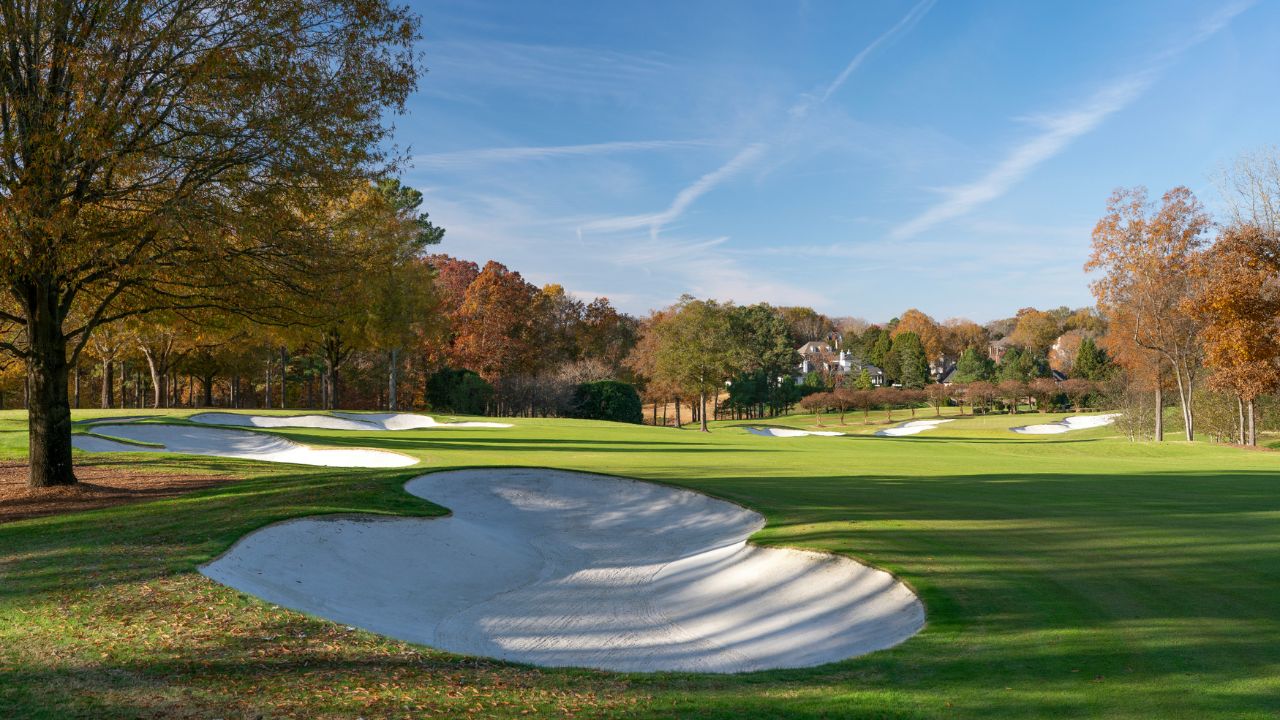
Quail Hollow Club Course is considered to be one of the most reputable championship golf courses in the United States. The club is located in Charlotte, North Carolina and it has established a good reputation due to elite tournament golf, prestige of the private club and a design that also favors both power and accuracy. It is a course that feigns to be pretty, but gets harsh to play.
Golf fans have become accustomed to the venue due to the high-level event it hosts on a regular basis. It has been the host to PGA TOUR tournaments and major championship golf and international team competition have also been welcomed. That past makes the club possess a more profound status than most of the current ones.
This 2026 guide describes the entire image of Quail Hollow Club Course in a clear and clear style. It includes course history, history of design, playing strategy, holes that are famous, significance of the tournaments, and the cost of membership that can be expected. It also features the performance of the players like Jhonattan Vegas who have played here in a major platform to demonstrate the demanding and the importance of this venue.
Fast Facts of Quail Hollow Club Course
The Quail Hollow club Course was established in 1959 and the golf course opened its doors in 1961. It was established in Charlotte by the local businessmen and has soon become one of the best privately owned golf facilities in the area. Gradually, it had expanded out of a reputable club by private membership to a championship course that the world of golf knows.
George Cobb was the designer of the original course. Arnold Palmer later made some alterations on the holes and Tom Fazio assisted in crafting what is currently referred to as the modern version of the championship, as played by players. Therefore, Those design changes provided the course with greater length, increased finishing pressure, and a design that could take on the finest world players.
The club is located on a big piece of woodland land some 7 miles outside downtown Charlotte. Although it is in a residential location, the course seems to be exclusive and secure. Moreover, That space contributes to prestige of the club and provides it with a neat tournament environment.
Highlight Snapshot
| Feature | Detail |
| Location | Charlotte, North Carolina |
| Course Type | Private / Championship |
| Holes | 18 |
| Par | 71 |
| Yardage | Approx. 7,626 yards |
| Original Designer | George Cobb |
| Major Renovation Influence | Tom Fazio |
| Famous Finish | The Green Mile |
| Key Events | PGA TOUR events, PGA Championship, Presidents Cup |
| Estimated Initiation | $150,000 – $350,000 |
| Estimated Monthly Dues | Around $800 |
| Estimated Membership Size | Around 350 members |
These figures provide a superficial view of the club, yet there is more than a mere statistic to the entire club. The place is unique due to its history of tournaments, challenging finish, and exclusivity of a club.
Playing Identity and Design Style
Quail Hollow Club Course is designed with the theme of big championship golf. The course has broad areas of visibility, however, any loose shot is punished. One of the reasons why it has still been able to be relevant in professional events is that balance.
The design is a mix of trees on the fairways, tiered greens, flashed bunkers and extreme contours of elevation. It appears graceful when seen, but requires severe management on every shot. Players should be able to form the tee shots effectively, and manage their iron ranges, as well as remain patient on the greens.
There is also a definite rhythm in the course. The lower side tests endurance and patience. Also, The reversal side introduces an extra tension, an extra amount of water and extra high-pressure situations. Moreover, Towards the final part of the round the course is more intense and weighty.
Key design traits include:
- Tree-lined driving zones
- Elevated and sloping greens
- Huge strategy-making bunkers.
- Playing water on main back-nine holes.
- A finishing course constructed of pressure golf.
In this case, golfers do not do so through power. They require discipline, clean hitting of balls and to be able to endure the pressure towards the end of the round.
Quail Hollow Club Course and Tournament History
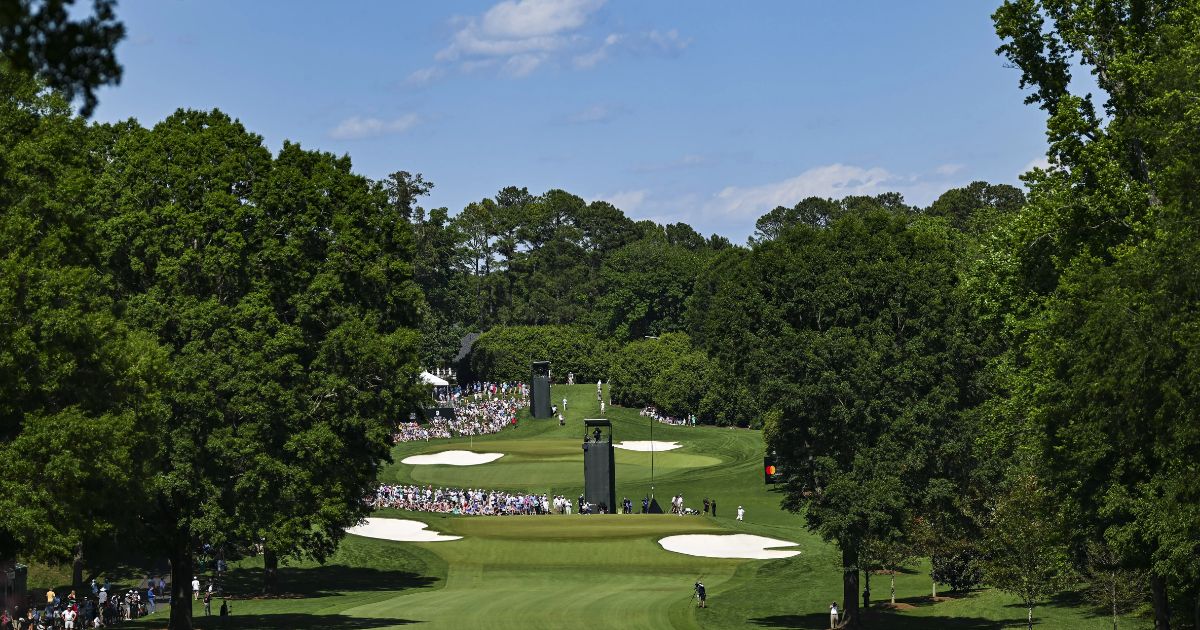
Quail Hollow Club Course has a local origin to the story. It began as an elite golf club in Charlotte that had room and desire to expand. During the course of time, it grew to become one of the best known venues of the South.
The course achieved widespread tournament significance when the Kemper Open started on the club in 1969. Also, That incident was a move towards making the venue a professional golfing destination. Moreover, It attracted good crowds and demonstrated that the course had the potential to challenge the various types of players.
Even greater prominence was given to an even later period. In 2003 PGA TOUR golf came back, and the club held the event under some other names, such as Wachovia Championship, Quail Hollow Championship, Wells Fargo Championship, and Truist Championship. Although there was a change in the names of the sponsor, the venue remained significant.
This was further enhanced by its major-event image following hosting of the PGA Championship in 2017 and the Presidents Cup in 2022. Those tournaments demonstrated that the course was able to perform both stroke play and match play on the highest level.
Plan of the Course and Environment
The movement of the course across the land is one of the most appealing things in Quail Hollow Club Course . The property falls off the higher ground by the clubhouse to the lower section of the property towards the creek and lake areas. The change gives the round the appearance of visual diversity and the motion of nature.
The front nine is at more of the upland side. It is more of a classical parkland that has long par 4s, clever bunkering, and regulated shot values. The last nine is more dramatic as the water is more exposed and the stress intensifies as the round progresses.
The course is located in a huge wooded area, and the environment is in a clean and secluded position. The holes have very little distractions. That assists in the establishment of the ambiance of an isolated championship.
Examples of natural and visual elements are:
- Topography of the property is hilly.
- In the back nine, there are creek and lake characteristics.
- Thick tree coverings along fairways.
- Powerful lifting of holes to holes.
- An old fashioned Southern clubhouse on the course.
The routing provides the players with the feeling of progression. The discipline leads into a round which culminates into a tense finish.
Yardage, Routing and Shot Demands
Quail Hollow Club Course has a championship routing of approximately 7,626 yards and par 71. That makes it a tedious and strenuous course more so when in the major championship conditions.
Nevertheless, total yardage is not the whole battle. It is the length, angle and the position of the green. It can take a player multiple hits to reach the greens on regulation and then have to putt hard when approach ends up in the incorrect area.
The test is an up-hill task of the par 4s. Some of them are lengthy and need total dedication at the tee. The par 5s are a source of scoring opportunities, although the opportunities are frequently risky. The par 3s require distance control and nerves relaxing.
Strategic Yardage Overview
| Hole Type | Yardage Range | Primary Strategy |
| Par 3 | 184–249 yards | Distance control and green accuracy |
| Par 4 | 344–530 yards | Tee position and precise approach play |
| Par 5 | 546–592 yards | Smart aggression and risk management |
It is this combination that makes the venue so effective when it comes to tournaments. It gives birdie opportunities, but it does not seem natural.
The Green Mile: The Most Notorious Stroke at Quail Hollow Club Course
The Green Mile can not be discussed as a part of the conversations about Quail Hollow Club Course. It is the infamous ending three-hole finish of 16, 17 and 18. It is among the most difficult tournament golf finishes.
The 16 th is a par 4 that is very challenging to the green. The signature par 3 is 17th and the players have to carry water and have control of line and height. The 18 th is a cruel finishing par 4 that has a creek flowing on the left hand side and hazard close to the green.
This is a tension that generates peril each year since none of the protagonists feels completely secure. One can control the player with 15 holes and lose ground rapidly. That aids in making the venue an exciting experience to the fans, and a challenging experience to the players.
Green Mile Overview
| Hole | Par | Yardage | Main Challenge |
| 16 | 4 | 529 | Long approach to a difficult green |
| 17 | 3 | 223 | Water carry and precise iron play |
| 18 | 4 | 494 | Narrow driving zone and creek pressure |
One of the largest sources of the course being so memorable is the Green Mile. It provides tournaments with a strong finish.
Hole Card of the Quail Hollow Club Course
The complete course card assists in demonstrating the reason why this layout is so comfortable and challenging. There is no smooth sailing that allows the players to sit back and rest.
| Hole | Par | Yardage |
| 1 | 4 | 505 |
| 2 | 4 | 452 |
| 3 | 4 | 483 |
| 4 | 3 | 184 |
| 5 | 4 | 449 |
| 6 | 3 | 249 |
| 7 | 5 | 546 |
| 8 | 4 | 346 |
| 9 | 4 | 530 |
| Out | 35 | 3,744 |
| 10 | 5 | 592 |
| 11 | 4 | 462 |
| 12 | 4 | 456 |
| 13 | 3 | 205 |
| 14 | 4 | 344 |
| 15 | 5 | 577 |
| 16 | 4 | 529 |
| 17 | 3 | 223 |
| 18 | 4 | 494 |
| In | 36 | 3,882 |
| Total | 71 | 7,626 |
The card displays a course in length, variety, and scoring fluctuation. Precisely that is what makes the venue so efficient with regard to the highest level of play.
Membership Experience and Access Privilege
Quail Hollow Club Course is an exclusive club and has a selective membership. The place has a reputation of being exclusive and such private status contributes to the popularity of the venue. It is not a community day charge course. It is, instead, an up-market club that is focused on privacy, quality of golf and value of members in the long run.
Moreover, It is estimated that the membership base is on the lower side. It is estimated to be approximately 350 members. Such a small amount contributes to the exclusive feel of the club and aids in the maintenance and experience of the facility.
The level of membership is presumably in accord with the standards of the private club. This may involve waiting periods, sponsorship and approval. The club is well-regarded, so there should be competition in admission.
Expectations of common access may involve:
- Support in the form of invitation or sponsorship.
- Review and approval process of clubs.
- Restricted and narrow membership base.
- Golf and clubhouse facilities available.
- An excellent level of service and privileges of a private club.
The profile of the tournament of the club contributes to its prestige. It is not just a private golf club that the members are joining. They are also accompanying a course that is regarded in the professional golf.
Membership Fees at Quail Hollow Club Course (Estimated 2026)
The precise pricing of such a level of private clubs is not always publicly traded. Nevertheless, according to the given numbers, projected membership fees put Quail Hollow Club Course squarely into the high-end private-club segment.
The opening fee is approximated at $150,000 to 350,000. The monthly fees are estimated at approximately 800. These figures indicate exclusivity, prestige and the championship level of the club.
Estimated Initiation Fees
| Category | Estimated Initiation Fee |
| Private Golf Membership | $150,000 – $350,000 |
Projected Annual and Monthly Costs
| Category | Estimated Cost |
| Monthly Dues | Around $800 |
| Estimated Annual Dues | Around $9,600 |
| Estimated Membership Size | Around 350 members |
Other private-club costs might also be based on usage and membership arrangement. These may be the guest charges, food and beverage charges, locker charges, and charges on other services in the tournaments. Precise costs may fluctuate since the club is exclusive and exclusive.
Nevertheless, this is an elite golf membership even according to the stated numbers that are estimates. The club is located within the category of the high-quality, privately based facilities as opposed to ordinary clubs on the market.
Conclusion
The Quail Hollow Club Course is still a well-liked golfing facility in the United States as at 2026. Also, It is a course that players admire and fans do not forget because of its private-club prestige, its history of major tournaments, its routing that is tough, and its legendary finish of the Green Mile.
Therefore, Many of the finest professionals have been tested here, and Jhonattan Vegas has reportedly been part of the major event story at the venue. Moreover, That is another dimension of competitive identity of the club. Having a great design, championship status, and high estimated membership charges, Quail Hollow Club Course remains a prominent brand in American golf.
Also Read About: Corales Golf Club Guide: Course, Fees & Tournament History