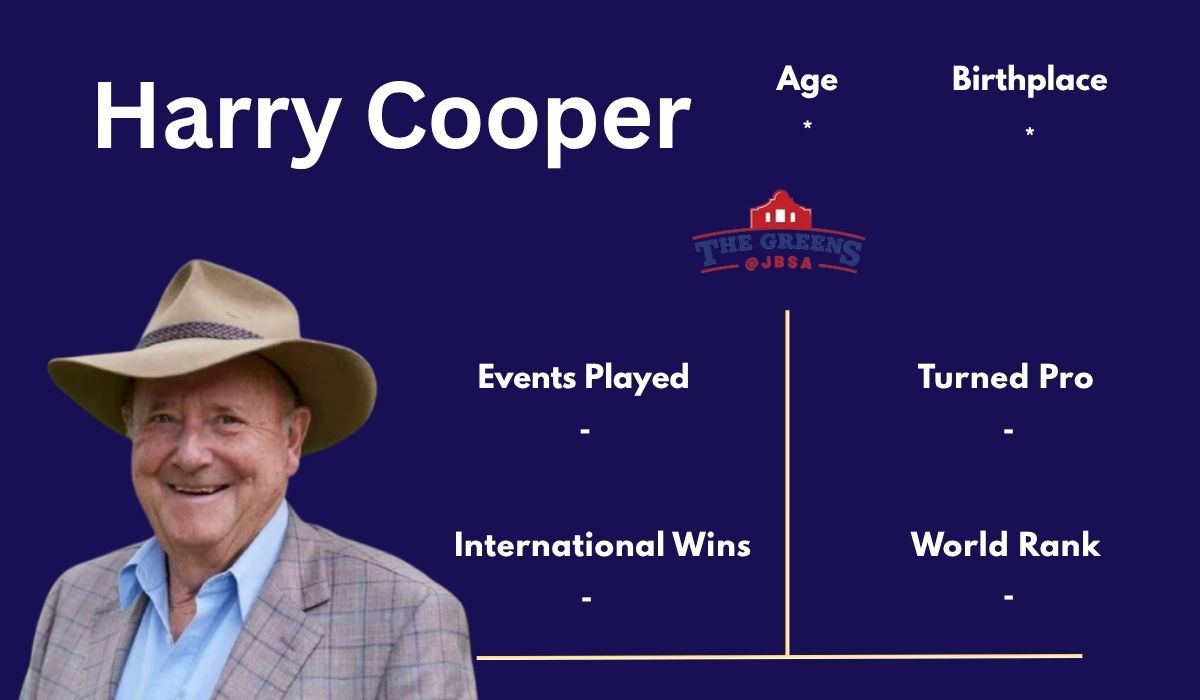
Other golfers establish their reputation by winning major championships. Some have their way to history by being consistent, long-lived and having an incredible list of tournament wins. Harry Cooper fits into the second category. He has never won a major championship on record, but he is one of the most successful players in the history of the game.
Cooper was the leader in the professional golf in the 1920s and 1930s also referred to as Lighthorse Harry due to his unusually quick speed on the course. The number of his 30 PGA Tour wins, the plethora of near misses in major championships and his enduring influence on the golf instruction still makes him one of the most interesting yet intriguing characters in golf history.
Over 20 years after his death, golf enthusiasts are still in quest of the records, accomplishments and legacy of Harry Cooper. There are even a lot of historians who regard him as the greatest golfer that never won a major championship. His account teaches us that the excellence in golf is way beyond the Grand Trophies.
Harry Cooper Quick Facts
| Detail | Information |
| Full Name | Henry Edward Cooper |
| Nickname | Lighthorse Harry |
| Date of Birth | August 4, 1904 |
| Birthplace | Leatherhead, England |
| Turned Professional | 1923 |
| PGA Tour Wins | 30 |
| Total Professional Wins | 36 |
| Hall of Fame Induction | 1992 |
| Died | October 17, 2000 |
Who Was Harry Cooper?
Harry Cooper was an English-American professional golfer, who is one of the most victorious players of his time, winning 30 PGA tour events and becoming a member of the World golf hall of fame.
He initially got involved in golf in a family that had a strong attachment towards it. Cooper was born to golf-courtesy father in Leatherhead, England. His parents were both professionals in golf which sprung him into the world into an early introduction to golf unlike most families of the time.
On moving to Texas as a family, Cooper was in the perfect place to practice his skills. He would practice and compet in Cedar Crest Golf course in Dallas, spending countless hours. This early life assisted in cultivating the competitive player who would forcefully confront the best golfers of the world in to come.
Cooper already exhibited a remarkable ability by the time he became a teenager. His instinctive style of striking the ball and his ability to handle pressure coupled with his incessant work ethic soon distinguished him amongst other young golfers.
Harry Cooper’s Rise to Professional Golf Stardom
To become a professional, Harry Cooper needed to take a step into the world of golf in 1923, and he set out strongly as one of the most promising young golfers.
Not many golfers have had this kind of meteoric ascension. Cooper won the Galveston Open when he was less than twenty years of age in 1923. Being a winner at a tender age was an indication of the coming of a star in the future.
He kept on picking up wins throughout the late 1920s as he established a reputation of being one of the most reliable players in the Tour. He drew crowds to tournaments and therefore he was well received by the organizers, but his colleagues valued his rough approach and brilliant shooting.
Cooper had consistent performances between years in contrast to many other players who follow the up and down performance curve. His competitiveness enabled him to emerge as one of the iconic golfers of his time.
Why Was He Called “Lighthorse Harry”?
Lighthorse Harry is a nickname created by the legendary writer on sport Damon Runyon.
Cooper had some speed in playing golf. He won the first Los Angeles open, and took just about two and a half hours on the last day of the event. Spectators and his fellow competitors were amazed with his speed.
The nickname remained with him throughout the remainder of his career and was one of the most well-known nicknames in golf.
Harry Cooper and Roosevelt Golf Course: Why Golf Fans Still Search for the Connection
The name of Harry Cooper is at times used when mentioning Roosevelt Golf Course though no unofficial records of any major professional appearances by a Pro on the course are well known.
Roosevelt Golf Course is a significant aspect of American golf. Throughout the decades, it has received a host of golfers and made efforts to bring new generations to this sport. Due to its historical relevance, numerous golf lovers tend to find links among renowned professionals and the course.
Harry Cooper also regularly features in those arguments since he was one of the participants in one of the most powerful periods of golf. The popularity of the courses that were attached to sports heroes keeps on increasing, as historians proceed to researching the field of early professional golf.
Though no official record indicates any historic association between Cooper and participating in key competitive events in the Roosevelt Golf Course, the search interest demonstrates the long-standing interest in his career. Over a century after his heyday, golf enthusiasts are willing to find out where he practiced, with the game, and left his imprint on the game.
Why Historic Golf Courses Are Often Linked to Harry Cooper
This is why researchers and golf enthusiasts are still trying to figure out how Harry Cooper is linked to prominent golf courses:
- He was a very known golf player of the 1930.
- He won 30 times in the PGA Tour making him a national golf star.
- He frequently competed in shows and local competitions.
- The history of the first half of the twentieth century is not comprehensive.
- The career of the halls of fame players in golf is often revisited by golf historians.
Historic Courses Associated With Harry Cooper’s Career
| Golf Course | Connection |
| Cedar Crest Golf Course | Developed his game during his youth |
| Oakmont Country Club | Site of his famous 1927 U.S. Open playoff |
| Baltusrol Golf Club | Venue of the controversial 1936 U.S. Open |
| Medinah Country Club | Location of several important victories |
| Glen Oak Country Club | Served as club professional |
| Metropolis Country Club | Long-time head professional and instructor |
Harry Cooper’s PGA Tour Wins and Career Achievements
Harry Cooper has 30 PGA Tour tournaments in his pocket and is one of the most accomplished players of his era.
Thirty wins is an elite achievement even in modern times. Historically only some professional golfers have hit that mark.
Cooper has been successful in different types of tournaments and courses. His uniformity enabled him to stay competitive during one of the most powerful periods in golf.
Major Career Achievements
| Achievement | Record |
| PGA Tour Wins | 30 |
| Professional Wins | 36 |
| Canadian Open Titles | 2 |
| Vardon Trophy | 1937 |
| Leading Money Winner | 1937 |
| Hall of Fame Induction | 1992 |
Most Notable Tournament Victories
| Tournament | Year |
| Los Angeles Open | 1926 |
| Pebble Beach Open | 1927 |
| Canadian Open | 1932 |
| Western Open | 1934 |
| Los Angeles Open | 1937 |
| Houston Open | 1937 |
| Canadian Open | 1937 |
This was the best season of the year he had in 1937. Cooper also became a winner in several tournaments in the same year and became the first holder of the Vardon Trophy and also included himself as the top money winner of PGA Tour.
Why Did Harry Cooper Never Win a Major Championship?
Although harboring numerous attempts to place himself in the right positions to win, Harry Cooper never achieved a major championship through official means. This is still one of the best mysteries of golf.
His talent, experience and record would warrant to have won a major title at least. Nonetheless, there were a number of heartbreaking moments that made it impossible.
The nearest one was the chance of the 1927 U.S. Open. At the end of the regulation game, Cooper has tied up Tommy Armour and assumes an 18-hole playoff. Armour would eventually beat Cooper, robbing Cooper what could be considered as the most memorable win of his career.
The other scandalous defeat was witnessed in the 1936 U.S. Open. Cooper recorded a superb time, and seemed to be heading towards the win. But Tony Manero ended up winning him in the end, leading to one of the most debated finishes in tournament history.
Later Cooper confessed that championships generated certain pressure. He frequently implied that there were some mental obstacles to maximizing his chances whenever he got a big opportunity in golf.
Harry Cooper’s Best Major Championship Finishes
| Major Championship | Best Result |
| Masters Tournament | Runner-Up (1936, 1938) |
| U.S. Open | Runner-Up (1927, 1936) |
| PGA Championship | Semi-Finalist |
| Open Championship | Did Not Play |
These events demonstrate how he nearly became a member of the list of major champions in golf.
Was Harry Cooper the Greatest Golfer Never to Win a Major?
The winning record and incredible consistency have made many golf historians think that Harry deserves that title.
Some of the wonderful players have created good careers without having to win major championships. One can speak about Colin Montgomerie, Lee Westwood, Doug Sanders, Macdonald Smith, and so forth.
Nevertheless, the resume of Cooper is interesting. His aggregate of triumphs in tournaments, his second place finishes and his longevity present him with one of the strongest cases in the history of golf.
Reasons Experts Support His Case
- 30 PGA Tour wins.
- Several significant second place finishes.
- Induction into Hall of Fame.
- 1st Money Winner, 1937.
- Vardon Trophy winner
- Continued success in the course of several decades.
There are not many golfers who do not have a major championship and can match that number of achievements.
Harry Cooper’s Influence Beyond Tournament Golf
The impact of Harry on golf was much broader than tournament wins since he was one of the most favored teachers and club professions in golf.
Cooper began concentrating on assisting other people to develop their own games, after his competitive career decelerated. He worked as an instructor and club professional over decades, transferring his experience of decades in the highest competition.
He served in high ranks at the Metropolis Country Club and Westchester Country Club in New York. Players would consult him due to the level of knowledge he had concerning the basic knowledge of golf and course management.
Cooper was unique in that he was a very long-lived man. Until his eighties, when he retired, he was still teaching golf, which shows a remarkable dedication to the game.
Lasting Contributions to Golf
- Mentored thousands of golfers
- Encouraged educational and sports development of golf.
- Was a respected PGA pro.
- Maintained classic Learning beliefs.
- Was over seventy years in the industry.
His impact was felt well beyond his end in the tourneys.
Harry Cooper’s Legacy in Modern Golf
Harry Cooper stands as a longstanding legend in the history of golf due to his accomplishments, sportsmanship and continued contributions to this sport.
Even now in the modern game of golf, the majors championships are a central part of this game, however, as Cooper has shown in his career, there exists greatness in numerous forms. It takes remarkable ability, consistency and persistence to have won 30 PGA Tour events.
It was affirmed by his judgment into the World Golf Hall of Fame in 1992 as one of the all-time greats of golf. The career of the player without a major championship, whose career makes one of the most impressive lists ever, is still under study of historians.
Harry Cooper, to a lot of golf fanatics, represents perseverance. He continually played against the most talented of his time, won titles all around the country, and was loyal to the sport until his death.
Conclusion
The career that Harry Cooper led is one of the greatest stories in the history of golf. Decades of greatness, his 30 victories on the PGA Tour and his Hall of Fame status have earned him the status of a legend in the game.
He has never won any major championship yet his performance still makes him respected by golfers, historians, as well as by the fans worldwide. Harry is a great example of how a legacy can be made out of consistency, ability, and hard work and more than a century after being born, is still a strong presence in how generations accomplish it.
Also Read About :- Bubba Watson: Net Worth