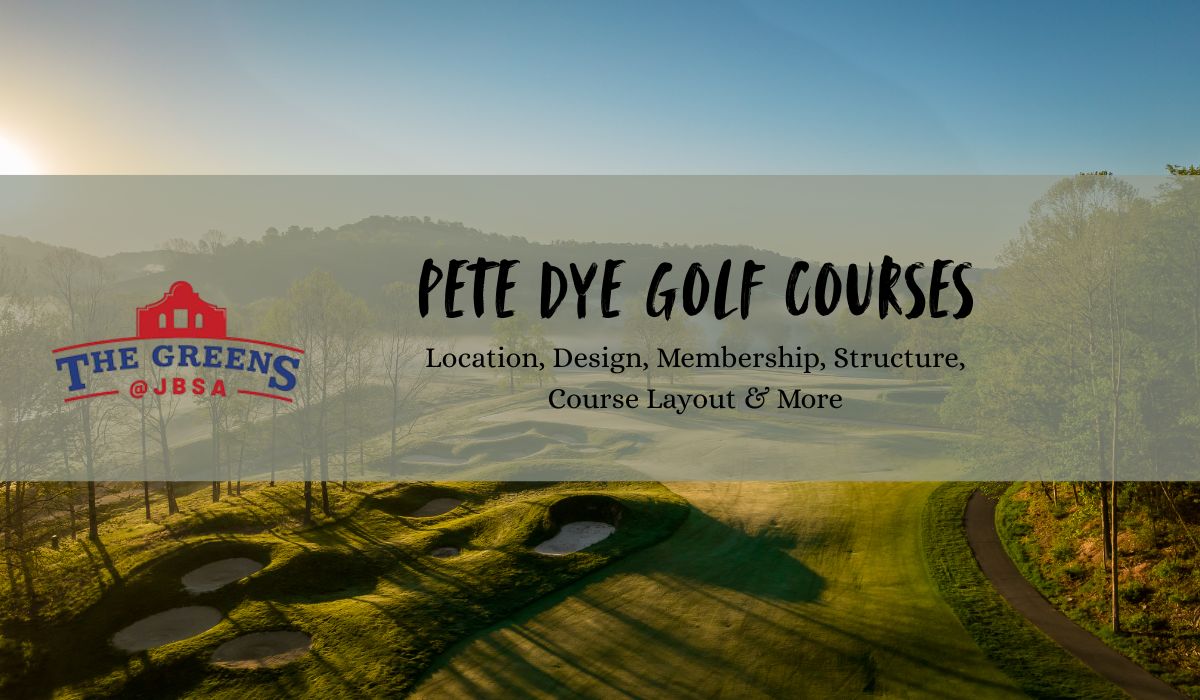
The architectural work at golf courses has seen a number of influential designers but few have left behind such a mark as big as Pete Dye. The way golfers, architects and tournament organizers consider course design changed through his work. Pete Dye golf courses are some of the most iconic on the globe today due to their ability to push the mind of its players, offer rewards to strategy and power rather than brute force and provide visual memories that could last a lifetime. His island green at TPC Sawgrass is as famous as ever, and his courses, such as the rugged beauty of Whistling Straits and the unique, Pete Dye Golf Club, continue to draw professional golfers, amateur golfers and golf travelers of all calibers to their destinations. Although Pete Dye passed on years back, his influence was evident even in modern golf architecture with his courses being mandatory places to visit in case one loves the game.
What Makes Pete Dye Golf Courses So Unique?
Pete Dye golf courses stand out unlike the rest since the courses are more focused on decision-making rather than the distance. When most championship courses gave players rewards based on distance when they strike the ball, Dye thought that golfers needed to execute a two-calculations prior to swinging the club.
His courses are intimidating in nature. The visual pressure on both sides of the tee box through deep bunkers, water hazards at strategic places, raised greens, railroad ties and small landing area give rise to visual pressure to the final putt. However, these features are not random obstacles. Rather, they prompt golfers to adopt wiser angles, easier paths or fierce lines based on their level of expertise and certainty.
Signature Design Features Found on Pete Dye Golf Courses
| Design Feature | Purpose | Effect on Players |
| Railroad Ties | Define hazards and water edges | Creates visual intimidation |
| Deep Pot Bunkers | Punish inaccurate shots | Rewards precision |
| Elevated Greens | Increase difficulty on approaches | Demands distance control |
| Strategic Water Hazards | Force decision-making | Creates risk-reward opportunities |
| Narrow Landing Zones | Promote positioning | Encourages course management |
| Dramatic Visual Angles | Challenge perception | Tests confidence and strategy |
Golfers find it easy to recollect a Pete Dye course several days after they are done with their round due to these design features.
Who Was Pete Dye and Why Is He Important in Golf?
One of the most influential golf course designers in the contemporary history was Pete Dye. He had over a hundred golf courses designed and renovated in the United States and around the world in cooperation with his wife Alice Dye.
His career came into being at the time when most golf courses were built according to the principles of traditional design. Dye instead of emulating the layouts in place, brought in radical ideas that transformed the game. He had researched on renowned Scottish and Irish links courses and integrated a lot of the strategic concepts in his project.
Consequently, his work contributed to the designing of a new generation of golf architecture. Several of the most successful designers of courses today admit to being influenced largely by Pete Dye in their careers.
Pete Dye Quick Facts
| Detail | Information |
| Full Name | Paul B. “Pete” Dye |
| Profession | Golf Course Architect |
| Nationality | American |
| Design Career | More than 50 Years |
| Known For | Strategic Course Design |
| Most Famous Course | TPC Sawgrass Stadium Course |
| Legacy | Over 100 Golf Course Projects |
His impact is not limited to single courses that he impacted due to many current trends in architecture can be tracked to his groundbreaking ideas.
The Most Famous Pete Dye Golf Courses in the World
A number of Pete Dye golf courses are always ranked among the best layouts in the world. This body of work is exemplified in these courses through creative imagination, strategic intricacy, and visual drama.
Top Pete Dye Golf Courses
| Course | Location | Opened |
| TPC Sawgrass Stadium Course | Florida | 1981 |
| Harbour Town Golf Links | South Carolina | 1970 |
| Whistling Straits Straits Course | Wisconsin | 1998 |
| Ocean Course at Kiawah Island | South Carolina | 1991 |
| Crooked Stick Golf Club | Indiana | 1964 |
| Pete Dye Golf Club | West Virginia | 1994 |
| Teeth of the Dog | Dominican Republic | 1971 |
| Bulle Rock Golf Club | Maryland | 1998 |
| The Honors Course | Tennessee | 1983 |
| French Lick Pete Dye Course | Indiana | 2008 |
All of these locations have hosted major professional championships, or received acclaim with architecture professionals and golf magazines.
Pete Dye Golf Club: The Only Club Named After Pete Dye
Pete Dye Golf Club holds a special place in the history of golf since it is the first club, to which Pete Dye himself granted license to use his name. The club itself is located in Bridgeport, West Virginia and presents much of what made his designs to become famous.
Located on recycled mining grounds, the course has dramatic fall and rise, rocky terrain, and mining wonders incorporated into the course. Golfers experience sceneries and topography that they hardly see in other parts of American golf.
In contrast to the busy resort golf sites, the club is dedicated to providing a pure golfing experience by which the members and guests can play more than one round without a great deal of wait time.
Pete Dye Golf Club Overview
| Feature | Details |
| Location | Bridgeport, West Virginia |
| Opened | 1994 |
| Course Type | Private Club |
| Designer | Pete Dye |
| Terrain | Reclaimed Mine Site |
| Signature Characteristic | Mining Features Integrated Into Design |
| Amenities | Lodging, Dining, Guest Access |
Pete Dye Golf Club is regarded by several golf architecture enthusiasts to be one of the most under-rated private golf experience, in the United States.
Did Greg Norman Play Pete Dye Golf Courses?
Yes, Greg Norman has been associated with a number of Pete Dye golf courses during his career and has had a significant relationship with a number of Dye projects.
Norman has played in championship courses designed by Dye such as Harbour Town Golf Links, Whistling Straits, TPC Sawgrass and the Ocean course at Kiawah Island. PGA TOUR events and major championships were often held on these courses as long as Norman was still playing.
The Medalist Golf Club in Florida was one of the relationships that was most powerful between the two. Pete Dye created a layout with Greg Norman in the process of designing, and this was the kind of layout that displayed the strategic philosophy of Pete Dye and the competitive outlook of Norman.
Pete Dye Courses Associated with Greg Norman
| Course | Connection |
| The Medalist Golf Club | Co-designed with Greg Norman |
| TPC Sawgrass | PGA TOUR competition venue |
| Harbour Town Golf Links | Regular TOUR stop |
| Ocean Course | Major championship venue |
| Whistling Straits | PGA Championship venue |
Since the constructs of Pete Dye were seen as a test of the game by virtually everyone in the golf industry, many believed that Dye would play there certain courses better than anyone.
Complete List of Notable Pete Dye Golf Courses by Region
The collection of Pete Dye covers dozens of states and even countries. Although it would take an entire directory to list all the courses, there are certain regions with some of his most important work.
United States
| Region | Notable Courses |
| Florida | TPC Sawgrass, Dye Preserve, Medalist Golf Club, Lake Nona |
| South Carolina | Harbour Town, Ocean Course, Long Cove Club |
| Indiana | Crooked Stick, Brickyard Crossing, French Lick |
| Wisconsin | Whistling Straits, Black Wolf Run |
| California | PGA West Stadium Course, Citrus Course |
| Maryland | Bulle Rock |
| Tennessee | The Honors Course |
| Oklahoma | Oak Tree National |
| West Virginia | Pete Dye Golf Club |
| New York | Pound Ridge Golf Club |
International Pete Dye Golf Courses
| Country | Famous Courses |
| Dominican Republic | Teeth of the Dog, Dye Fore |
| China | Mission Hills |
| Japan | Pete Dye Golf Club Royal Course |
| France | Golf Club Barbaroux |
| Switzerland | Domaine Imperial |
| Singapore | Laguna National |
| Brazil | Buzios Golf Club and Resort |
| Thailand | Subhapruek Country Club |
This global foot imprint shows how the architectural philosophy by Pete Dye has had an impact on golf even outside of North America.
How Much Does Membership Cost at Pete Dye Golf Courses?
The costs of membership differ considerably as Pete Dye designed private clubs, resort courses, and facilities that can be accessed by people. All the Pete Dye properties do not have a standard membership structure.
Other clubs are aimed at local golfers, whereas there are also those that are highly exclusive with exclusive access and premium services.
Estimated Membership Costs at Selected Pete Dye Clubs
| Club | Estimated Initiation Fee | Typical Dues |
| Pete Dye Golf Club | $12,000–$15,000 | Varies |
| Dye Preserve | Six Figures | Around $9,000 Annually |
| Glenmoor Country Club | Approximately $95,000 | Monthly Dues Apply |
| Citrus Club | $50,000+ | $1,600–$1,850 Monthly |
Golfers who are interested in membership must always contact individual clubs as far as the rates, categories and availability of the club varies over time.
Which Pete Dye Golf Course Should Golf Travelers Play First?
The optimal Pete Dye golf course will largely depend on the kind of golf experience you desire.
Golfers who are interested in having a professional tournament feel usually choose TPC Sawgrass due to its association with THE PLAYERS Championship. The Ocean Course of Kiawah Island or Whistling Straits often get the selective attention of those seeking dramatic scenery.
In the meantime, Pete Dye Golf Club usually ends in the top of the bucket list of the architecture admirers, as numerous design principles of Dye are presented in a spectacular mountain landscape.
Best Pete Dye Courses by Experience
| Goal | Recommended Course |
| PGA TOUR Experience | TPC Sawgrass |
| Oceanfront Golf | Ocean Course at Kiawah Island |
| Links-Style Challenge | Whistling Straits |
| Architecture Study | Pete Dye Golf Club |
| Caribbean Golf Vacation | Teeth of the Dog |
| Strategic Golf Test | Harbour Town Golf Links |
Each golfer will have a favourite with which he or she will always associate with, but these will always be rated as one of the most respected courses in the world.
Why Pete Dye’s Design Philosophy Still Influences Modern Golf?
The best contribution that Pete Dye has made to golf architecture is that he laid emphasis on strategic thinking. He more than thought a golf course ought to be a test of wits to the participants and not an examination of the physical talent.
Robust architects have also borrowed ideas popularized by Dye, such as risk-reward holes, aesthetically awe-inducing dangers, innovative bunkering, and twin strategically allotted paths to the identical target. Organisers of tournaments, too, still prefer golf courses that have been designed by Dye due to the fact that they are able to see the full golfers capable of thinking, adapting and acting under pressure.
Pete Dye golf courses are still relevant today, even with the changing equipment technology since their challenges are more of design strategy than simply length.
Conclusion: The Lasting Legacy of Pete Dye Golf Courses
The Pete Dye golf courses are still one of the most admired layouts in golf since it fuses both architectural imagination with the tactical intricacy. His designs, such as going up to Harbour Town and TPC Sawgrass, to Whistling Straits and Pete Dye Golf Club, are still challenging to the elite professionals and also offer exciting experiences to ordinary golfers.
Pete Dye has had a greater impact on modern golf than any other architect. His lessons are a reward to the level of intelligence, patience and precision, and this is why they have stayed at the center of professional golf, architecture discourses and bucket-lists travelling decades after they were written. To golfers who value intelligent design and intelligent test, the work of Pete Dye can be considered one of the best architecture the game has ever been able to create.
Also Read About :- Enumclaw Golf Course: Fees,