Deciding when to invest in a large floor sweeper isn’t always straightforward. Many businesses depend on manual cleaning methods, often unaware of how much time and money they’re losing in the process.
The reality is that most operations reach a point where manual cleaning equipment simply can’t keep up. Productivity drops, operators struggle with fatigue, and dust and debris become a genuine workplace safety concern. Recognising these signs early can save your business from high operational costs and improve site conditions.
Today, we will outline the practical indicators that signal it’s time to upgrade to a large floor sweeper, along with what you should assess before making that investment.
Here Are the Key Reasons When You Need a Large Floor Sweeper:
#1 Your Cleaning Area Has Become Too Large for Manual Cleaning
When you’re cleaning over 5,000 square metres regularly using manual methods, the process becomes inefficient and labour-intensive. Manual cleaning simply cannot match the coverage and speed required for large-scale operations.
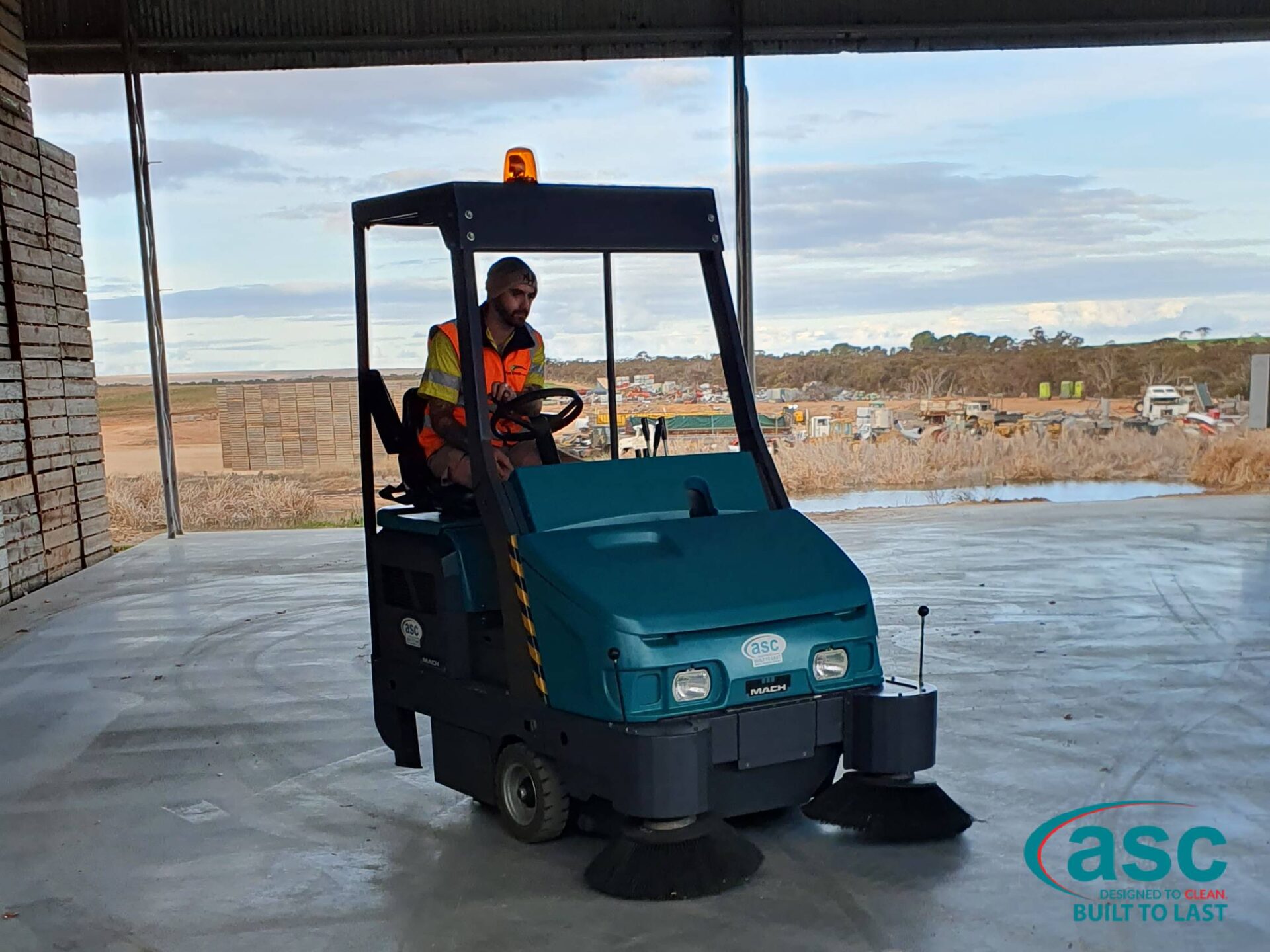
Large warehouses, distribution centres, manufacturing plants, and logistics facilities often reach this point quickly. What takes several hours with manual cleaning can be completed by one person in a fraction of the time with a ride-on machine. The shift delivers consistent coverage and reduces the physical burden on your crew.
Commercial facilities with expansive concrete or sealed surfaces benefit most. Car parks, factory floors, and outdoor hardstand zones are prime candidates for ride-on sweepers.
#2 Cleaning Is Taking Too Long and Affecting Your Productivity
Floor cleaning that regularly interferes with operational schedules or requires shutting down sections of your site signals you’ve outgrown your current methods.
Ride-on sweepers cover significantly more ground per hour than manual alternatives. Cleaning can happen during shift changes, overnight, or in tighter windows without disrupting workflow. For businesses operating around the clock, faster turnaround times directly translate to better site utilisation and reduced downtime.
The efficiency gain is substantial. A large sweeper can clean areas in minutes that would otherwise take an operator over an hour manually.
You’re Dealing with Heavy or Continuous Debris Volume
Some sites generate debris constantly. Metal shavings, packaging waste, aggregate, sawdust, and general industrial rubbish accumulate quickly in active facilities.
Manual cleaning methods require frequent stops to collect and dispose of debris. This constant interruption slows the job down and frustrates operators. Large ride-on sweepers feature bigger hoppers — the built-in collection containers that store swept-up debris — designed for heavy, continuous loads. This allows longer cleaning runs without needing to stop and empty.
When your crew spends significant time collecting and disposing of debris multiple times per shift, a larger-capacity machine eliminates that bottleneck and keeps operations moving smoothly.
Dust Control and Workplace Safety Have Become Priorities
Dust goes beyond a cleanliness issue — it presents a workplace safety and compliance concern. Businesses are required to manage airborne dust, particularly in environments where silica, metal particulates, or other fine materials are present.
Large ride-on sweepers with integrated dust suppression systems trap fine particles rather than redistributing them into the air. This protects operators, reduces respiratory hazards, and helps maintain compliance with workplace health and safety regulations.
For sites dealing with concrete dust, grinding residue, or agricultural by-products, effective dust control becomes non-negotiable. A properly equipped sweeper addresses this directly.
Operator Fatigue Is Starting to Reduce Efficiency
Manual cleaning is physically demanding. Operators working manually for hours experience fatigue, which slows productivity and increases the risk of injury. Repetitive strain, sore backs, and general exhaustion become common complaints.
Ride-on sweepers eliminate this issue. Operators sit comfortably, steer with minimal effort, and can maintain consistent performance throughout their shift. This practical measure improves job satisfaction, reduces turnover, and keeps cleaning standards high.
When your crew regularly complains about soreness or struggles to maintain cleaning schedules, a ride-on machine becomes the clear solution.
What to Check Before Choosing a Large Floor Sweeper
Before committing to a purchase, assess your site’s specific requirements. Consider the total floor area you’re cleaning, the type and volume of debris, and whether indoor or outdoor use is needed. Different environments demand different machine capabilities.
Evaluate hopper capacity based on how often you’re willing to stop and empty. Larger hoppers mean fewer interruptions, but they also add weight and size to the machine.
Check manoeuvrability requirements. Tight aisles or congested layouts may need compact ride-on models, while open warehouses can accommodate larger, wider sweepers with greater cleaning paths.
Think about operator experience and training. Modern ride-on sweepers are intuitive, but ensuring your crew is comfortable and properly trained maximises machine performance and longevity.
Finally, consider ongoing maintenance and support. Equipment downtime costs money, so reliable local service and parts availability should factor into your decision. Harsh conditions can be tough on machinery, so durability matters.
Conclusion — Choosing the Right Time to Upgrade
Upgrading to a large ride-on floor sweeper is a decision driven by practical need, not preference. When cleaning takes too long, operators are fatigued, dust becomes unmanageable, or debris volume overwhelms manual methods, the time to reassess your equipment has arrived.
Industrial sites demand reliable, efficient cleaning solutions that keep pace with operational demands. Recognising the signs early and choosing equipment suited to your environment ensures you’re working smarter and protecting your crew in the process.