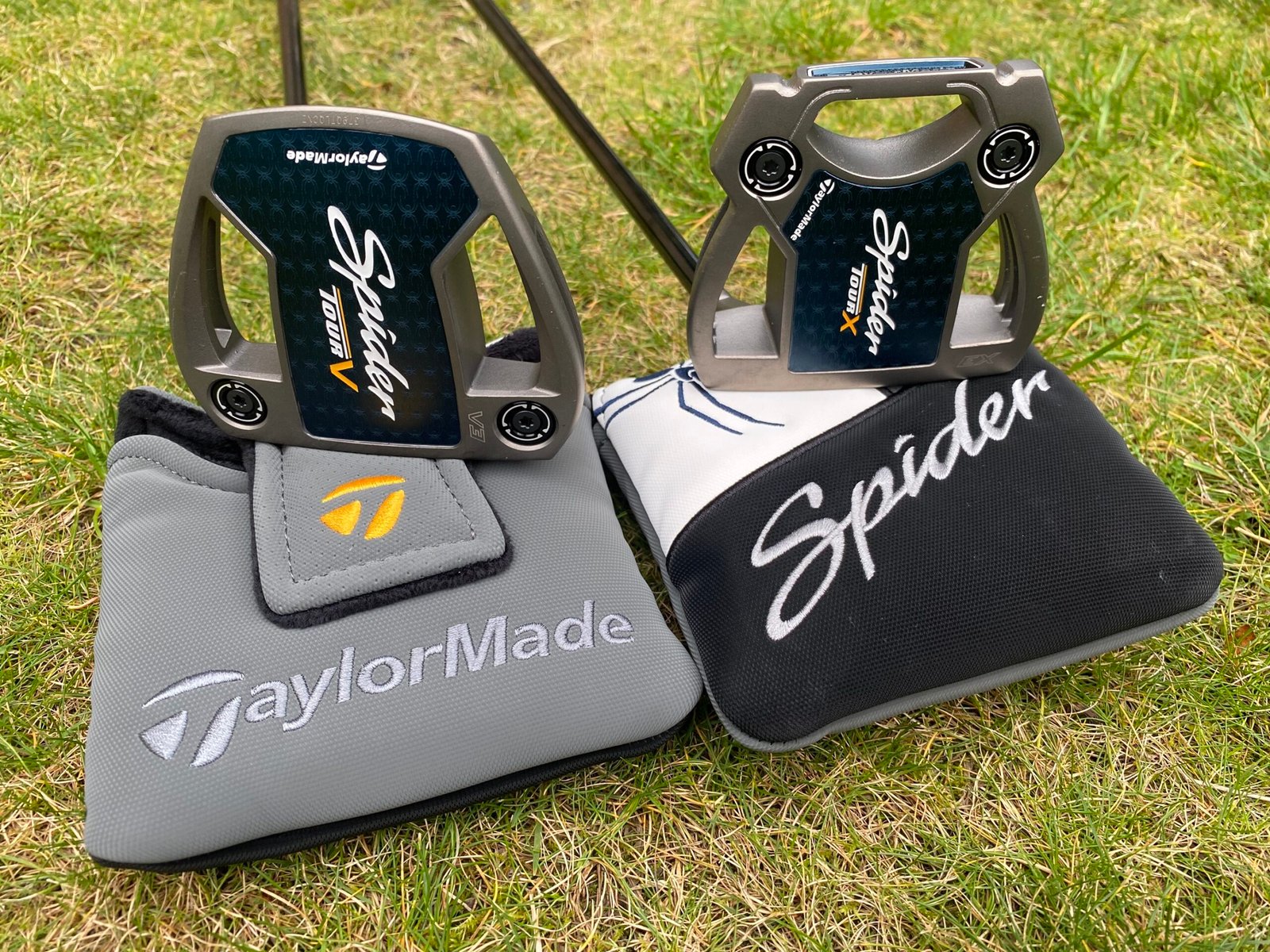
The identity of Spider Tour V is built around restraint, balance, and repeatable putting performance. Instead of relying on visual bulk or exaggerated shaping, this model focuses on how a golfer actually sets up, swings, and releases the putter. Also, Within the Spider Tour lineup from TaylorMade, the Tour V exists for players who want modern stability without losing the natural feel of a blade.
This is a golf putter, not a golf ball and not a membership-based product. It is designed for golfers who value predictability on the greens and want equipment that supports their stroke rather than correcting it artificially. The Tour V simplifies the Spider concept while preserving its core performance strengths. This guide explains Spider Tour V in depth. Moreover, It covers its design intent, construction, specifications, fitting logic, estimated pricing, professional usage, and long-term value.
Highlights Overview: Spider Tour V & Model Snapshot
Before going deeper, it helps to understand where Spider Tour V sits in the market. This model is not built for beginners chasing maximum forgiveness, nor for players who prefer extreme mallet designs. Also, It is positioned for golfers who already understand their stroke and want equipment that enhances consistency.
| Category | Details |
| Model | Spider Tour V |
| Brand | TaylorMade |
| Product Type | Golf putter |
| Head Style | Compact mallet |
| Primary Focus | Control, feel, and stability |
| CG Location | 27 mm from face |
| MOI | 4,900 |
| Stroke Fit | Moderate to strong arc |
| Market Position | Premium performance |
This snapshot clearly places Spider Tour V as a feel-oriented performance putter.
Spider Tour V Design Background
Spider putters have a long reputation for stability, but not every golfer connects with large, winged shapes. Over time, TaylorMade observed that many skilled players loved the forgiveness of Spider putters but struggled with their visual size. Moreover, Spider Tour V was developed to address that gap. Also, The rear wings were removed. The footprint was reduced. Hence, Weight was repositioned closer to the face. These changes were not cosmetic. They were made to improve stroke flow and visual comfort.
The design allows the putter to sit naturally behind the ball. At address, nothing feels exaggerated. This calm setup often leads to better tempo and confidence, especially under pressure.
What Makes Spider Tour V Different from Other Spider Models?
Spider Tour V stands apart because it intentionally sacrifices some extreme MOI in favor of feel and release. This trade-off is what many experienced golfers prefer. Key differences include:
- Smaller head that resembles a blade at address
- Forward center of gravity for stronger face rotation
- Higher toe hang than other Spider Tour models
- Minimal rear structure for cleaner visuals
Other Spider models prioritize maximum forgiveness. Spider Tour V prioritizes balance between forgiveness and feedback. This makes it appealing to players who already strike the ball consistently but want insurance on slight misses.
Spider Tour V as Part of the TaylorMade Equipment System
TaylorMade designs equipment as a connected system. Clubs are not developed in isolation. They are tested to work together with shafts, grips, and even golf balls. Spider Tour V fits this philosophy by offering predictable launch and roll characteristics. When paired with modern TaylorMade golf balls, distance control becomes easier to judge. Also, The ball starts rolling sooner and stays on line longer. Also, This system-based thinking reduces guesswork. Golfers begin to trust what they see and feel, which leads to better decision-making on the greens.
Spider Tour V Technical Construction Explained
The internal construction of Spider Tour V reflects TaylorMade’s engineering-driven approach. Every component has a clear purpose. The thin-wall undercut construction removes unnecessary mass from the center of the head. That weight is redistributed to improve stability. A steel wireframe inside the head allows precise control over center of gravity placement.
Behind the face sits the HYBRAR Echo dampener. This element absorbs unwanted vibration and refines sound at impact. The result is a soft yet solid feel that works well with different golf ball compressions. TSS weighting further fine-tunes balance across various shaft lengths, ensuring consistent performance for a wide range of golfers.
Alignment, Feel, and Roll Characteristics
Spider Tour V uses the True Path alignment system. The white alignment channel contrasts sharply with the green, helping golfers aim squarely without distraction. Because the head is compact, the alignment aid feels subtle rather than overpowering.
The White TPU Pure Roll insert blends Surlyn and aluminum. The grooves are angled at 45 degrees, which encourages immediate forward roll. This reduces skidding and improves distance control, especially on longer putts.
Impact sound is muted and controlled. The feedback is clear without being harsh, which many players find reassuring during competitive rounds.
Spider Tour V Specifications
| Specification | Value |
| CG Location | 27 mm |
| MOI | 4,900 |
| Toe Hang | 32° |
| Insert | White TPU Pure Roll |
| Shaft | KBS CT 120g Black PVD |
| Grip | SuperStroke Pistol GT 1.0 |
| Finish | Gunmetal PVD |
| Hosel Options | Small slant, double bend |
These specifications explain why Spider Tour V behaves more like a blade while maintaining mallet stability.
Who Should Use Spider Tour V?
Spider Tour V is best suited for golfers who already have a repeatable putting stroke. It rewards natural motion rather than forcing correction.
Ideal users include:
- Blade putter players seeking more forgiveness
- Golfers with noticeable arc in their stroke
- Players who prefer clean, simple visuals
- Those sensitive to feel and sound at impact
Golfers with straight-back-straight-through strokes may find face-balanced models more suitable.
Mason Andersen and Spider Tour V on Tour

Understanding how a specific player relates to Spider Tour V helps explain its performance strengths. Mason Andersen is known for a putting stroke that blends natural face rotation with deliberate rhythm.
Andersen’s stroke is not artificially forced. It has flow and release. Putters like Spider Tour V naturally align with this style. The 32° toe hang and forward CG support his motion rather than working against it. When Anderson tested mallet-style putters with forward rotation players on tour, he shared insights about how smaller heads can feel more predictable through impact.
While Andersen may use different models depending on course conditions, his preference for feel-oriented mallets highlights why Spider Tour V resonates with players who do not want extreme perimeter weighting but still want forgiveness. This real-world connection shows that Spider Tour V is not merely theoretical. It works with actual putting styles in competitive environments.
Estimated Pricing, Fitting Fees, and Ownership Cost
Spider Tour V is sold as a retail product. There are no mandatory memberships or recurring fees.
Exact retail price (USA):
- $349.99
Estimated additional costs:
| Item | Estimated Cost |
| Professional putter fitting | $75 – $150 |
| Custom MySpider options | $50 – $70 |
| Accessories or headcovers | $30 – $50 |
The overall ownership cost remains reasonable compared to frequent putter changes.
Customization Options for Spider Tour V
Through TaylorMade’s MySpider program, golfers can personalize their putter without altering performance fundamentals. Customization options include:
- Finish color variations
- Insert material and color
- Alignment line styles
- Weight accent colors
- Headcover designs
These options help golfers feel more connected to their equipment.
Conclusion: Why Spider Tour V Remains Relevant?
Spider Tour V remains relevant because it respects how skilled golfers putt. It blends modern engineering with traditional feel, avoids unnecessary complexity. It encourages trust through consistency. For golfers who want stability without sacrificing feedback, Spider Tour V continues to be a dependable choice on the greens.
Also Read About :- PXG Golf Clubs: Complete