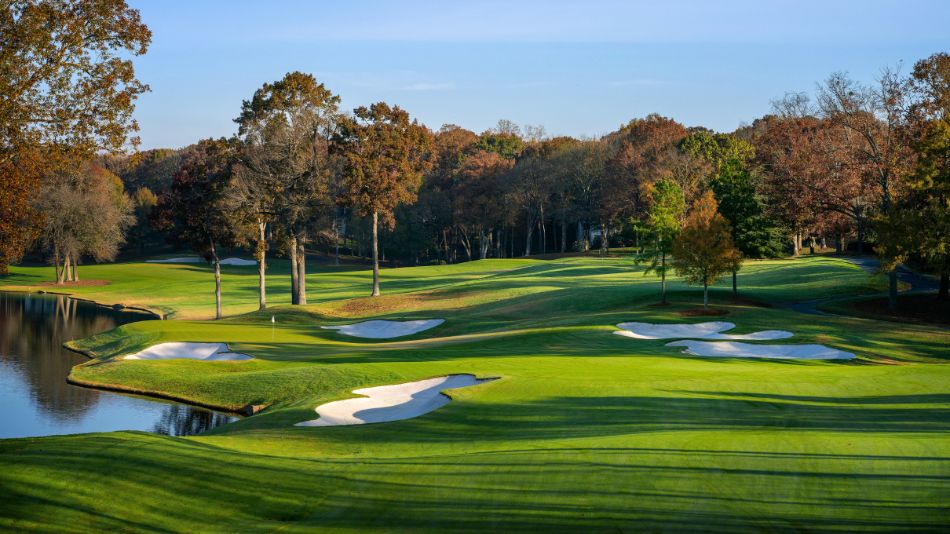
Quail Hollow Club is different in the sense that it was not constructed with the intention of keeping up with trends and pursuing popularity. It is based on its identity in competitive golf, long-term-thinking and disciplining execution. Most clubs put the emphasis on luxury or social prominence, but this club has never put the golf course to talk first.
Quail Hollow Club is a club located in Charlotte, North Carolina that signifies a balance between responsibility and exclusivity. It is a closed system, an organized one, and one that is constrained, but operates a conspicuous role in the golfic system of the world in the form of professional tournaments. The environment is controlled and predictable, and the members are not distracted with handling crowds as it is all about playing good golf. This guide describes the club in detail with respect to its philosophy, course structure, professional role, and cost of membership.
Highlight Overview: Key Facts About Quail Hollow Club
Quail Hollow Club is an entire championship system as opposed to a collection of spectacular individual holes. The decisions in the course are supposed to be interrelated by every part of the course. Tee shots influence angles. Angles are what define approach quality. The quality of approach influences difficulty of putting.
The first holes relax the players without putting them down. Precision is more valued in the round as it moves on. Mistakes that are little start growing instead of dying out. In the last run, the course requires a total concentration and strict performance. Such a development enables the club to compete with professional elites at the same time making it fair to experienced members.
The major strong point of Quail Hollow Club is that the challenge is not man-made. Players are challenged both mentally and physically.
Highlight Snapshot
It is worth knowing a bare outline of the club structure before going into more detail. These background facts provide an understanding of the way the club functions and its ability to be relevant in the long term. The snapshot below describes location, access, and core characteristics in an easy to understand way.
| Feature | Detail |
| Location | Charlotte, North Carolina, USA |
| Club Type | Private, invite-only |
| Total Holes | 18 |
| Course Style | Championship layout |
| Signature Stretch | Final three holes (“Green Mile”) |
| Membership Size | Approx. 350 members |
| Access | Members and invited guests only |
| Core Focus | Competitive golf excellence |
These characteristics show why Quail Hollow Club is measured by performance rather than visibility.
Understanding the Identity of Quail Hollow Club
Restraint has always influenced the identity of Quail Hollow Club. It is not meant to satisfy random visitors or seek trends that are of the moment. Rather, it is a club available to those players who have a virtue of preparation, discipline, and consistency.
The renewal and remodelling of the course over time has concentrated on the values of the shots, green complexes and tournament readiness. Cosmetic alterations are incidental. The club is of the opinion that when the golf is fair and challenging, reputation will automatically follow. Members are exposed to an environment in which patience is paid off. Taking risks can be done but never without cost. This balance has characterized Quail Hollow Club among generations.
Context and Regional Significance Location
Charlotte presents a perfect setting to a privately owned championship club. The city has a good infrastructure, good transportation and extensive connections with professional sports. These will enable the club to host the major tournaments without undermining its individuality.
Meanwhile, the club is not in touch with everyday business. There is no traffic and crowd of resorts, or general playing about the members. Golf does not become a spectacle and it marches with the pace of the region. This has been strategically positioned to ensure that Quail Hollow Club has privacy but at the same time it makes a contribution to the world of professional golf.
Playing Philosophy and Course Architecture
The course design focuses on reasonable decisions as opposed to brute strength. The fairways are open, yet require proper positioning. Greens are designed in such a way that approach shots made at the right angle will reward instead of just hitting the putting surface.
Getting acquainted with the philosophy is essential before studying the technical aspects. Aggression is not automatically penalized with the course, but it reveals badly calculated shots. Strategy players have an obvious advantage.
The table below summarizes the architectural approach.
| Category | Detail |
| Total Holes | 18 |
| Playing Style | Strategic championship |
| Terrain | Gently rolling |
| Primary Challenge | Approach precision |
| Ideal Player | Advanced amateur to professional |
This approach keeps Quail Hollow Club relevant for both elite tournaments and long-term member play.
Championship Pedigree and Professional Events
Quail Hollow Club has gained the credibility of the professional golf bodies because of consistency. Major events take more than a challenging course to host. It needs operations, crowd management, training courses, and discipline.
These capabilities have been exhibited on numerous occasions by the club. The fact that it was chosen as a major championship is an indicator of trust in the golf and the management. Players admire the venue due to its reward systems based on preparation and not victory. At Quail Hollow Club, success in the profession is very likely to portray the full repertoire of skills instead of specific abilities.
The Green Mile: Delimitations of Stretch of the Course
The last three holes commonly referred to as the Green Mile are one of the most challenging final holes in major golf. Different holes pose a unique challenge with different types of control being required.
Momentum is not something that players can rely on. All shots have to be properly planned and accurate. The reason why leads will change here is not due to dramatic hazards but as a result of sustained pressure. This final run strengthens the identity of the club. Discipline is the means of getting championships.
Facilities, Amenities and Club Environment
Quail Hollow Club facilities are built to promote performance and comfort and not extravagance. All spaces have a definite role that relates to golf or member experience.
Perhaps, it is worth mentioning before enumerating amenities, that the surroundings are quiet even at the time of big events. Flow and privacy are of concern to the club.
Available facilities include:
- Championship practice range
- Advanced short game areas
- Private locker facilities
- Dining areas designed for quiet interaction
- Tournament-grade infrastructure
Luxury exists, but it never overshadows golf at Quail Hollow Club.
Private Access Model and Member Experience
Access is tightly controlled. There are no public tee times and no casual entry. Guest play is permitted only through member sponsorship, ensuring accountability and consistency.
This model protects course conditions and preserves pace of play. Members know what to expect each time they arrive. The experience remains stable regardless of season or tournament schedule. Privacy is a core benefit of membership at Quail Hollow Club.
Quail Hollow Club Membership Fees: Estimated
Membership costs are not publicly disclosed. However, industry reporting and comparisons with similar private championship clubs allow reasonable estimates. Before reviewing the numbers, it is important to understand that fees reflect exclusivity, course quality, and limited access rather than amenities alone.
| Fee Category | Estimated Amount |
| Initiation Fee | $100,000 – $150,000 |
| Monthly Dues | Around $800 |
| Membership Type | Private, invitation-based |
| Guest Access | Limited, member-sponsored |
These figures are estimates and may change based on policy or membership class.
Membership Structure and Entry Requirements
Membership is exclusive in nature and small. The potential members are normally expected to be sponsored by the existing members and have to undergo an internal vetting procedure.
One has to be financially eligible to gain entry. It is equally important that cultural fit and long-term commitment to the club. This strategy takes the form of consistency and common expectations. Consequently, Quail Hollow Club does not experience a high turnover rate and retains the internal culture.
Practice Culture and Player Development
Practice facilities are used with intention. Members often focus on fundamentals rather than volume or experimentation. The environment encourages deliberate improvement.
Common areas of focus include:
- Distance control
- Green reading
- Trajectory management
- Mental pacing
Practice at Quail Hollow Club mirrors tournament preparation rather than casual play.
Course Yardage Profile and Hole Balance
The course maintains balance across hole types, preventing repetition and predictability. Each section of the layout tests a different skill set. Before viewing the yardage breakdown, it helps to note that difficulty increases through placement and angles rather than extreme length.
| Hole Type | Yardage Range | Skill Focus |
| Short Par 3s | 160–190 yards | Precision |
| Mid-Length Par 4s | 420–460 yards | Positioning |
| Long Par 4s | 480+ yards | Control |
| Par 5s | 560–600 yards | Decision-making |
This balance keeps rounds engaging and mentally demanding.
Seasonal Playing Conditions and Maintenance
Maintenance strategy focuses on equality and uniformity. It does not aim at extreme speed or artificial challenge, but rather expected conditions all year round.
Seasonal patterns include:
- Spring: Slightly receptive greens
- Summer: Firmer surfaces and faster pace
- Fall: Balanced conditions
- Winter: Controlled firmness
These adjustments ensure Quail Hollow Club remains playable and challenging in all seasons.
Who Typically Becomes a Member at Quail Hollow Club?
The membership base reflects stability and long-term commitment. Common member profiles include:
- Business leaders
- Competitive amateur golfers
- Tournament patrons
- Individuals who value private club culture
The community prioritizes respect, discretion, and shared appreciation for the game.
Role of Quail Hollow Club in American Golf
Quail Hollow Club plays an important role in shaping modern championship golf. It bridges traditional design principles with modern competitive demands. Many professional careers have been influenced by performances here. The club contributes quietly, without excessive branding or promotion.
Performance Pattern Indicators (Illustrative)
The table below provides illustrative indicators based on course demands and member behavior.
| Category | Value | Notes |
| Average Member Rounds | Moderate | Quality-focused |
| Driving Accuracy Emphasis | High | Strategic layout |
| Scoring Volatility | Moderate | Position-based |
| Tournament Difficulty | High | Proven under pressure |
Operations, Staffing, and Standards
Operations prioritize reliability and discretion. Staffing levels support both daily play and major events without disruption. Before reviewing operational details, it is important to note that consistency is valued more than visibility.
| Category | Detail |
| Staff Structure | Professional |
| Maintenance Goal | Championship-ready |
| Member Services | Discreet |
| Event Capability | Major tournament level |
Conclusion: Why Quail Hollow Club Endures?
Quail Hollow Club survives since it does not take shortcuts. All decisions enforce competitive honesty, discipline, and structure. The club, by its rigorous course structure and its selective membership approach, is much more concerned with long term credibility rather than short term hype. To players of golf who prize substance and preparation, and integrity, Quail Hollow Club still remains one of the most powerful models of private championship golf.
Also Read About :- Maxfli Golf Balls