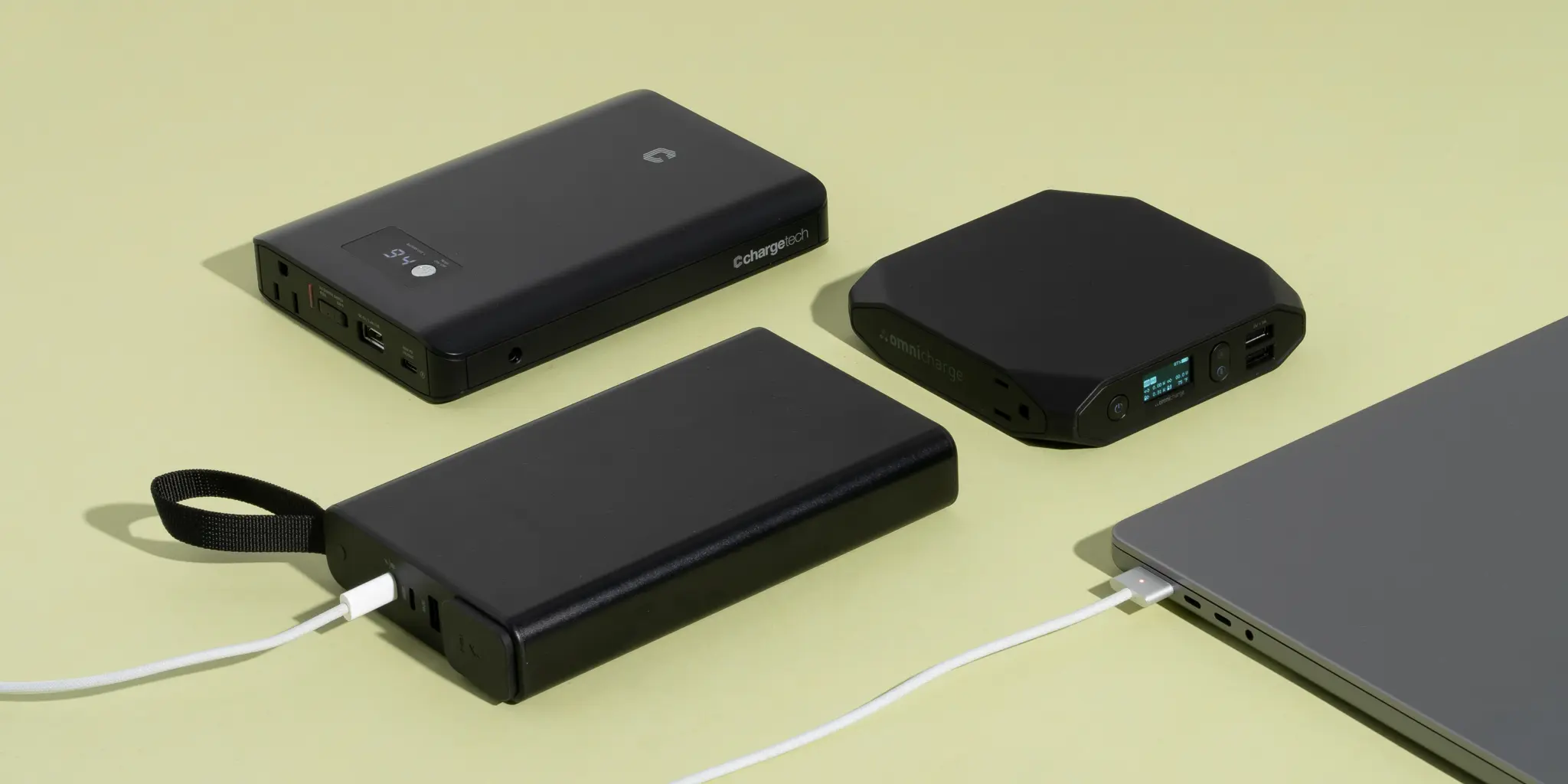
For frequent travelers, every ounce matters. Bulky chargers and power banks add weight, take up space in your carry-on, and can even complicate airport security checks. Traveling in the fall can be particularly challenging—shorter daylight hours and cooler temperatures drain device batteries faster.
Lightweight charging solutions let you stay connected, keep your devices powered, and travel without unnecessary hassle. With the right gear, you don’t have to choose between portability and performance.
How to Choose the Best Portable Charger for Travel
When looking for the best portable charger for travel, consider these factors:
- Battery Capacity
Battery capacity, measured in mAh or Wh, determines how many times your devices can be charged. A small 10,000 mAh power bank is usually enough for phones, while laptops may require 20,000–25,000 mAh.
- PD Charger Support
USB-C Power Delivery (PD) enables fast charging for most new phones and laptops. If you want to charge laptop with portable charger, ensure the bank supports sufficient wattage (45W, 65W, or higher depending on your device).
- Size and Weight
The smallest power bank that meets your needs reduces travel weight and fits easily into carry-ons or daypacks. Built-in cables or compact designs add convenience.
- Safety and Build Quality
Choose reputable brands with certifications and built-in protections against overcharging, overheating, and short circuits. INIU provides an industry-leading 3-year warranty to ensure safe charging for consumers.
- Airline Compliance (TSA Approved Power Bank)
Ensure your power bank meets airline regulations: carry-on only, capacity under 100 Wh for unrestricted flights, and clearly labeled watt-hours.
- Value vs Cost
Investing in a high-quality PD charger or durable power bank often pays off by reducing replacements and ensuring reliable performance during travel.
Understanding TSA Approved Power Bank Rules
Traveling with lithium-ion batteries requires awareness of TSA rules:
Carry-on Only: Power banks must be in your carry-on luggage. They are not permitted in checked bags.
Capacity Limits:
- Up to 100 Wh: Generally allowed without airline approval.
- 101–160 Wh: May require airline approval; usually limited to two spare batteries.
- Over 160 Wh: Typically prohibited.
Labeling and Safety: Your power bank should clearly display capacity (Wh or mAh) and have built-in protections.
Following these rules ensures smooth airport security checks and keeps your devices safe during travel.
INIU P63-E1: Best Portable Charger for Travel
The INIU P63-E1 is a standout option for travelers seeking lightweight, high-capacity charging:
| Feature | Details |
| Capacity | 25,000 mAh (~92.5 Wh), multiple phone/tablet charges |
| PD Charger Support | 100W USB-C output, ideal for laptops |
| Size & Portability | 4.3 × 2.7 × 1.4 in, ~392.3g; 30% smaller than similar capacity banks |
| Number of Ports | 2× USB-C + 1× USB-A for simultaneous charging |
| TSA Compliance | Under 100 Wh, carry-on friendly |
Why It Works for Travelers:
- It balances size and power, making it one of the smallest power banks in its category.
- PD charger support allows fast charging for laptops and phones.
- TSA-approved design ensures hassle-free airport security.
Tips for Smart Travel Charging
Even the best power bank needs smart usage, here are some useful tips for better charging experience:
- Mix Small and High-Capacity Banks
Carry a compact smallest power bank for daily outings and a larger PD-capable bank for flights or remote work.
- Prioritize PD Charging
USB-C PD chargers deliver faster, more efficient charging than older USB-A solutions. They are essential if you want to charge laptop with portable charger.
- Use Quality Cables and Adapters
Short, durable cables reduce tangling and weight. Always carry what you need and avoid extras. Most INIU power banks are designed with a built-in cable or a lanyard-integrated fast charging type c cable, which is very convenient for travel.
- Verify Airline Rules Before Travel
Check TSA and airline limits for each trip. Even compliant power banks must be in your carry-on and clearly labeled.
- Protect Batteries in Cooler Weather
Cold temperatures reduce battery life. Keep your power bank and devices insulated in jackets or travel pouches.
- Organize Your Charging Kit
A small pouch with power banks, cables, adapters, and a PD charger keeps everything accessible and safe.
- Plan for Contingencies
For long flights, trains, or outdoor trips, a high-capacity PD bank ensures your devices remain functional even when outlets are scarce.
Conclusion
Lightweight charging solutions are essential for travelers seeking freedom, reliability, and convenience. Choosing a TSA approved power bank with sufficient capacity, PD charger support, and portable design ensures you can keep your devices charged, whether you’re exploring a city, working remotely, or camping in the fall.
The INIU P63-E1 exemplifies the balance between power, portability, and TSA compliance. By combining small and high-capacity options, and following safety guidelines, you can travel smarter, lighter, and stay powered on the go.
Before your next trip, ask yourself:
- Which devices need charging?
- Is my power bank within airline limits?
- Do I need PD charger support for laptops?
- Which smallest power bank will meet my daily travel needs?
With thoughtful planning, you’ll enjoy travel without the stress of dead devices.