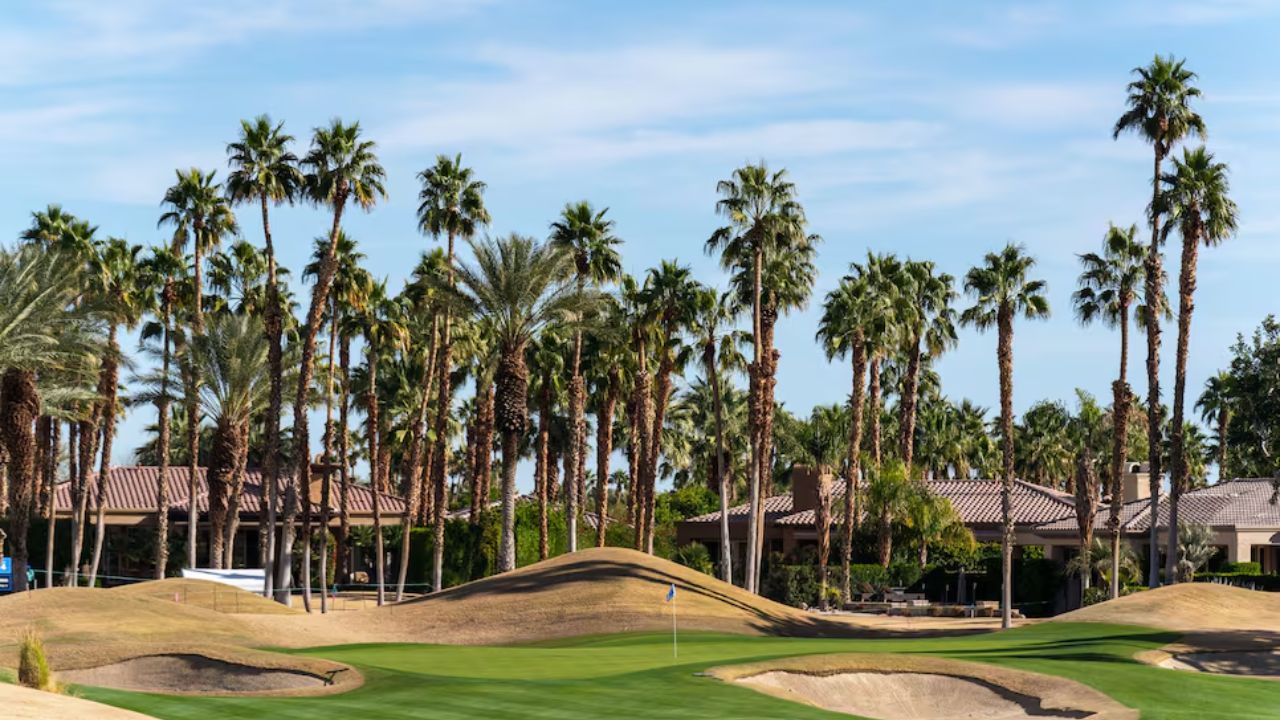
Nicklaus Tournament Course is rated among the finest championship courses in the area of Palm Springs. This course represents a high-end architectural concept with sporting discipline, as it is located within a high-profile PGA West complex in La Quinta, California. The layout was created by Jack Nicklaus and reflects the way of thinking that marked his playing career. There is power, but control determines results. The fairways look spacious when standing on a high tee, and the angles of scoring become narrower when the approach shots pass in the direction of elevated green complexes. The course is not based on artificial drama.
Rather, it develops pressure by intelligent positioning, desert framing, and by designing strategically. This building is acknowledged by modern professionals. Players like William Mouw who play rhythmically and positionally tend to play well at layouts where a player is less aggressive but has patience. The Nicklaus Tournament Course is fabricated by the same strategic identity, and this identity still characterizes the long-term reputation of the venue.
Highlight Overview: Key Facts About Nicklaus Tournament Course
Nicklaus Tournament Course was designed to accommodate elite championship courses and high-end resort courses. The course is situated in PGA West, La Quinta, California and it combines the desert landscapes with high green complexes and expansive strategic corridors. The routing by Jack Nicklaus was created to be a challenge to the higher-end players without being too difficult to play at the different tea boxes. The tee has space provided by the visual look.
Nonetheless, the closer the player comes to the putting surface, the more disciplined the shot requirements are. High greens require accuracy of path. Bunkers will be placed in perfect positions to shield angles instead of scaring unnecessarily. Landing fields and areas of waste like desert flank the areas of landing and discipline reckless swings. The course stretches more than 7200 yards in tournament tees and has a par of 71 when played in competitions.
Highlight Snapshot
| Feature | Detail |
| Location | La Quinta, California, USA |
| Club Type | Resort & Private Access (PGA West) |
| Designer | Jack Nicklaus |
| Par | 71 |
| Tournament Yardage | ~7,200+ yards |
| Course Style | Desert Championship Layout |
| Estimated Initiation Fee | $25,000–$65,000 |
| Estimated Monthly Dues | $800–$1,800 |
Course Identity and Playing Philosophy
The Nicklaus Tournament Course is a course that focuses on strategic patience. The first hole makes the expectations fast. One should take confidence in his/her tee shots, but the second shot must be held back. The fairways can appear to be broad on the eye, and the good scoring points get narrow as one approaches the favorite approach angles. High greens provide sophistication that recompenses accuracy. The overconfidence will most of the time result in a scenario of defensive recovery as opposed to generating a scoring opportunity. Players should learn the direction of the wind.
The conditions in the desert may change in nuances during the round. The choice of clubs becomes a necessity. Experts know that maximum distance can not always be better than controlled trajectory. The philosophy resembles the disciplined competitors like William Mouw who are oriented to systematic performance instead of the emotional fluctuations. The Nicklaus Tournament Course does not reward flashy aggression but well thought-out, methodical pace.
Nicklaus Tournament Course: Routing and Desert Architecture
The routes are naturally passing through desert land with minor elevations changes which affect the planning of shots. Uplifted tees offer panoramic glimpses of mountainous scenery as well as fairways. There are inviting landing areas. Nevertheless, there are prime angels into greens which are defended by bunkers. Waste spaces do not overpower the environment with visual framing. The architecture is never obtruded. Rather, the natural contours of deserts are mixed with fairway lines.
One hole leads to another where the intensity of competition is created as the round progresses. In early holes, emphasis is laid on placement. Longer par fours with no mercy on iron play are introduced in middle stretches. The closing sequence adds psychological burdens with green complexes and protection landing areas. The Nicklaus Tournament Course is one of the examples of how desert golf can be both beautiful and challenging to structure.
Yardage Profile and Strategic Demands
Although the Nicklaus Tournament Course is over 7,200 yards long on championship tees, the real difficulty is not limited to the result of a tape measure. High greens and solid turf cause problems. The wind pattern of La Quinta may differ in morning and afternoon rounds.
| Hole Type | Yardage Range | Strategic Focus |
| Par 3s | 170–210 yards | Distance precision & elevation control |
| Par 4s | 390–470 yards | Angle discipline & fairway positioning |
| Par 5s | 520–580 yards | Risk evaluation & second-shot planning |
Tournament History and Competitive Significance
Nicklaus Tournament Course has also hosted professional and high quality amateur events in the complex of PGA West. Completion of desert tour events can be very dramatic as the difficulty changes with the final holes. Higher greens pressure increases championship pressure. The use of par is useful in tournament setups. Birdies are won and not awarded. The design has been effective in keeping the disciplined sportswomen apart vastly differentiated against the excessively aggressive players. Its tournament name keeps strengthening its position as Palm Springs championship venue.
Perspective and Competitiveness Fit of Modern William Mouw

Contemporary gamer needs organization in routing to boost performance. William Mouw is one of the representatives of the generation of the professionals that values positioning and tempo control. Nicklaus Tournament Course goes in line with that philosophy. The planning of par fours should be thoughtful. The increased greens are rewarding to controlled iron paths. Tight desert lies demand creativity to provide recovery shots. The mental consistency is based on competitive separation. Players with emotional pace control have the benefit in four rounds. The Nicklaus Tournament course explains why organized discipline is still the main focus of the championship golf in the modern world.
Resort Integration and Location
The Nicklaus Tournament Course lies in PGA West at La Quinta in California. The area enjoys the sun all through the year and spectacular desert mountain scenery. The portability is easy by means of regional airports and highways. The course is combined with luxury hotels, training centers, restaurants, and fitness centers. The guests of the resort and the members have the advantage of the uninterrupted shuttle service on the various courses in the complex. The atmosphere strikes the right balance between exclusivity and the accessibility of the practical aspects. This will enhance the long term value to the visiting golfers as well as the residential members.
Asymmetrical Spots and Symmetrical Movements
There is a build up of momentum in the round of the Nicklaus Tournament Course. The introductory segment focuses on restrained drives and cautious approach angles. The intermediate part presents the more par fours in which cross winds challenge the iron accuracy. Increase in greens all over the routing necessitate thorough distance management. There are landing areas on which bunkers protect the tee-side. The holes near the finish contribute to the heightened level of competition. Risk needs to be calculated by players. The policy of being conservative can be more effective than wanton birdy-hunting. Rhythm becomes essential. The tempo-setters benefit with the progress of the round.
Membership Structure at PGA West
PGA West members receive a planned access to various courses, and the Nicklaus Tournament Course is one of the courses. Applicants are normally vetted and given a pass. Cultural fit and financial qualification are still included. The memberships tend to offer unlimited access to golf according to the tier, practice facilities, access to the clubhouse, structured events and social programming. The waiting time differs according to the category demand. There is an equilibrium of exclusivity and continuity of community in the club. Tournament play, networking and resort amenities are all part of the benefits to members.
Nicklaus Tournament Course Membership Fees (Estimated 2026)
Exact financial terms remain private, yet estimated figures for 2026 provide realistic expectations.
Estimated Initiation Fees
| Category | Estimated Initiation |
| Full Golf (6-Course Access) | $50,000–$65,000 |
| Single Course Tier | $25,000–$35,000 |
| Social Membership | $5,000–$10,000 |
| Estimated Monthly Dues | |
| Category | Estimated Monthly Dues |
| Full Golf Member | $1,200–$1,800 |
| Limited Golf Access | $800–$1,200 |
| Social Member | $300–$500 |
Visitor Policies and Access Guidelines
Tournament play by visitors in Nicklaus Tournament Course is organized. Tee times can be booked by guests of the resorts. Scheduling is given to its members. The green fees are estimated at between 200-275 during weekdays and 250-350 during weekends. Seasonal pricing may vary. Dress codes apply strictly. Pace of play expectations are maintained. The club does not focus on a volume-based access to courses but club preservation and member contentment.
Conditioning Standards Maintenance Philosophy
Agronomy teams have strict yet equitable playing fields all year round. Greens are made to achieve a balance between speed and stability to enable fair play in windy afternoons. Drainage systems cushion surfaces on the infrequent rainy days. Bunkers are modified and kept in the state of uniform performance. Fairway lines are clean and well delineated. The practices of sustainability have an impact on irrigation and turf management. Maintenance philosophy focuses on authenticity and durability of surfaces in architecture as opposed to cosmetic improvement.
Future Positioning and Prestige in the Long Run
The Nicklaus Tournament Course still invests in its infrastructure enhancement like irrigation upgrades and improvement of practice facilities. Modernization values are handled by leadership without compromising the original design vision. The course will be established to secure future professional activities. It is appealing to seasonal championships because of desert winter schedules. Strategic governance guarantees a stable growth and not a wanton expansion. Prestige is developed by the constant conditioning and regulation.
Why Nicklaus Tournament Course Is Still Successful?
The Nicklaus Tournament Course is based on strategic architecture, organised membership, and consistent conditioning as the basis of success. High greens bring individual identity. Desert routing does not reduce the visual drama at the expense of fairness. The access of the visitors is even. Monetary barriers ensure exclusivity. Players who compete take its requirements seriously. The importance of discipline and positioning are brought out by professionals like William Mouw as these are the traits of success on this layout. The Nicklaus Tournament Course is still doing well since it appreciates accuracy more than spectacle and form more than fashion.
Conclusion
The Nicklaus Tournament Course is among the most admired championship locations in Palm Springs in 2026. Its routing favors strategic planning. High greens require trained performance. Membership estimates indicate some form of organized exclusivity without going up to the utmost national limits. Golfers, who are competitive, enjoy its combination of beauty and challenge. William Mouw is an example of players who have the coolness to perform well here. The Nicklaus Tournament Course is a solid foundation in the top desert championship courses in the United States with the strength of governance, conditioning consistency, and the timeless architectural importance.
Also Read About: Southern Hills Country Club Guide & Fees 2026