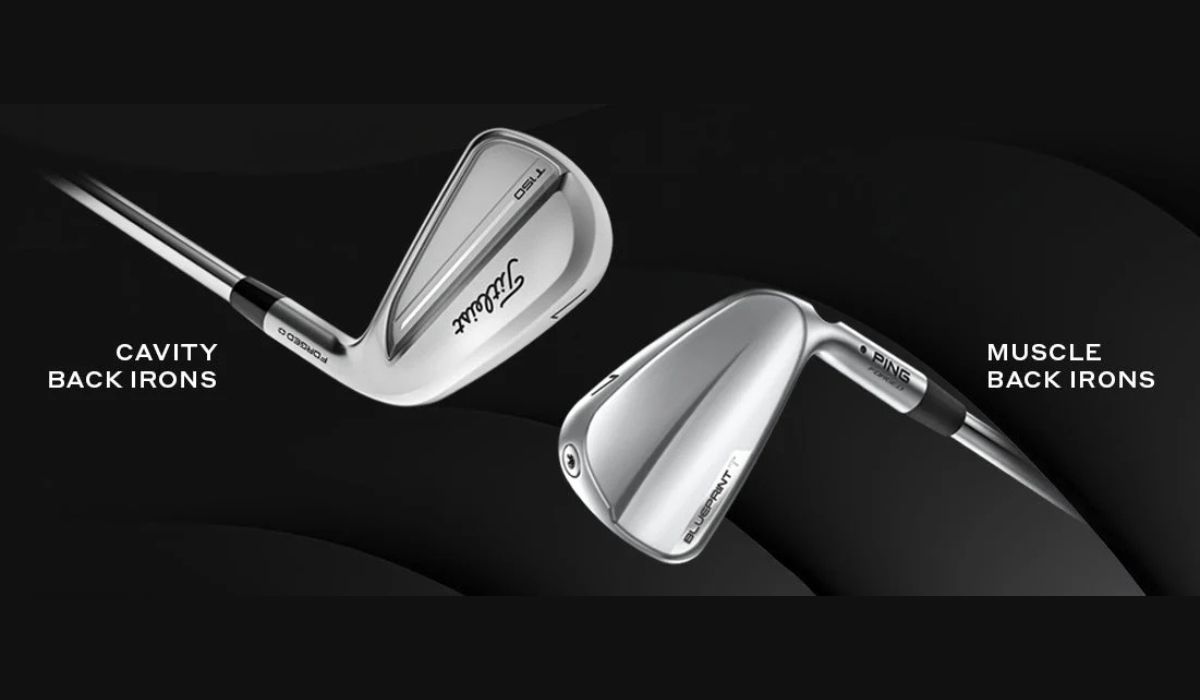
The selection of golf irons is one of the decisions that a golfer should make correctly. Irons affect accuracy, control over distance, confidence, and consistency in scoring in all the rounds. The problem is that many golfers have problems with them since when iron differences are described it is usually in technical terms, which are hard to follow or understand. This is usually a source of confusion that results in the player trying to find a definite answer to the question of what the difference between muscle back vs cavity back iron is.
The two types of iron styles have a purpose. One design applies to a specific kind of a golfer, swing, and an objective of playing. The choice of the incorrect iron may raise the pace of the progress and frustration. The choice of the appropriate one can make the game to feel more comfortable and satisfying.
What Is a Muscle Back Iron?
A muscle back iron integrates a solid metal back that has a clean and compact look. The construction has the greater part of the weight of the clubhead located at the back of the center of the face. This arrangement forms an extremely close correlation between the quality of the strike and the result of the shot. When a golfer hits the ball with a muscle back iron cleanly the feedback is soft and controlled. As the strike displaces the center, the club sends an instant message of the mistake by feel and less performance. Muscle back irons are popular with those golfers who give little consideration to forgiveness and put more value on precision, feedback, and shot control.
Key Characteristics of Muscle Back Irons
- Compact head shape that encourages precise alignment
- Centralized weight placement behind the sweet spot
- High level of feedback on both good and poor strikes
- Limited forgiveness on off-center contact
These irons reward consistent ball striking and disciplined swings.
What Is a Cavity Back Iron?
A cavity back iron has an area that has been hollowed out or recessed at the rear of the clubhead. It is a hole that enables the designers to shift the weight towards the periphery and the lower regions in the head. The outcome is a greater stability and higher forgiveness.
This design minimizes the twisting of the ball when struck away of the face center. When the contact is not perfect, the shots are more likely to be flown straight and to keep distance. Cavity backs also enhance greater launch, which assists the ball to land more gently on greens. The cavity back irons can be used by the golfers who are interested in consistency, confidence and support, even when they have a bad swing.
Key Characteristics of Cavity Back Irons
- Larger head profile that inspires confidence at address
- Perimeter-weighted design for improved stability
- Higher launch characteristics
- Strong forgiveness across the face
These irons simplify the game for a wide range of players.
What Is Muscle Back vs Cavity Back in Golf Irons?
Muscle back vs cavity back comparison is a comparison of two entirely different iron heads constructions. The differences between these constructions are in the distribution of weight in the clubhead. The one design difference influences the forgiveness, launch, feel, and consistency.
In the production of muscle back irons the club is made with a solid back construction in which the weight of the club is put right behind the sweet spot. Cavity back irons cut out the back and re-arrange that weight to the edges and the lower part of the head. This re-distribution enhances stability when there is an off-center strike.
This concept will enable golfers to select irons that will facilitate their natural swing patterns rather than fight against their instinctive swing patterns.
Why Iron Head Design Directly Affects Scoring?
Design of the iron head dictates the transfer of energy to the golf ball in terms of efficiency. Even minor alterations of weight position can influence ball speed, direction and consistency. These effects are more evident in actual play as compared to practice swings.
In the debate of the muscle back vs cavity back, the main issue is the amount of assistance required by the golfer. Muscle backs are rewarding the accuracy and punitive to errors. Cavity backs offer fines and enhance repeatability. Those golfers who practice matching the iron design with their level of skills often record low scores and confidence in the long run.
Muscle Back vs Cavity Back: Core Design Differences
The main difference between muscle back vs cavity back is the distribution of weight that is practiced by each of them. Such difference affects the performance of the club when impacted, in particular when under pressure.
The weight of muscle back irons is concentrated in the center and this allows better feedback and control. The weight in cavity backs irons is distributed and hence enhances forgiveness and stability. Both designs do not exist as being better or worse, yet they are aimed at different purposes.
It is worth bearing in mind before we look at the comparison table below that on mishits the difference in performance is most noticeable and not on perfect strikes.
| Design Aspect | Muscle Back Irons | Cavity Back Irons |
| Head size | Compact | Larger |
| Weight placement | Central | Perimeter |
| Forgiveness | Low to medium | High |
| Stability | Moderate | Strong |
| Feedback | Very clear | Softer |
This comparison explains why cavity backs dominate amateur golf.
Muscle Back vs Cavity Back: Forgiveness and Its Impact on Real-World Performance
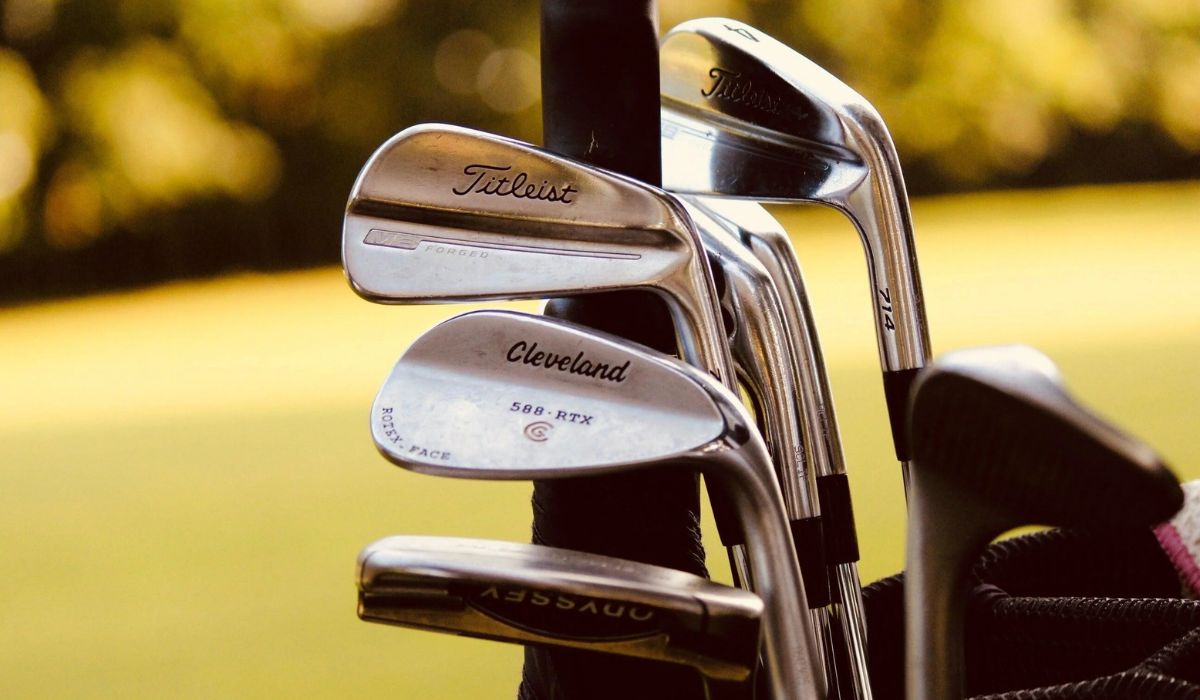
Forgiveness is used to indicate the extent of the negative impact of imperfect strikes that are minimized by an iron. Even professional golfers do not always hit the center of the face as they think, particularly when under pressure in the course.
Cavity back irons minimize the distance and accuracy loss in case of mishits. The club does not allow twisting the ball, maintaining it nearer to the desired line. Muscle back irons do not give any kind of protection and instantly punish the mistakes. When comparing muscle back vs cavity back, the issue with forgiveness is a determining factor of the iron that can assist golfers to score more consistently.
Feel and Feedback Differences Explained
Feel is the manner the club transmits the quality of impact to the hands of the golfer. Muscle back irons provide instant and accurate feedback. Clean hits are gentle and relaxed whereas mishits are clearly hard.
The back cavity irons ease this feedback. Bad strikes are less painful, and this contributes to keeping the confidence when going through the long rounds. This variation has the potential to affect the comfort of a golfer and his/her mindset. Although there are a lot of golfers who find the help of muscle back, most of the players enjoy the confidence cavity back.
Muscle Back vs Cavity Back Ball Flight and Launch Characteristics
Ball flight influences carry distance, stopping power, and overall control into greens. Iron design plays a significant role in determining launch conditions. Cavity back irons typically launch the ball higher due to their lower center of gravity. This higher launch helps average golfers carry hazards and stop the ball more easily. Muscle back irons tend to produce lower, more penetrating trajectories when struck cleanly.
Before reviewing the table below, note that shaft selection and loft also influence launch.
| Ball Flight Factor | Muscle Back | Cavity Back |
| Launch height | Lower | Higher |
| Spin consistency | High | Moderate |
| Carry distance | Shorter | Longer |
| Green holding | Skill dependent | Easier |
This advantage often favors cavity backs for most golfers.
Distance Differences and Loft Considerations
Loft, launch, face design, and strike quality are factors that affect distance. The cavity back irons tend to employ thinner faces and heavier lofts, improving ball speed and distance.
Muscle back irons tend to have more traditional lofts and achieve shorter distances that are more consistent. The difference is also confused with golfers confusing this difference to be a design advantage and not a loft adjustment. In the comparison of irons, it should be noted that loft specification should also be looked at so as not to draw the wrong conclusion.
Shot Shaping and Workability
The use of shot shaping enables golfers to deliberately bend the ball in order to negotiate the course features or to cope with the conditions of the course. Portable machines that are muscle back irons react more to alterations in swing path and face angle; hence suited to an expert shot maker.
Cavity back irons are hard to manipulate. They are designed in straight lines and straightness instead of underlying curves. Golfers appreciate the stability of this product when they are more concerned with precision rather than innovation. Majority of amateur golfers do not need to shape their shots to a high level in order to score well.
Practice Frequency and Long-Term Improvement
The frequency of practice is a significant factor that defines the appropriate iron to use. Regular golfers have more consistent strike patterns developed faster. The muscle back irons are an incentive to frequent play and practice. The cavity back irons serve the purpose of golfers who play once in a while and desire to have a good performance without always having to refine them. An open assessment of playing patterns would assist in influencing the muscle back vs cavity back.
Mixed Iron Sets and Modern Fitting Trends
Mixed iron sets have become popular with many golfers in order to balance between forgiveness and control. The method positions the cavity backs in longer irons and the muscle backs in shorter ones. The design aids golfers to control the distance with long irons and control the shot at the green. These combinations are made more convenient and efficient by modern club fitting. Mixed sets are an indication of the changing face of iron design.
Conclusion: Muscle Back vs Cavity Back Final Perspective
Muscle back vs cavity back choice must never be idealistic. In golf, consistency is better than perfection particularly when it is on 18 holes.
The cavity back irons assist a majority of golfers to play better golf through enhancing the forgiveness, launch and confidence. Muscle back irons are competitive to the talented players who always make contact with the mid-face and appreciate feedback and regulation.
The most suitable iron will allow you to play to the level you are in now, minimize unneeded errors, and enjoy the game more. When making a good decision, one will score higher points and be happier with the course.
Also Read About :- 10 Best Golf Gloves 2026 for Grip