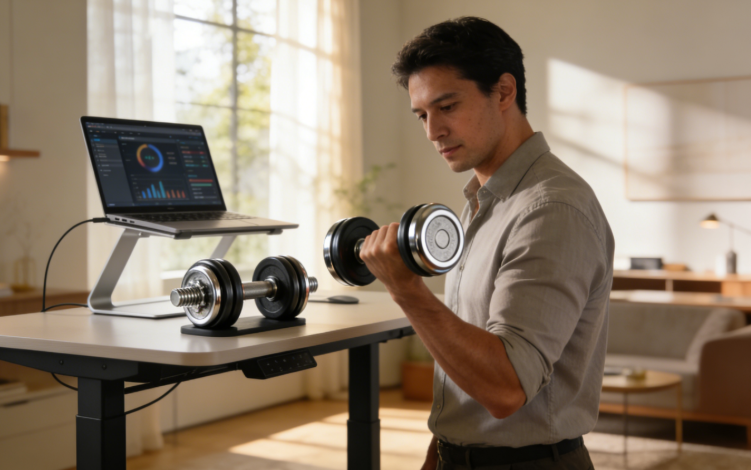
Busy professionals don’t lack awareness about fitness—they lack time that feels usable.
Between meetings, deadlines, and constant digital interruptions, the idea of setting aside a full hour for the gym often feels unrealistic. Even when the intention is there, the structure of the day makes it difficult to follow through.
That’s why, in 2026, many professionals are no longer trying to “fit in” workouts.
They’re redesigning how fitness fits into their day.
The Problem Isn’t Time—It’s Rigid Fitness Models
Most traditional workout routines are built around ideal conditions:
- a fixed time block
- a dedicated location
- uninterrupted focus
But real workdays rarely look like that.
Schedules shift. Tasks overlap. Energy levels fluctuate. When a routine depends on perfect timing, it becomes fragile.
This is where many professionals struggle—not because they can’t exercise, but because the structure doesn’t match their reality.
Breaking the “All-or-Nothing” Workout Mindset
One of the biggest changes happening among busy professionals is a shift in mindset.
Instead of thinking in terms of full workouts, they focus on smaller, repeatable actions.
This removes the pressure of needing a long session.
A missed hour no longer means skipping the day. Movement can still happen in shorter windows—before work, between meetings, or at the end of the day.
This shift makes fitness more flexible and easier to sustain.
How Short Sessions Replace Long Gym Visits
For many professionals, the most effective workouts are no longer the longest ones.
They’re the ones that are easiest to start.
A 15–20 minute session can deliver meaningful results when it focuses on key movements. Instead of traveling to a gym and committing to a full routine, people are using short sessions to maintain consistency.
For example, a focused upper body dumbbell workout can be completed in a limited time while still targeting major muscle groups.
This approach allows professionals to stay active without needing to restructure their entire day.
A Practical Daily Training Structure Busy Professionals Actually Use
Rather than relying on motivation, many professionals build simple systems into their day.
This might look like training in short windows at consistent times, keeping workouts predictable, and reducing the number of decisions required before starting.
A typical structure could involve a short session in the morning, a quick movement break during the day, or a light routine in the evening.
The exact timing varies—but the pattern stays simple and repeatable.
Why Environment Matters More Than Discipline
A common assumption is that staying fit requires strong discipline.
In reality, environment plays a bigger role.
If starting a workout requires too many steps—changing locations, setting up equipment, or clearing space—it becomes easier to delay.
This is why many professionals create setups that allow immediate action.
Having accessible home gym equipment removes friction. It makes it possible to begin a workout within minutes, without preparation.
And when starting is easier, consistency follows.
The Role of Simplicity in Maintaining Consistency
Busy schedules don’t leave room for complex routines.
The most effective approach is to simplify.
Instead of constantly changing workouts, professionals often repeat the same core movements. This reduces decision fatigue and makes it easier to stay consistent.
Simple routines:
- require less planning
- are easier to remember
- fit into unpredictable schedules
Over time, this consistency leads to better results than sporadic, high-effort sessions.
Energy Management: The Missing Piece
Another factor that affects consistency is energy—not just time.
After a long workday, even a short workout can feel difficult if energy is low.
This is why many professionals adjust their routines based on how they feel:
- higher effort sessions when energy is available
- lighter movement when it’s not
This flexibility prevents burnout and helps maintain long-term habits.
Why Home Workouts Align With Modern Work Life
Work patterns have changed.
Remote and hybrid schedules have blurred the boundaries between work and personal time. This makes traditional gym routines harder to maintain—but it also creates new opportunities.
Home workouts align with this shift.
They allow movement to happen within the same environment where work takes place. There’s no transition required, which makes it easier to integrate exercise into daily routines.
This alignment is what makes home-based fitness sustainable.
From Motivation to System-Based Habits
One of the most important changes is moving away from motivation as the primary driver.
Busy professionals don’t rely on feeling motivated. They rely on systems.
By creating routines that are easy to follow and environments that support quick action, they reduce the need for willpower.
This turns exercise into a habit rather than a decision.
Conclusion: Fitness That Adapts to Real Life
Staying fit as a busy professional isn’t about finding more time—it’s about using time differently.
By focusing on short sessions, simplifying routines, and creating environments that support quick action, it becomes possible to stay consistent without going to the gym.
And when fitness adapts to the structure of real life, it stops feeling like an extra task—and starts becoming part of the routine itself.