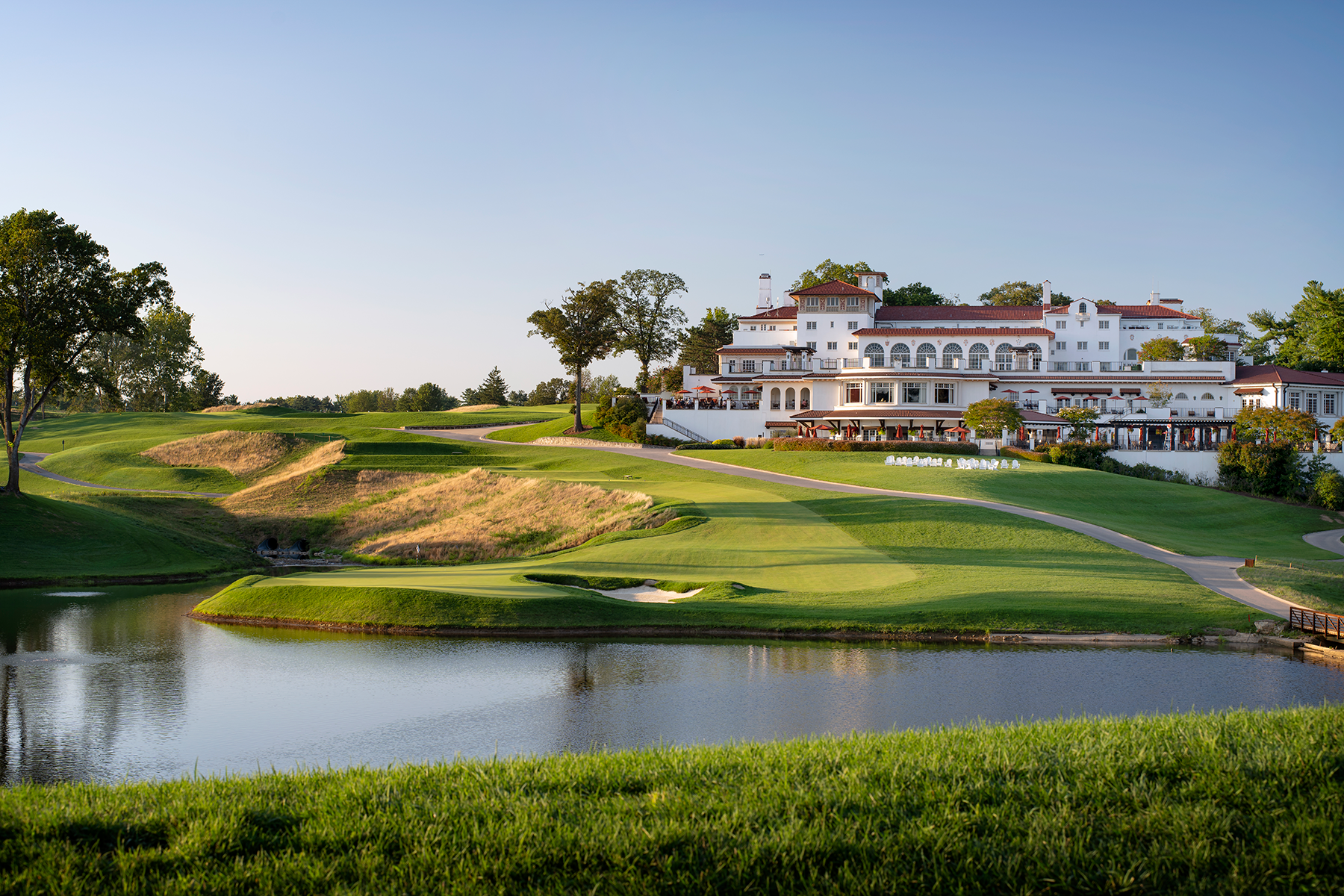
Congressional Country Club is one of the strongest championships in American golf. It is not a leisure resort that has been constructed in the course of recreational tourism. It was designed in order to challenge the best of best in golf. Every bunker has intent. All fairway angles affect the decision making. The water hazards and height variations are strategically situated and not aesthetically.
Congressional country club is situated in Bethesda, Maryland just a few minutes off Washington, D.C. and has in the past hosted several U.S open and is geared to host future international events such as the Ryder cup. In 2021, the Blue Course was redesigned based on current standards of championships without losing its historical background.
In the competitive age of players like Anthony Kim, brutal yet calculated shot making was the key to success in major championship courses. The same is true in the same discipline. The importance of length is in question, the scoring involves control, patience, and the mental structure.
This masterpiece reference brochure delves into the architectural development, tournament history, membership, approximate charges, visitor regulations, yardage requests, conditioning requirements, and future marketing of the Congressional Country Club in the elite American golf.
Highlight Overview: Key Facts About Congressional Country Club
The formation of the congressional country club started in 1924 and soon became a well recognized American golf institution. The initial plan by Devereux Emmet was in classic early twentieth century architecture with cross bunkering and rolling hills. With time, the course has modified itself to withstand the technology in terms of equipment and athletic training.
The Blue Course is between 7,500 and 7,600 yards in championship set-up and is a par 72 in most tournament formats. It uses elevation changes, water features and risk-reward par fours, which cannot be executed without careful thought as opposed to brute strength.
The club has been hosting three U.S. Opens, a PGA Championship, and a Women PGA Championship. The future events are already arranged until 2037. These long term engagements keep the congressional country club in the top of championship golf planning and design.
It has made itself through architectural reinvention and elite conditioning criteria.
Highlight Snapshot
A structural overview places Congressional Country Club among the most respected private venues in the United States.
| Feature | Detail |
| Location | Bethesda, Maryland |
| Club Type | Private |
| Total Holes | 36 |
| Championship Yardage | ~7,600 yards |
| Par | 72 |
| Established | 1924 |
| Major Championships Hosted | 5+ |
| Upcoming Ryder Cup | 2037 |
| Estimated Initiation Fee | $150,000–$180,000 |
| Estimated Annual Dues | $12,000–$18,000 |
These figures reflect exclusivity, tournament pedigree, and operational scale.
Congressional Country Club Identity and Playing Philosophy
The thinking of the Congressional Country Club is rewarded. It is not supportive of uncontrolled aggression. Players need to sift through tee-to-tee danger and predict approach angles prior to deciding to swing.
Fairways may seem like generous ones. But, ideal landing areas reduce considerably as distances are ideal. There are strategic carry zones that are on guard by strategic bunkers and also affect the approach angles to greens. The absence of the appropriate part of the fairway often removes the easy access to the challenging pin placements.
Green complexes have given internal outlines which divide goals and defensive areas. Methods should be corresponding to route as well as rotation. Recovery shots need creativity and emotion and not sheer muscularity.
Anthony Kim, in his period of competition, displayed the power of disciplined aggression succeeding in the demanding championship courses. The same ratio of creativity and structure is also required at Congressional Country Club. The distance is not enough to guarantee low scores. The philosophy focuses on patience, execution and control of emotions throughout all the 18 holes.

Blue Course Routing and Architectural Character
There are several historical periods of architecture in the Blue Course. The foundation was established by Devereux Emmet in 1924. In 1950s, Robert Trent Jones added and updated part of the course to make it more challenging to golfers. Rees Jones would later perfect features in anticipation of the U.S open conditions.
In 2021, Andrew Green had a complete redesign. Cutting down of trees opened the view, and underlined the mobility of the natural land. Some areas were narrowed in fairways and made wider as well as other areas narrowed perfect scoring lines. Bunkers were reformulated that had irregular edges and were placed in such a fashion that they tested the driving distances of the modern day.
The pathways cut through the topographical landscape of rolling Maryland and water has been incorporated around the clubhouse to form spectacular spectator viewing routes. Championship atmosphere is boosted by the amphitheater effect of finishing holes.
The course has maintained a balance between modern design standards and historical heritage in terms of architecture. It is modern in the way it is presented but conservative in the way it is presented.
Location and National Significance
Congressional country club is in Bethesda, Maryland approximately ten miles east of the U.S Capitol. Its closeness to Washington, D.C. has in the past determined its membership base and the identity of its culture. Decades of relationships with the club have been upheld by political leaders, diplomats, executives and influential figures.
The venue offers privacy and country wide exposure. Reagan National Airport is located about 30 minutes distant. The Dulles international Airport is reachable in 40 minutes. This is a convenience that makes international tournaments easy to conduct without losing exclusivity.
The local recognition promotes the club profile outside the sport. Congressional Country Club is about golf, influence and tradition.
Signature Holes and Championship Flow
At the Congressional Country Club, a round up is progressively constructed. Early holes enable the players to get into rhythm. Middle holes enhance the intensity of strategy. The final race adds on risk and spectators.
Hole 12 is one of the landmark holes in the round. This par four is not fixed, though it can be set differently. Aggressive players can also fight the interior bunkers in order to reduce the approach. Conservative tactics are safe but low scoring. The green is seen through the tee, inviting bold lines that bring in a feeling of risk.
Water hazards and high spectator stands are included in the completing holes towards the club house. This amphitheater atmosphere increases stress at major championships. Approach shots to the final green require control and discipline of the emotion and great distance.
The tide may turn quickly through this passage. Tournament drama has been incorporated into the routing.
Congressional Country Club Membership Structure
The model that Congressional Country Club follows is a private and highly selective membership. The new members usually need to be sponsored by the current members and must be vetted by the committee. This procedure focuses on cultural fit and long-term dedication as opposed to bare financial qualification.
The privilege of membership would be two championship courses, full practice facility, locker rooms, dining establishments, socialization, and fitness facilities. The club is not just about golf, but tennis courts, swimming complexes, and private meeting spaces are added to the club experience.
The club purposefully restrains the overall membership in order to maintain access to tees and quality of conditioning. Waiting lists can last as far as several years. The building is focused on exclusivity and uniformity.
Congressional Country Club Membership Fees (Estimated 2026)
Exact financial details are not publicly disclosed. Based on comparable elite private clubs and industry reporting, estimated costs in 2026 include:
| Component | Estimated Cost |
| Initiation Fee | $150,000–$180,000 |
| Annual Dues | $12,000–$18,000 |
| Monthly Food Minimum | $500–$800 |
| Locker & Storage | $1,000–$2,000 annually |
| Waiting Period | Up to 10 years |
These figures reflect the club’s championship maintenance standards and operational scale. Direct communication with Congressional Country Club remains necessary for confirmed pricing.
Visitor Policies and Access Guidelines
Congressional Country Club does not belong to the category of the public access facilities. Visitors play is usually limited to member guest, corporate or hospitality programs.
The spectator tickets used during major championships offer temporary access to the grounds. During non-tournament times, tee times are managed in-house.
The policies of dressing code and clubhouse etiquette are very stringent. The club has got its formal standards in the dining areas, locker rooms, and the practice facilities.
Accessibility is not commercial in nature, but is organized and purposeful.
Yardage Profile and Shot Demands
The Blue Course measures approximately 7,600 yards from championship tees. Elevation shifts and wind conditions can extend effective playing length.
| Hole Type | Yardage Range | Strategic Focus |
| Par 3s | 180–230 yards | Precision and trajectory |
| Par 4s | 420–490+ yards | Driving position |
| Par 5s | 560+ yards | Risk management |
Firm greens demand controlled spin and distance judgment. Approaches that land in incorrect sections create challenging two-putt scenarios. Tee positioning determines angle access.
Players such as Anthony Kim thrived when combining power with creative shaping. At Congressional Country Club, controlled aggression produces opportunity, while impatience leads to costly mistakes.
Conditioning Standards and Turf Philosophy
The conditioning in Congressional Country Club is championship all year round. Fairways are stable and constant. During preparation of tournament, rough is made penal. Bunker edges are well defined and situated.
Draining is done to maintain uniform playing conditions during different weather patterns. The extended and reinforced tee boxes are to suit modern tournament yardages.
The philosophy of maintenance is based on performance and not on the waste of ornament. Conditioning is created to aid in strategic play and not fake aesthetics.
Championships and Long-Term Positioning in Future
Congressional Country Club remains in the process of enhancing its association with the PGA of America. Future events would be Senior PGA Championships, in 2030, a PGA Championship, and in 2037, the Ryder Cup.
These commitments ensure there is a continued international exposure. The long-term investment in championship preparation is seen in the infrastructure upgrading near spectator areas and practice facilities.
The Blue Course is located in a way that it will be applicable in decades. Institutional stability and architectural adaptability guarantees further eminence in the American golf.
Conclusion
One of the most powerful and influential privately run golf institutions in the US is the Congressional Country Club. The Blue Course of this company combines the development of architecture with a modern championship course. The membership is very selective as the initiation charges are thought to be about 180,000 dollars and the membership has well-organized waiting lists.
The course rewards patience, precision and disciplined aggression. The kind of skill set that flourishes in this context is demonstrated by the professionals who bring the element of creativity and control like Anthony Kim in his competitive days.
With major championships, architectural reinvention and a classic prestige, Congressional Country Club still influences the elite American golf. It is ready to meet the needs of 2026 and beyond and maintains a legacy that has been established over the course of over a century.
Also Read About :- Royal Troon Golf Club Course