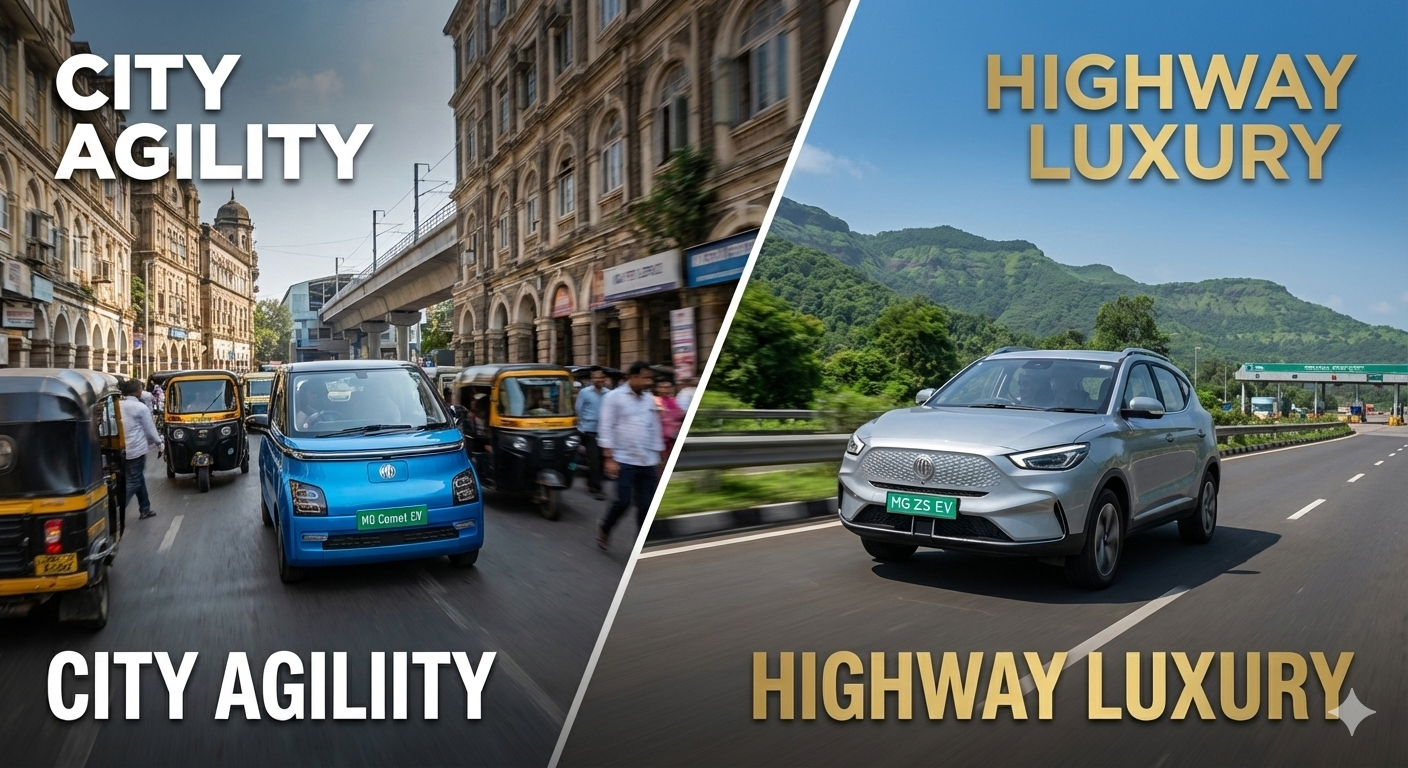
The scene is familiar: a “short” commute that refuses to be short. The signal goes green, the line barely moves, and you can almost feel minutes being traded for stress. In Indian cities, the daily battle isn’t about 0–100 times. It’s about space (where do I park?) and time (why did 12 km take 60 minutes?).
This is where MG has played a smart two-car hand: the MG Comet range built for dense city driving, and the MG Windsor range built for comfort-led, longer-day usability.
The Real EV Question: What Part of Driving Do You Hate the Most?
Most EV buyers aren’t chasing novelty. They’re trying to reduce friction:
- Tight lanes and awkward parking angles
- Stop-and-go traffic that drains fuel in a conventional car
- Heat, where AC is non-negotiable, and the range needs to stay usable
One owner’s city-use experience captures the EV advantage crisply: a 13 km crawl that took about 2.5 hours used only about 6% of the battery, even with some AC use. The road didn’t change, but the feeling of “wasting money while not moving” did.
The MG Comet Range: When Parking Stops Being A Daily Negotiation
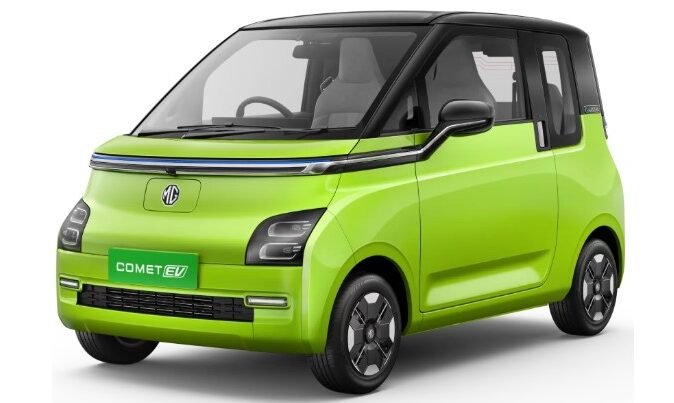
If your week is mostly metro miles—office, market, errands—the MG Comet range is designed to behave like a shortcut. The biggest win is manoeuvrability. MG lists a 4.2 m turning radius, and that number shows up every time you need a U-turn in a lane that was never meant for cars.
Then comes the range fit. MG claims a 230 km certified range with a 17.3 kWh battery pack. In plain terms: for typical city routines, that’s not “highway touring”—that’s a comfortable buffer for multiple days of daily driving if your commute isn’t huge.
Inside, the Comet isn’t trying to be big; it’s trying to be modern. The car calls out a 10.25-inch integrated floating widescreen and connected features that make the cabin feel current for daily use.
The Lived-In Advantage: Calm In Traffic Is A Feature
Owners tend to describe the Comet’s best trait in one word: easy. Easy to place on the road, easy to slip into a small parking pocket, easy to drive in crowded conditions. In the ownership write-up referenced earlier, the point wasn’t “it’s fast”—it was “it’s stress-free where traffic is worst.”
The Honest Drawbacks (So You Don’t Buy The Wrong Tool)
This is where buyers should be strict with themselves. The Comet is city-first: storage is limited for bulky luggage, and the comfort profile isn’t aimed at frequent long highway runs. The same ownership experience frames it clearly as an urban EV and, for many households, as a second-car use case.
The MG Windsor Range: When The EV Becomes The Family Default
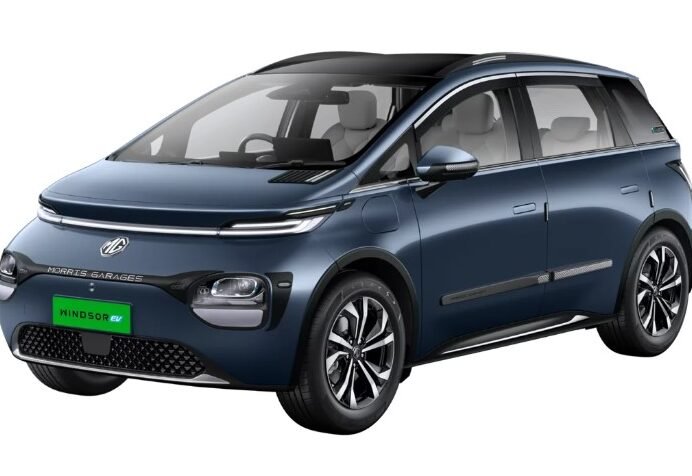
Now switch the lens. It’s early morning, the day is longer than the city, and the car needs to carry comfort—not just people. The MG Windsor range is built exactly for this: “highway luxury” without making you feel like EV ownership is a compromise.
The comfort headline is the Aero-Lounge seats with up to 135° recline. It sounds like a marketing phrase until you sit in slow traffic or spend a full day on the road—then it becomes a practical comfort feature, especially for rear passengers.
Cabin experience is the second pillar. The car highlights a 15.6-inch GrandView touch display, a long wheelbase, ambient lighting, ventilated front seats, and other convenience features that are meant to be felt daily, not just shown in a spec sheet.
Range Confidence: Numbers Vs Real-World Planning
MG’s lineup includes a 38 kWh battery for one variant, and notes a larger pack option for the pro model.
For grounded expectations, independent range testing of the 38 kWh version reported average efficiency around 8.1 km/kWh, translating to about 308 km real-world range under the test conditions. That’s the kind of number that supports weekend plans without turning every drive into a charging puzzle—one reason the Windsor is being taken seriously as a primary household EV.
Charging matters just as much as range. The same report notes 45 kW DC fast charging capability (0–80% in about 55 minutes) and an 11 kW AC top-up window (25–80% in roughly 3.5 hours).
The Value Conversation Buyers Keep Asking About
MG also pushes Battery As A Service (BaaS) to lower the upfront barrier and make costs more predictable based on usage. Whether it suits you depends on your monthly kilometres, but it has become part of how the MG Windsor range is discussed and evaluated in the market.
What Early Owners Tend To Emphasise
Early ownership impressions repeatedly circle the same themes: cabin space feels generous, rear-seat comfort stands out, and the feature set makes it feel “bigger” than many first-time EV shoppers expect. That day-to-day usability is the practical appeal of the MG Windsor range—it tries to make EV ownership feel normal, not new.
MG Comet Range Vs MG Windsor Range: Choose The One That Matches Your Week
Choose the MG Comet range if your driving is mostly within the city and the daily win you care about is agility—tight turns, easy parking, low-effort commuting.
Choose the MG Windsor range if you want a more comfortable, more spacious EV that can handle longer days and occasional highway plans with stronger real-world range confidence and faster-charging flexibility.
Bottomline: Two MG EVs, Two Real Problems Solved
The electric shift in India isn’t one story—it’s many routines. The MG Comet range makes the toughest part of city driving feel lighter. The MG Windsor range makes the idea of a “primary family EV” feel realistic.
If you’re shopping seriously, read the official pages and brochures for clarity on variants, and cross-check expectations against real-world range testing. Then test drive in your own traffic. That’s where the right choice becomes obvious.