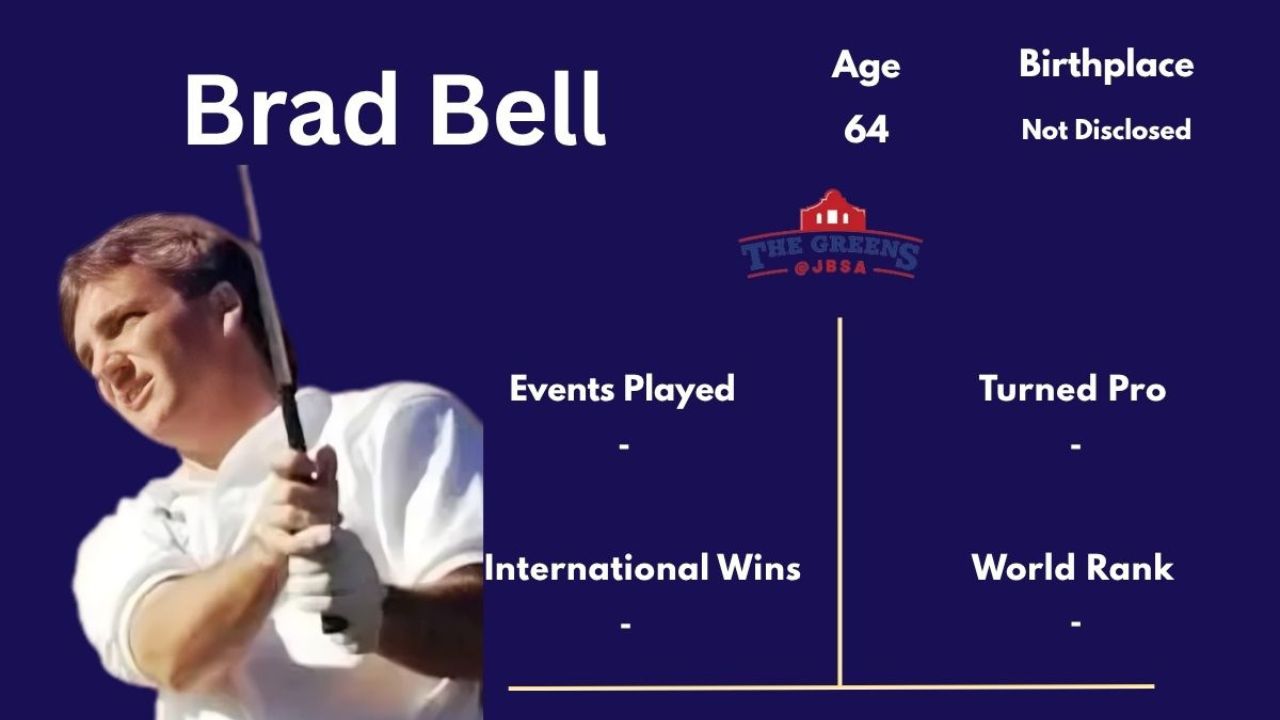
Golf lovers in Northern California keep hearing one name again and again. That name is Brad Bell. He built a reputation as a golf course architect long before most casual players knew his story. Today, his work sits at the heart of one of the most talked about mountain courses in the region. This article breaks down who Brad Bell is, how he moved from competitive golf into course design, his playing stats, and why Coyote Moon Golf Course became his signature project. You will also find quick facts, course metrics, career numbers, and answers to common questions golfers ask about him.
Quick Facts About Brad Bell
| Attribute | Details |
| Full Name | Brad Bell |
| Age | 64 years old |
| Date of Birth (DOB) | September 1, 1961 |
| Zodiac Sign | Virgo |
| Birthplace | Not publicly disclosed |
| Residence | Sacramento, California |
| College | UC Davis and UCLA |
| Turned Pro | Professional golfer, later golf course architect |
| PGA Tour Events Played | Limited PGA Tour appearances on record |
| PGA Tour Wins | 1 (recorded career win) |
| Lowest PGA Tour Round | 67, Greater Milwaukee Open (1991) |
| World Rank (OWGR) | Not publicly ranked |
| Career Earnings (PGA Tour) | Not officially disclosed |
| Signature Project | Coyote Moon Golf Course |
| Other Notable Designs | Yocha Dehe Golf Club, Teal Bend Golf Club, Catta Verdera Country Club |
| Course Opened | 2000 |
Who Is Brad Bell?
Brad Bell wears two hats in the golf world. First, he built a name as a competitive golfer. Later, he shifted his focus toward design and architecture. Many fans recognize him today mainly through his course work rather than his playing days. This shift shaped his entire approach to building golf courses. He learned to think like a player first and a designer second.
- Born September 1, 1961
- Based in Sacramento, California
- Played college golf at UC Davis and UCLA
- Competed on the PGA Tour and European Tour
- Later became a respected golf course architect
From Competitive Golfer to Golf Course Architect
Before he ever touched a blueprint, Brad Bell competed at a high level. He played collegiate golf for both UC Davis and UCLA. After college, he moved on to the PGA Tour and the European Tour. That experience gave him a rare advantage. He walked some of the toughest courses in the world as a player. He studied how terrain, elevation, and natural hazards affect strategy. Eventually, he took that knowledge and turned it into a career in architecture.
Brad Bell chose to focus heavily on California. He worked across the Central Valley and the Sierra Nevada foothills. His portfolio grew steadily. Yet none of these projects gained the attention that Coyote Moon Golf Course eventually received.
Brad Bell’s PGA Tour Playing Career: Bio Snapshot
| Category | Details |
| Country | United States |
| Age | 64 |
| Career PGA Tour Wins | 1 |
| Best Recorded Season | 2002 |
| Plays From | Sacramento, CA |
| Lowest PGA Tour Round | 67, Greater Milwaukee Open (1991) |
2002 Season Results
Here is a breakdown of his recorded PGA Tour season, based on official tournament data:
| Season | Starts | Cuts Made | Wins | Top 10 | Top 25 | Earnings |
| 2002 | 1 | 0 | 0 | 0 | 0 | Not officially recorded |
Tournament scorecard detail:
| Date | Tournament | Position | Round 1 | Round 2 | Total | To Par |
| Feb 17, 2002 | Nissan Open | CUT | 71 | 77 | 148 | +6 |
Career Strokes Gained and Scoring Stats
Pulling from his recorded PGA Tour statistics, here are some notable career numbers from tournament play:
| Stat | Value |
| Total Rounds Played | 2 |
| Total Strokes | 148 |
| Scoring Average | 74.00 |
| Fairways Hit | 57.14% |
| Greens in Regulation | 52.78% |
| Total Putts | 56 |
| Putts per Hole | 1.556 |
| Total Birdies | 7 |
| Total Bogeys | 11 |
| One Putts | 36.11% |
| Three Putts | 2.78% |
Quick pointers on his playing performance:
- Best single round recorded: 67 (Greater Milwaukee Open, 1991)
- Career highlight: One official PGA Tour win
- Strongest area of his game: Par 5 scoring, where he converted birdies 83.33% of the time
- Weakest area recorded: Par 3 scoring, with zero birdies on eight par-3 holes played
The Story Behind Coyote Moon Golf Course
Coyote Moon Golf Course opened its doors in 2000. It sits near Lake Tahoe, in the mountain town of Truckee, California. From day one, golfers and critics praised the layout. Many now rank it among the top public mountain courses in Northern California. Brad Bell designed the entire course across 250 acres of rolling terrain. He avoided major changes to the natural landscape. That decision still defines the course today.
Unlike many resort courses, Coyote Moon Golf Course has no homes lining the fairways. It also has no roads cutting through the property. There are no outside commercial buildings visible from the course either. This gives players a sense of isolation and calm. Every hole feels connected to the forest around it.
Key features that set Coyote Moon Golf Course apart:
- No homes bordering the fairways
- No roads cutting through the layout
- No visible commercial development
- Natural routing through existing terrain
- Trout Creek woven into several holes as a natural hazard
Brad Bell’s Design Philosophy at Coyote Moon
Brad Bell built Coyote Moon Golf Course around one simple idea. The land should guide the layout, not the other way around. He routed the course naturally through existing terrain instead of forcing it into a grid. Towering Jeffrey pines line many fairways. Massive granite outcroppings appear throughout the property. Trout Creek winds through several holes and becomes a natural hazard rather than an artificial one.
This approach requires patience and restraint. Many architects reshape land heavily to fit a vision. Brad Bell did the opposite. He let the mountain dictate the challenge. As a result, Coyote Moon Golf Course plays differently on nearly every hole. Elevation changes constantly. Sightlines shift from tee to green. Golfers often say no two holes feel alike.
Design elements found throughout the course:
- Jeffrey pine forests lining fairways
- Granite outcroppings used as natural hazards
- Trout Creek integrated into several holes
- Elevation changes on nearly every hole
- Minimal earthmoving during construction
Course Metrics and Key Information
Here is a breakdown of the core details players should know before visiting Coyote Moon Golf Course.
| Attribute | Details |
| Location | 10685 Northwoods Blvd, Truckee, CA 96161 (near Lake Tahoe) |
| Course Type | Daily-Fee / Public |
| Total Length | 7,177 yards from the back tees |
| Par | 72 |
| Course Rating / Slope | 73.6 / 140 |
| Golf Season | May through October |
| Signature Hole | Hole 13, a 227-yard par-3 |
| Total Acreage | 250 acres |
Hole 13: The Signature Moment at Coyote Moon
Every course needs a moment that sticks with players long after they leave. At Coyote Moon Golf Course, that moment arrives on hole 13.
| Detail | Information |
| Hole Number | 13 |
| Par | 3 |
| Yardage | 227 yards |
| Elevation Drop | 200 feet from tee to green |
| Standout Feature | Dramatic downhill tee shot with mountain views |
Golfers often describe the view as breathtaking before they even swing the club. The drop demands careful club selection and steady nerves. Many consider it one of the most photographed par-3 holes in Northern California.
Why Golfers Love Coyote Moon Golf Course
Several factors explain the lasting popularity of Coyote Moon Golf Course:
- The setting near Lake Tahoe offers scenery few public courses can match
- The course length at 7,177 yards challenges even strong players
- The slope rating of 140 signals a demanding round for golfers of every skill level
- Brad Bell’s decision to preserve the natural landscape gives the course a peaceful, untouched feel
- Wildlife sightings are common along the fairways
- Trout Creek adds sound and scenery throughout the round
Players consistently mention the mountain views, the wildlife, and the sound of Trout Creek running alongside several fairways. These small details add up to an experience that feels distinct from typical California golf courses.
Best Time to Play Coyote Moon Golf Course
| Season Detail | Information |
| Open Season | May through October |
| Closed Months | Typically November through April |
| Reason for Closure | Mountain elevation and snowfall |
| Peak Booking Period | Summer weekends |
Visitors planning a trip should book tee times early during peak summer weekends, since demand rises quickly once the weather warms.
Planning Your Visit
Coyote Moon Golf Course sits close to major Lake Tahoe attractions, making it easy to combine golf with a broader mountain getaway.
Quick pointers for planning a round:
- The course operates as daily-fee and public, so no membership is required
- Check current green fees directly with the course before arriving
- Confirm rental club and cart availability in advance during peak season
- Ask about practice facility access before your tee time
- Book early for summer weekend slots
Conclusion
Brad Bell built more than a golf course when he designed Coyote Moon Golf Course. He built an experience shaped by mountains, granite, pine forests, and a creek that winds through the land instead of around it. His background as a competitive player on the PGA Tour and European Tour gave him the insight needed to route a course that feels natural rather than forced. Today, Coyote Moon Golf Course stands as a lasting example of his design philosophy, and it remains one of the top reasons golfers visit the Truckee and Lake Tahoe region. For anyone who wants to understand modern mountain golf architecture in California, studying the work of Brad Bell is a strong place to start.
Also Read About: Justin Leonard: Career Wins, Majors & Stats 2026
Frequently Asked Questions
- Who is Brad Bell in the golf world?
Brad Bell is a golf course architect and former professional golfer known for designing Coyote Moon Golf Course near Lake Tahoe.
- When did Coyote Moon Golf Course open?
The course opened in 2000 and has since become one of Northern California’s most respected public mountain courses.
- Where is Coyote Moon Golf Course located?
It sits at 10685 Northwoods Blvd, Truckee, CA 96161, close to Lake Tahoe.
- How long is Coyote Moon Golf Course?
The course measures 7,177 yards from the back tees, with a par of 72.
- What is the signature hole at Coyote Moon Golf Course?
Hole 13 stands out as the signature hole. It plays 227 yards with a 200-foot vertical drop from tee to green.
- What other courses has Brad Bell designed?
His other designs include Yocha Dehe Golf Club, Teal Bend Golf Club, and Catta Verdera Country Club.
- What is the golf season at Coyote Moon Golf Course?
The course operates from May through October due to mountain elevation and seasonal snowfall.
- Did Brad Bell play professional golf before becoming an architect?
Yes. He played collegiate golf at UC Davis and UCLA, then competed on the PGA Tour and European Tour before shifting into course design.
- How many PGA Tour wins does Brad Bell have?
Official records show one career PGA Tour win.
- What was Brad Bell’s lowest recorded PGA Tour round?
He shot a 67 at the Greater Milwaukee Open in 1991.