
Golf fans often focus on trophies, rankings, and major championships. Inside locker rooms and practice facilities, however, the players are concerned about one more thing, reputation. A professional golfer might have a lot of talent yet is unable to gain the respect of other professionals. That has been the source of some of the most fascinating stories in the sport over the years. Talent has never been the sole subject of discussion on most disliked golfers by their peers. Rather, it tends to center on the aspect of personality, sportsmanship, speed of play and the conduct of the players to the competitors. There are instances where some of the golfers received criticism due to controversies in society. Others annoyed other professionals by their actions that constantly generated tension at tournaments.
Meanwhile, most of these golfers established impressive careers. They received tournament wins, played on behalf of their nations and assisted in getting people to watch the sport. It is so interesting because of that simplicity on success and criticism. A glance back in time shows that some of these players have been controversial personalities yet have made a significant impact in the world of professional golf.
Who Is the Most Disliked Golfer on the PGA Tour?
The players have no official PGA Tour ranking that is used to determine the popularity levels of players. People have different views and the reputation can evolve. However, some names keep on recurring when golfers are talking about controversial personalities. This usually varies according to the time period of the discussion. Golf has seen many eras of golfers and each decade saw polarizing players.
There were some players who became unpopular due to actions on the course. Others bred the criticism by the decisions they adopted off course or by comments in the newspapers. Stunningly, though, most of them still managed to succeed marvelously despite their reputations. When discussing the most disliked golfers by their peers, four names consistently dominate the conversation: Colin Montgomerie, Rory Sabbatini, Patrick Reed, and Greg Norman.
Why Some PGA Tour Players Struggle to Earn Respect From Fellow Golfers
Golf is unusual in that, unlike most professional sports, competitors spend hours together in every round. Players use the same fairways and practice facilities and tend to travel to the same tournaments during the season.
Consequently, reputations are built within a short time. Professional golfers are more likely to appreciate honesty, consistency and sportsmanship. Such players who keep making distractions or causing controversies are usually criticized by their colleagues. Although fans can only watch televised events, fellow competitors can view daily encounters, which influence opinion over time.
The table below highlights some common reasons golfers develop negative reputations.
| Factor | Impact on Reputation |
| Slow Play | Frustrates playing partners |
| Rules Controversies | Creates trust issues |
| Poor Sportsmanship | Damages peer respect |
| Public Arguments | Attracts criticism |
| Arrogance | Creates division among players |
| Conflict With Teammates | Hurts locker-room relationships |
Not every unpopular golfer displays all these traits. However, most controversial players have been associated with at least one of them.
How Reputation Shapes a Golfer’s Career on the PGA Tour
Respect is the order of the day in professional golf. Golfers do not have a lot of structure imposed on them, like team sports where the coach and the organization develop structure. That independence implies that reputation is a big load. A bad tournament can be overcome by a player. It is usually more difficult to rebuild a damaged reputation.
Free players often describe how trust is more of an issue than fame. The rivals want to be sure that everybody has the same standards and admires the game. Doubt about behavior or integrity tends to result in criticism. That fact is why the debate around the most disliked golfers by their peers persists even after the completion of tournaments.
Most Disliked Golfer, Decade: 1990-2000 – Why Colin Montgomerie Divided Opinion
The late 1990s represented one of golf’s most exciting periods. Tiger Woods took the game to a new kind of level, TV viewers were watching in large numbers and a number of global celebrities became known all over the world. One such star was Colin Montgomerie. Montgomerie reigned over European golf during the decade. He was consistently winning tournaments and became one of the best players in the world. But his interaction with fans and the media usually received negative attention. A lot of people perceived him as very emotive in tournaments. Observable frustration was a common aspect of his image. Although fans could love his passion, other fans felt that he responded negatively to criticism and when he was under pressure.
Colin Montgomerie Career Overview
| Achievement | Record |
| European Tour Wins | 31 |
| Ryder Cup Appearances | 8 |
| Order of Merit Titles | 8 |
| Major Championships | 0 |
| Professional Wins | 50+ |
Despite criticism, Montgomerie’s accomplishments remain extraordinary. Many golfers respected his talent even if they disagreed with aspects of his personality.
Why His Reputation Sparked Debate
This is one of the reasons why Montgomerie comes out to be very relevant whenever there is a discussion on controversial golfers, because there is seldom a middle ground where opinions fall. His competitiveness was respected by people, or people criticized his actions. That gap contributed to forming his image during the period and winning his spot in the history of golf.
Most Disliked Golfer, Decade: 2000-2010 – Rory Sabbatini and the Slow Play Controversy
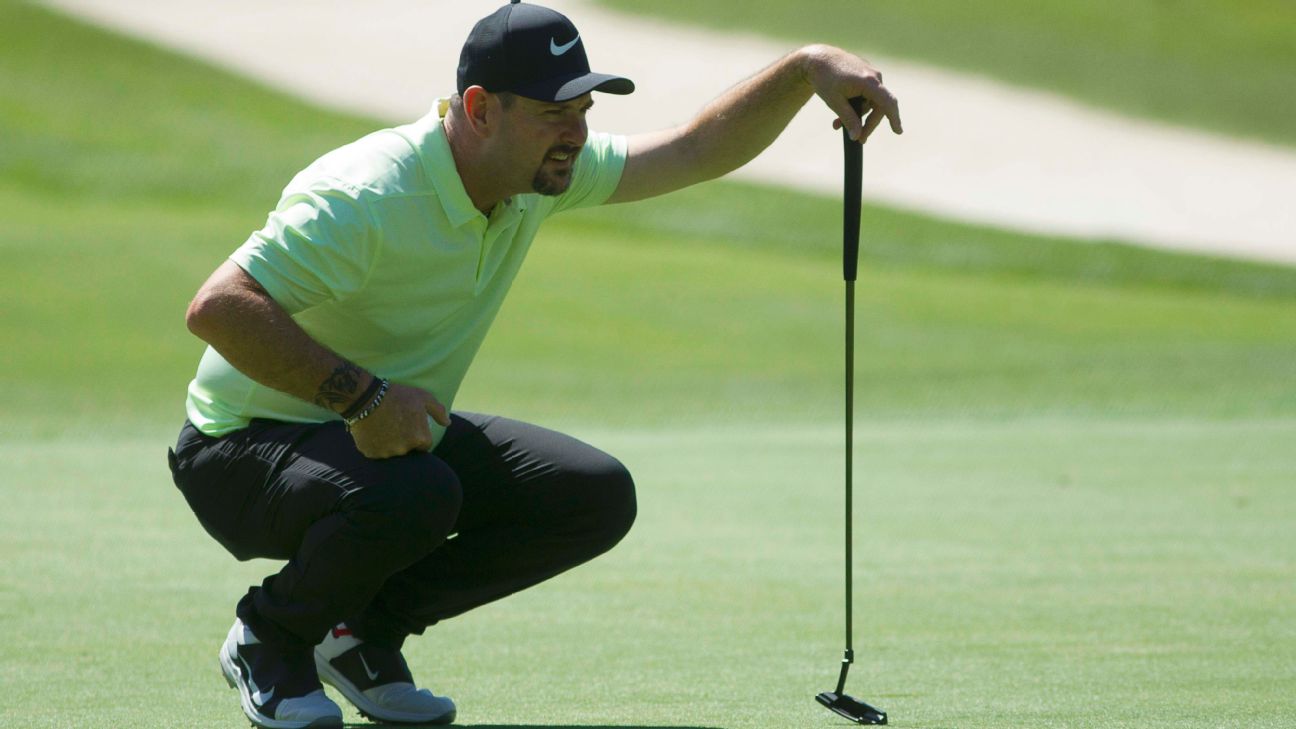
The 2000s brought a different type of controversy to professional golf. Slow play was also one of the most common attributes that were raised by the players during this period. The competitors and television viewers were frustrated with rounds of long duration. Numerous golfers were openly talking about the problem, and not many were directly linked to the matter more than Rory Sabbatini.
Sabbatini earned a reputation as one of the quickest players on the tour. His favorite was fast playing and decision-making. Slower competitors often came into conflict with that style. A notorious incident aggravated by the pace of play is what turned out to be a hot debate throughout professional golf. While some players understood his concerns, others believed he handled the situation poorly.
Why Pace of Play Creates Friction
Rhythm and concentration are very important in golf. Before each shot, players psych themselves out. There can be an interception of that process by long delays and performance can be hampered. Take a simple example. When the difficult approach shot is involved, taking several minutes longer than usual to play the shot because the group ahead is not in a good position, imagine that. That latency has an effect on attention, self-esteem and momentum. Those frustrations are common with many professionals. Nonetheless, how they handle the players can influence their perception to others quite often.
Factors Behind Sabbatini’s Reputation
| Issue | Result |
| Aggressive Personality | Mixed reactions |
| Fast Playing Style | Conflict with slower players |
| Competitive Nature | Created tension |
| Public Incidents | Increased media attention |
Sabbatini’s reputation illustrates how personality can become almost as important as performance in professional golf.
Most Disliked Golfer, Decade: 2010-2020 – Patrick Reed and Years of Controversy
There is no contemporary golfer who has created as much talk as Patrick Reed. Reed is an undoubtedly talented person. His major championship wins, Ryder Cup shows and other victories show that. However, he was plagued by controversy during a large proportion of his career.
There were headlines caused by several rules incidents. With differences openly calling each other into conflict. There was additional debate due to team-related controversies. With the development of social media, such stories were being distributed to more audiences than ever before. The fans have a common response that Reed has been unjustly criticized. They cite his accomplishments and winning spirit. Opponents dwell on scandals that put him in the limelight on numerous occasions.
Patrick Reed’s Professional Achievements
| Category | Achievement |
| Major Championships | Masters Champion |
| PGA Tour Wins | Multiple Victories |
| Ryder Cup Success | Significant Contributor |
| Presidents Cup Appearances | Multiple Teams |
The contrast between performance and perception makes Reed one of golf’s most fascinating figures.
How Social Media Changed Public Opinion
The past generations depended on TV broadcasts and newspaper publications. Players nowadays play in an entirely different environment. Any interview, disagreement, and any controversial situation go viral on social sites. Consequently, reputations are made in a shorter time than ever.
The career of Patrick Reed is the best example of this change. Golf has grown into buzzing discussions that are no longer kept within golf circles, but extended to reach millions of fans globally. For that reason, many people consider him one of the strongest examples when discussing the most disliked golfers by their peers.
Most Disliked Golfer, All Time – Why Greg Norman Still Sparks Debate
When the discussion goes further than a decade, Greg Norman will often be involved in the debate. Norman had a remarkable success as a player. He had spent several years playing with the best golfers in the world and has contributed to the popularity of the sport all over the world.
Simultaneously, reports about conflicts, firm beliefs and work-related disagreements accompanied him at various periods of his life at work. He had a lot of golfers who admired his ambition. Other people saw him in a new light. The same rift grew as Norman became entangled in large business deals and the command of golf.
Greg Norman’s Influence Beyond Competition
| Area | Contribution |
| Global Golf Growth | Expanded audiences |
| Course Design | International projects |
| Business Ventures | Successful brand development |
| Professional Golf Leadership | Significant influence |
His impact extends far beyond tournament victories. However, that influence also brought criticism from certain sections of the golf community.
Why Opinions Remain Divided
Few athletes maintain relevance across multiple generations. Norman accomplished exactly that. His supporters praise his leadership and entrepreneurial mindset. Critics point to disagreements that created friction within professional golf. That combination explains why his name frequently appears in discussions about all-time controversial golfers.
The Fine Line Between Confidence and Arrogance
Confidence is one thing many successful and accomplished athletes have in common. The professional golfers have a feeling that they are able to compete with the world’s best golfers. The highest level can hardly be attained without that attitude.
Issues arise where the confidence level comes out as excessive. Fans find it hard to differentiate between self-belief and arrogance. The challenge is encountered by fellow competitors. Some miserably focused golfers looked pompous to the outside world. It is this gray ground that can account for the fact that the views of the people and the views of the locker room do not necessarily coincide.
Can Controversial PGA Tour Players Still Earn Respect From Their Peers?
Absolutely, the history of professional sports is not short of polarizing personalities that gained respect despite the criticism they faced. Competition often makes a rival recognize talent irrespective of his/ her viewpoints.
Patrick Reed gives us a good example. One can doubt something about his reputation, but there are not many golfers who reject his skills when he has to cope with the pressure. Equally, Greg Norman has been impressive in his exploits irrespective of the perception people have about his character. Respect and popularity are not on the same road.
Final Thoughts
The debate surrounding the most disliked golfers by their peers will likely continue for years because opinions rarely stay fixed. Colin Montgomerie, Rory Sabbatini, Patrick Reed, and Greg Norman are controversial in their own right and all had immense success. Their biographies will remind us that professional golf is not based only on numbers and achievements. A legacy is frequently influenced by such factors as reputation, relationships and personality rather than winning a tournament. The most intriguing aspect is that most of these golfers are still admired as competitors in spite of the criticism and that success and popularity do not necessarily go hand in hand.
Also Read About :- Michael Block PGA Championship