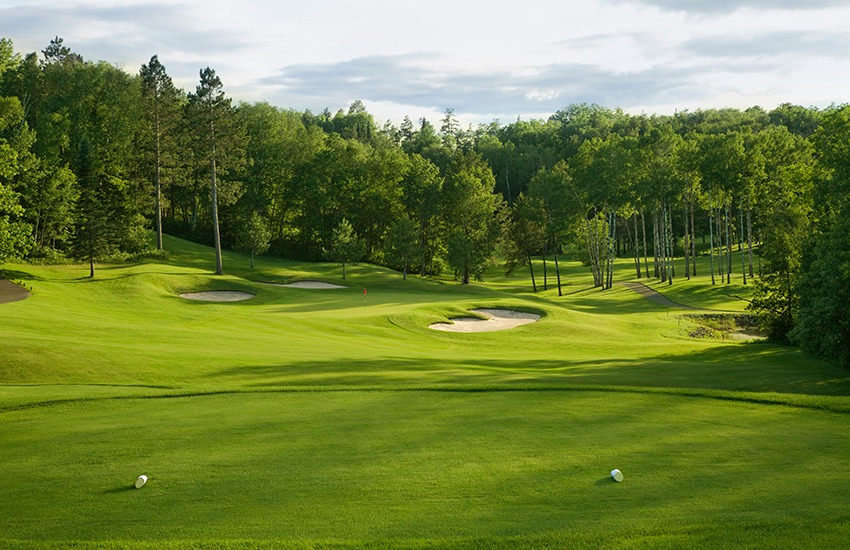
Some golf courses are famous for breaking players, not inspiring them. There is a meaningful distinction between a layout that simply punishes mistakes and one that rewards smart thinking, creative shot-making, and intelligent risk management. The best courses in the world do both, but they do something more important: they make the golfer feel genuinely engaged from the first tee to the final green.
Difficulty alone is not a design virtue. A course can be made brutally hard by narrowing fairways to absurd widths, growing rough to knee height, or placing water hazards on every approach, and the result is often frustration, not enjoyment. The golfer leaves feeling defeated and not challenged, and that is a failure of design, not a mark of success.

Great course design shares something with other disciplines that balance structure and freedom. Just as an online vortex game rewards players who understand its mechanics, a well-designed golf course rewards players who think through each hole strategically without simply trying to overpower it. The best layouts present options, not just obstacles.
The Difference Between Difficulty and Design
One of the most reliable markers of genuine greatness in a course is whether it plays differently depending on the ability of the golfer. Augusta National, for instance, offers multiple angles of attack on nearly every hole. A scratch player and a 20-handicapper can both enjoy the same layout because the design accommodates different strategies rather than demanding one specific approach. That quality is rare and far harder to achieve than raw difficulty.
Truly great courses also avoid repetition. A layout that presents the same challenge repeatedly across 18 holes becomes monotonous, regardless of how technically demanding each hole may be. Variety in hole length, shape, green contour, and wind exposure keeps the golfer mentally engaged throughout the round, which is one of the core purposes of good design.
What Great Designers Actually Prioritized
The architects who produced the most celebrated courses in history, including Alister MacKenzie, Donald Ross, and Pete Dye, consistently focused on creating courses that offered multiple routes to the hole. MacKenzie believed that the ideal hole was one where a player could take several different lines and feel that each carried its own logic and reward. That philosophy produced layouts like Cypress Point and Augusta National, both of which are endlessly discussed for their strategic depth rather than their raw difficulty.
The Role of Natural Terrain

The best course designers work with the land rather than against it. MacKenzie was famous for walking a site extensively before drawing a single line, as he was searching for natural features that could become the defining elements of specific holes. When a designer forces a layout onto terrain that does not suit it, the result often feels artificial and arbitrary, a common reason difficult courses fail to earn lasting respect from players or critics.
Greens are another area where design philosophy separates great courses from merely punishing ones. Ross famously crowned his greens so that the center sat higher than the edges, which meant approach shots needed to be precise without the course relying on extreme pin positions to manufacture difficulty. The challenge came from the design itself, not from trickery.
Famous Layouts That Illustrate the Point
Pebble Beach Golf Links is frequently cited as one of the finest courses in the world, and it earns that reputation not because it is the longest or the narrowest but because its drama comes from the land itself. The cliffside holes along the Pacific coastline pose challenges through their exposure and beauty. Players are intimidated by the setting, not just by the scorecard, and that is what separates a great course from a merely difficult one.
Pinehurst No. 2, designed by Donald Ross and refined over decades, offers similar lessons. The turtleback greens Ross built there penalize imprecise approaches by deflecting the ball into surrounding collection areas, but they do so in a way that feels fair because the golfer can see the consequence clearly before the shot is ever played.
Why Golfers Keep Coming Back
The surest sign that a course has achieved genuine greatness is repeat play. Golfers do not return to courses that simply humiliate them. They return to layouts that reveal something new with each round, that offer problems worth solving, and that leave room for the occasional brilliant shot to feel genuinely earned.