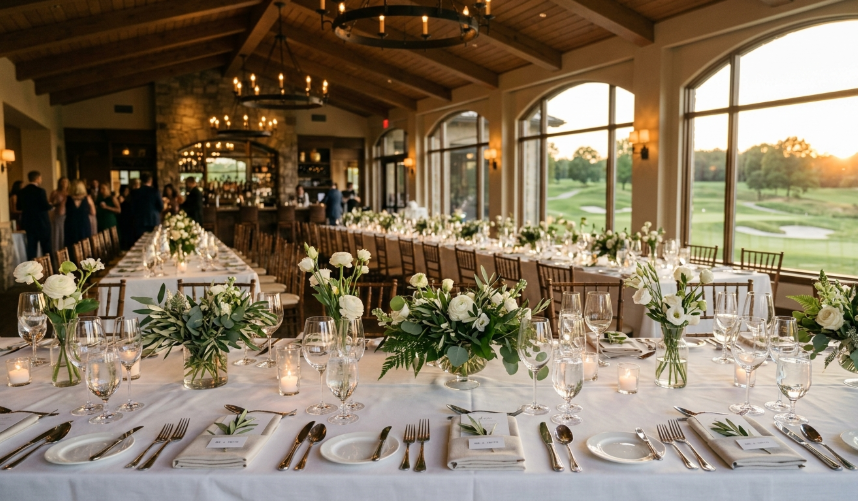
There are over 7,600 golf clubs nationally, each one of which holds events regularly. The ones that stick in a member’s memory are those where the environment felt effortless.
When you nail the layout, the decor disappears into the background of a perfect afternoon. Success in this space requires a deep understanding of sightlines, the room’s physical scale, and the specific needs of golfers or social members who are there to connect, not just consume.
A great clubhouse table setup prioritizes the member experience by balancing high-end aesthetics with the functional reality of a busy social environment. It isn’t just about throwing a white cloth over a folding table and calling it a day.
Mastering Scale and Visibility for Social Flow
The biggest mistake amateur coordinators make is choosing centerpieces that act as a physical wall between guests. If a member has to crane their neck or lean uncomfortably to the side to see the person across from them, the setup has failed its primary mission.
Keeping table decor either below fourteen inches or above twenty-four inches to preserve clear sightlines. This “donut hole” of visibility ensures that whether it is a casual brunch at the grill or a formal banquet, the conversation flows as easily as the drinks.
When you are planning seasonal events, the choice of greenery matters more than the color palette. Using curated seasonal stems that are pre-arranged allows for a professional look without the logistical headache of on-site assembly. These arrangements provide the necessary pop of organic texture without overwhelming the limited real estate on a standard sixty-inch round.
Essential Elements of a High-Functioning Table
Functionality should dictate the form in a high-traffic environment like a clubhouse. You have to account for heavy glassware, multiple utensils, and the inevitable crumbs that come with a multi-course meal. Even if you’re using an app to manage the event, these factors can’t be overlooked.
A setup that looks beautiful but feels cramped will lead to spills and frustrated staff. To keep things moving during a high-stakes tournament dinner or a member wedding, you must consider these three foundational pillars of table logic:
- Traffic flow around the perimeter must allow at least thirty-six inches of clearance for servers and guests
- Scent profiles should be strictly neutral to avoid clashing with the kitchen’s offerings or triggering allergies
- Sponsor materials need dedicated placement that ensures visibility without cluttering the dining surface
These rules apply whether you are setting up a buffet line or a formal sit-down service. By focusing on banquet operation standards, you ensure that the physical layout supports the rhythm of the service rather than creating bottlenecks that slow down the kitchen.
Optimizing Cleanup and Transition Logistics
A setup is only as good as its teardown. In a clubhouse environment, rooms often need to transition from a morning meeting to a lunch service in under an hour. This is where modularity becomes your best friend.
Using standardized linens and pre-staged decor kits reduces the “decision fatigue” for your floor staff. If every element has a designated spot, the transition happens with military precision. This efficiency isn’t just about speed; it’s about protecting the longevity of your assets. High-quality linens and delicate glassware last longer when they aren’t being handled in a panicked rush.
Your table setup is a silent ambassador for the club’s standards. When you focus on the harmony between the physical objects and the human interactions taking place around them, you create a space where members want to linger long after the final course is served.
We’ve got plenty more golf content to check out here on the site, so even if you aren’t in charge of clubhouse decor, there’s something for you.