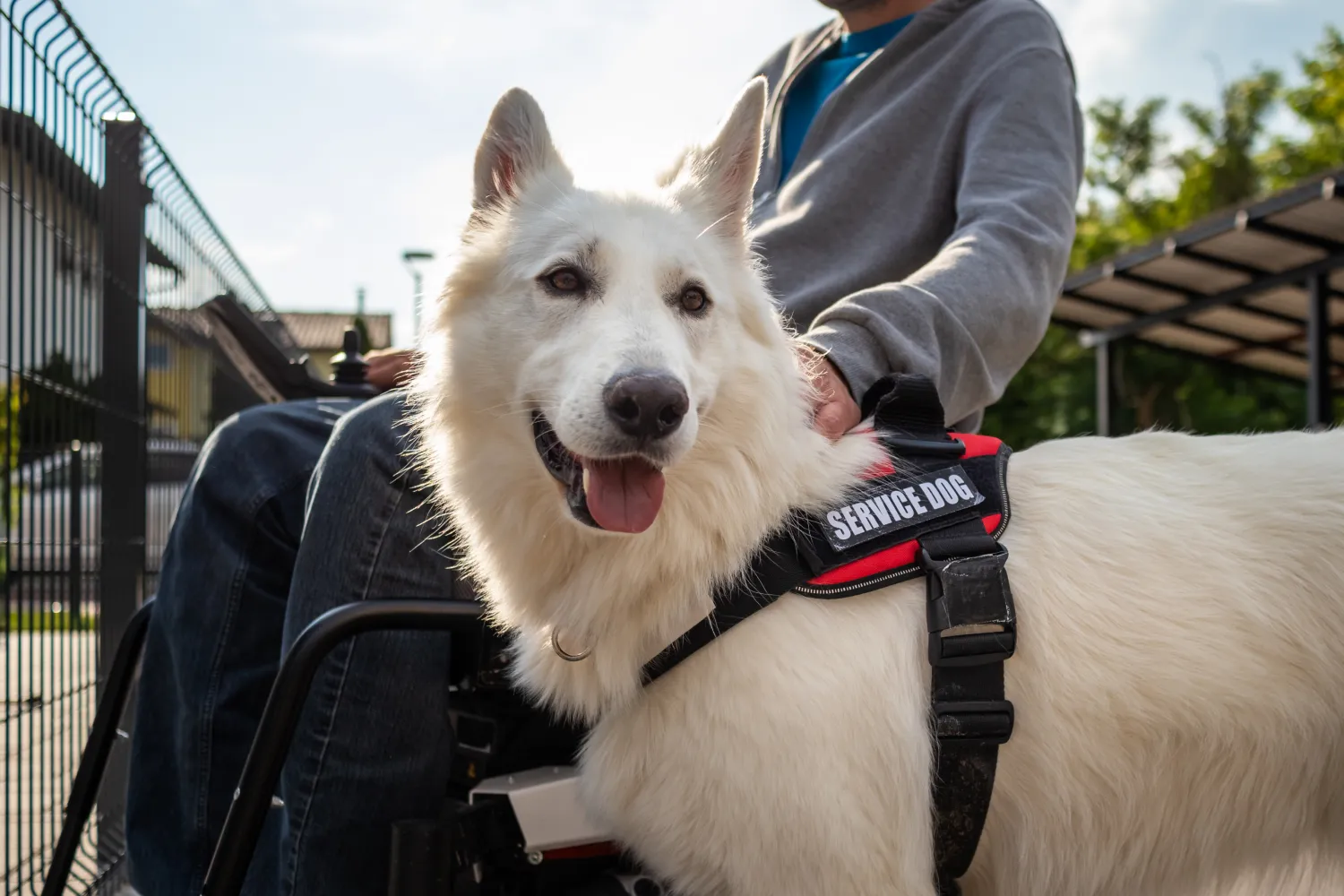
You’ve probably seen a service dog out with their person before. They wear a vest or harness that usually says “service dog” or asks you not to pet them. These dogs look calm and focused and stay close to their handler’s side. They remain alert and focused, no matter the noise or distractions around them.
This is what defines a service dog. They are born with a calm, steady temperament, which is then carefully developed through dedicated training. Today, service dogs assist people in many ways, including physical, psychological, and medical support. They are trained to help their handlers live more independently and safely.
Continue reading to learn more about the different service dog types, common breeds for these roles, and the steps involved in getting one for yourself.
Understanding the Different Service Dog Types
One of the most well-known service dog types is the guide dog. These dogs serve as the eyes for people who are blind or have low vision. They navigate sidewalks, stop at curbs and stairs, and safely avoid obstacles. Their guidance gives handlers the freedom to travel independently.
Another common type is the hearing dog. They assist people who are deaf or hard of hearing. Their job is to listen and respond to important sounds, such as a door knock, an oven timer, or even a person calling their handler’s name. When they hear it, they physically alert their person and lead them to the source of the sound.
Medical alert dogs can sense changes in a person’s body, such as a drop in blood sugar or the onset of a seizure, before they happen. This early warning lets the person get to a safe place, take medication, or call for help. They can also be trained to bring medicine or a phone.
Next are psychiatric service dogs. These dogs are perfect companions for people with conditions like PTSD or severe anxiety. They are trained to notice the early signs of a panic attack and step in to disrupt it.
Mobility assistance dogs are another category of service dogs. They can pick up dropped items, open doors, turn lights on and off, and even help pull a wheelchair. Some service dogs also work with children who have autism. These dogs are trained to prevent a child from wandering into danger and interrupt harmful behaviors.
Can Everybody Get a Service Dog?
No, not everyone can get a service dog. You must have a qualifying disability to be eligible for a service dog. The service dog must be trained to perform specific tasks that directly assist the person with their disability.
Common Breeds for Service Dog Types
Labrador retrievers, golden retrievers, and German shepherds are popular choices for service work due to their calm, trainable nature. These dogs are smart, focused, and enjoy working with their person. They can handle many different jobs, from guiding to medical alert.
Great Danes are another excellent breed for specific service roles. They have a surprisingly gentle and steady nature despite their large size. This makes them great for mobility work, where they can help someone get up from a chair or keep their balance while walking.
Some people even choose smaller breeds, like miniature poodles and Pomeranians, as their service dogs. Their small size makes them easy to travel with, and they can be very good at jobs like alerting to medical issues.
How to Apply for a Service Dog
If you’re thinking about applying for a service dog, the first thing you need is a letter from your doctor. This letter should confirm your disability and explain why a service dog is a necessary part of your treatment plan.
Next, you need to find the right organization or a good trainer. You can apply to a non-profit program that trains and places dogs. You’ll likely need to complete a detailed application, provide references, and attend interviews to confirm your eligibility. Some people choose to work with a private trainer to train their own dog, which can be faster but often costs more money.
You can get your service dog certified or registered online if you want to. This is not required by law, but it can help explain your dog’s presence in rented housing and public places like stores and restaurants.
Service Dog Types: Conclusion?
From guide dogs and hearing dogs to medical alert and mobility assistants, service dogs play essential roles in transforming the lives of people with disabilities. People usually choose Labrador retrievers, golden retrievers, and German shepherds as their service dogs, but the right breed really depends on the person’s specific needs.
If you have a disability that prevents you from completing daily tasks on your own, you may qualify for a service dog. This process starts with a letter from your doctor and requires a serious commitment to the dog’s training and lifelong care. In return, a service dog will provide invaluable assistance, constant companionship, and help you live a safer, more independent life.