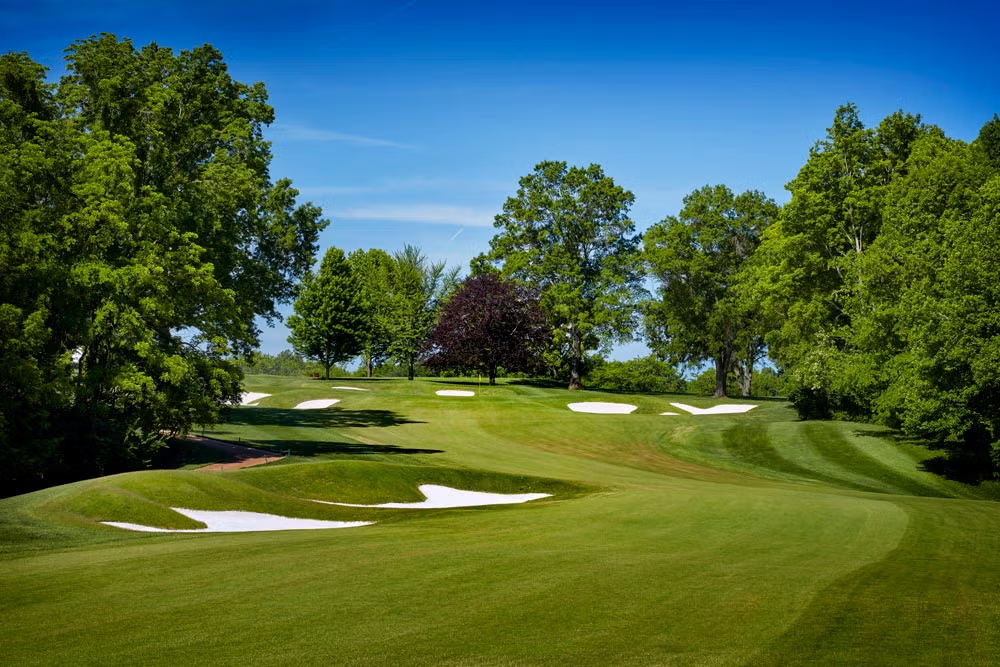
Bellerive Country Club is not constructed in such a way that it leaves players stunned with eye-catching graphics. It is built to test thinking. The course is presented with silence power. The holes are all naturally interconnected. The initial errors can be regarded as being manageable but the recurrence of errors are expensive.
Bellerive Country Club in Missouri has expanded to become one of the most commissioned clubs in America in the field of golf. It has been the host of several big championships and still remains topical in the present day professional golf. Kevin Tway, a PGA Tour professional has also played at the club strengthening the reputations of the club as being competitive. This guide covers the identity of the club, its architecture, history of the tournament, its membership estimates and long term significance to the American golf.
Highlight Overview: Key Facts About Bellerive Country Club
Bellerive Country Club functions as a full championship environment rather than a collection of isolated standout holes. The routing flows around a winding creek that influences nine holes. Water becomes part of decision-making instead of decoration.
The front nine allows players to find rhythm. The back nine gradually increases complexity. Greens become more demanding. Positioning grows more important as fatigue sets in.
Distance alone does not control scoring here. Precision into large, sloped greens often determines success. The course rewards discipline and structured thinking. That balance explains why Bellerive Country Club continues to attract championship events decades after its opening.
Highlight Snapshot
A quick profile helps clarify the authority of Bellerive Club in American golf.
| Feature | Detail |
| Location | Missouri 63141, United States |
| Club Type | Private members-only |
| Original Founding | 1897 (as St. Louis Field Club) |
| Current Course Opened | 1960 |
| Original Architect | Robert Trent Jones |
| Renovation | Rees Jones (2006) |
| Creek Impact | 9 holes |
| Major Championships Hosted | U.S. Open, PGA Championship |
| Professional Presence | Kevin Tway has played here |
| Access | Invitation-based membership |
These elements establish Bellerive Country Club as a structured championship venue built on performance standards.
Bellerive Country Club Identity and Playing Philosophy
Bellerive Country Club was designed with tournament play in mind. The course does not force artificial drama. Instead, it builds challenge through intelligent routing and green design.
Fairways can appear generous. The real test begins with approach angles. Being slightly out of position often leaves difficult putts or defensive chip shots. Greens feature subtle tiers that reward distance control.
Bunkers are bold and placed with intent. They guard landing areas and protect critical approach lines. Players must think two shots ahead.
The philosophy emphasizes patience. Aggressive play works only when supported by sound positioning. Reckless decisions tend to compound. That identity has allowed Bellerive Country Club to remain relevant across eras of changing equipment and increasing driving distance.
Bellerive Country Club Location and Regional Significance
Bellerive Country Club sits west of St. Louis in Missouri. The setting offers privacy while remaining accessible. Major airports and accommodations support tournament logistics. The environment around the course remains calm and controlled. Urban distractions rarely interfere with play. This balance between accessibility and seclusion makes it ideal for hosting large championships.
Within the Midwest region, Bellerive Club stands as a benchmark for private golf excellence. Few clubs nearby match its consistent championship résumé.
Bellerive Country Club Course Architecture and Strategic Depth
The current layout opened in 1960 under the direction of Robert Trent Jones. It quickly gained the nickname “Green Monster of Ladue Road” due to its length and demanding structure.
In 2006, Rees Jones modernized the design. The renovation enhanced fairness while maintaining championship intensity. Greens were reshaped to suit modern speeds. Bunkers were repositioned to account for increased driving distances.
Key architectural features include:
- Creek corridors influencing nine holes
- Large, undulating greens with tiered sections
- Deep bunkering protecting landing zones
- Rolling parkland terrain
- Tournament yardage exceeding 7,300 yards (estimated championship setup)
| Category | Description |
| Course Style | Strategic championship parkland |
| Terrain | Rolling with natural water influence |
| Primary Test | Precision into large greens |
| Shot Requirement | Controlled trajectory and spin |
| Tournament Proven | Yes, multiple majors |
The architecture rewards thoughtful strategy. Recovery shots require imagination. Mental stamina becomes just as important as physical skill.
Kevin Tway and Competitive Presence

Elite clubs are concerned with modern relevance. Kevin Tway, a PGA Tour professional, has been on this golf course, and he proved that Bellerive Country Club is a professional venue. Competitive players tend to take courses that are not too difficult or too easy. They defy all elements of the game without unnatural dangers. The appearance of Kevin Tway proves that the club is compatible with the level of performance of PGA.
Professionals using the course as a choice of practice or competition are an indication of confidence in conditioning and design guidelines. Such trust builds on the credibility of Bellerive Club in the long run.
Major Championship History at Bellerive Country Club
There is not a single private club that has such a consistent record on championship as Bellerive Country Club.
- In 1965 it hosted the U.S. Open or Gary player won in a playoff and made the course nationally known.
- In 1992, PGA Championship was reinstated back in the venue. Nick Price was the champion due to consistent ball hitting.
- FedEx Cup drama was witnessed in the 2008 BMW Championship. It was the first PGA Tour win of Camilo Villegas.
- The 100 th PGA championship was organized in 2018 in Bellerive Country Club. Brooks Koepka was the winner and Tiger Woods made a late surge that gripped the entire world.
Such tournaments are flexible. The course sets the challenge of the players in the generations of equipment and sport development.
Signature Holes and Round Flow
Difficulty at Bellerive Club builds progressively. The opening holes allow controlled scoring opportunities. The middle stretch tightens approach demands. The closing holes require disciplined club selection and emotional control. Notable flow characteristics:
- Creek influence intensifies under pressure
- Long par 4s demand endurance
- Par 5s offer calculated risk-reward decisions
- Greens increase in complexity late in the round
Tournament outcomes often hinge on how players handle the final stretch.
Facilities and Member Experience
Bellerive Country Club balances tradition and comfort. The clubhouse reflects classic private club architecture. Dining spaces support both formal events and relaxed gatherings. Core amenities include:
- Full driving range (estimated 250–300 yards)
- Short-game practice greens
- Professional pro shop
- Locker rooms and member lounges
- Event and banquet facilities
The atmosphere remains composed even during major championships. Member experience stays central to operations.
Membership Structure and Club Culture
Bellerive Country Club is by invitation only membership. Entry is normally guided by sponsorship and board approval. The culture is discretionary and etiquetted. Course care and pace of play are taken care of. Growth is tamed to maintain exclusivity. The club is regarded by the members as a long-term activity but not a transactional one.
Bellerive Country Club Membership Fees (Estimated)
Exact membership pricing remains private. Based on comparable elite U.S. clubs, estimates are:
| Component | Estimated Cost |
| Initiation Fee | $80,000 – $400,000+ |
| Annual Dues | Up to $19,500 |
| Monthly Dues | $300 – $2,350 |
| Food & Beverage Minimum | $1,000 – $3,000 yearly |
| Additional Charges | Locker, cart, assessments |
These estimates reflect exclusivity and championship maintenance standards. Direct contact with Bellerive Club is required for confirmed figures.
Guest Access and Tournament Ticket Expectations
Public access is limited. Guest play requires member sponsorship. During major tournaments, public tickets become available.
Estimated ticket pricing:
| Ticket Type | Estimated Cost |
| Single-Day Grounds | $38 – $75 |
| Multi-Day Packages | $200 – $600 |
| Premium Hospitality | Up to $1,260 |
Pricing varies depending on championship scale and demand.
Yardage Breakdown and Shot Variety
The course avoids repetition by blending yardage and shot demands.
| Hole Type | Yardage Range | Emphasis |
| Par 3s | 160–220 yards | Precision |
| Mid Par 4s | 420–460 yards | Positioning |
| Long Par 4s | 480+ yards | Control |
| Par 5s | 540–600 yards | Strategic scoring |
Long hitters find opportunities. Accurate iron players gain consistent advantage.
Conclusion
Bellerive Country Club represents structured championship golf built on strategy, discipline, and enduring architectural intelligence. Its creek-lined routing, bold bunkering, and expansive greens create layered challenges.
Its major championship history and estimated elite membership costs confirm exclusivity. Professional presence, including that Kevin Tway has played here, strengthens modern relevance. Bellerive Country Club remains a venue defined by performance rather than spectacle. Its legacy continues to stand firm in American championship golf.
Also Read About :- Kasumigaseki Country Club