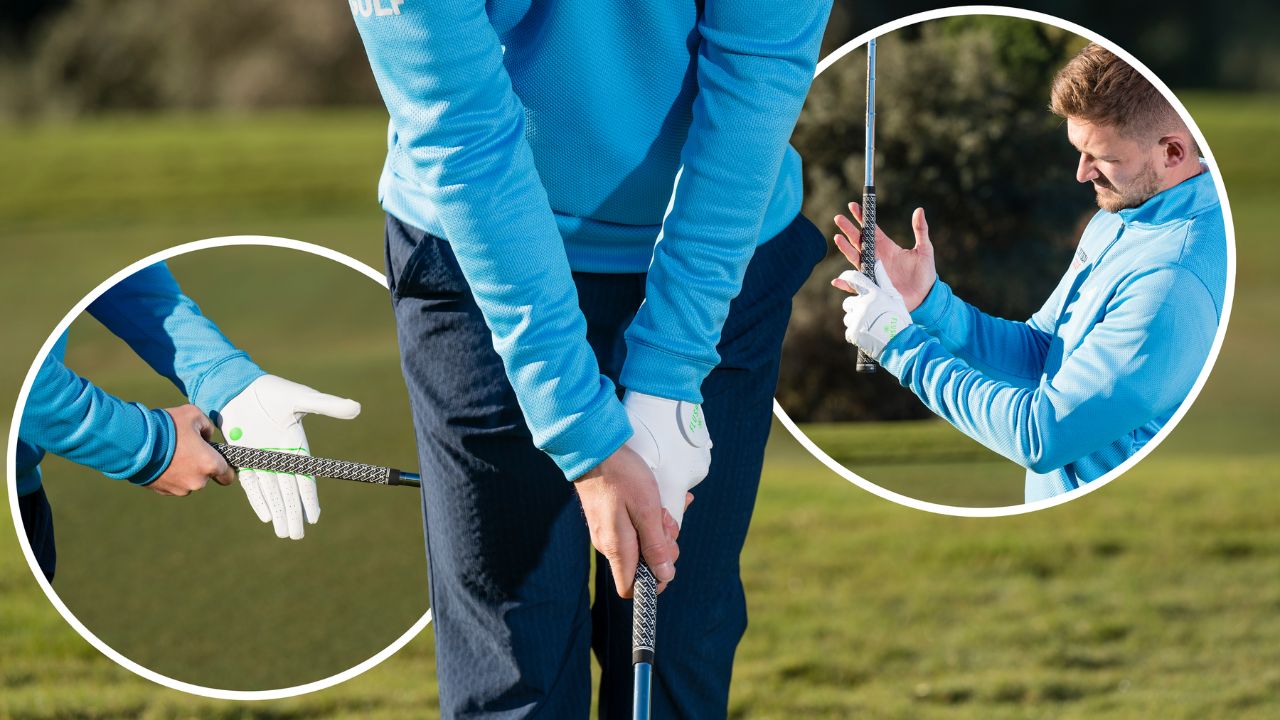
The most neglected but the most significant skill in golf is learning how to hold a golf club. Most of the players are preoccupied with swing, pace, and power and they forget that hands determine the behavior of the club when it starts and upon termination. Defective grip compels the body to make a compensatory move. The swing should work with a proper grip.
When golfers know how to hold a golf club, they get control without coercion in movements. The clubface squares with a lot of ease. The wrists move freely. The arms stay relaxed. The grip is described in this guide in an organized, athlete-type approach which is applicable to all levels of skill and yet easy to use.
This article sub-units the grip into easy steps, creates insight sequentially, and justifies the importance of each detail towards the grip becoming dependable in a crisis.
What Is a Golf Grip and Why Does It Matters?
A golf grip is described as the position that the hands are held and the coordination that exists between the hands during a swing. It dictates the connection of hands, wrists and the clubface. All the swing movements go through this connection.
An adequate grip helps in natural rotation and face control. Misplaced grip will make the golfer handle the club later in the swing. The manipulation leads to incongruity and time distortions. Knowledge of proper grip of a golf club eliminates any extra re-positioning of the club and enables the swing to be reproducible with each shot.
The Grip as the Foundation of the Swing
The only physical connection of the golfer and the club is the grip. When such a connection is not firm, the whole movement is in question. Minor grip faults will result in massive ball-flight mistakes.
The wrists are hinged and unhinged freely by a stable grip. It prevents over-rotating of the clubface, as well. This is a balance between liberty and restraint which is required in regular striking of balls.
Golfers who improve how to hold a golf club often see immediate improvement without changing their swing mechanics.
How to Hold a Golf Club: Starting With Athletic Posture
Posture should be taken before touching the club. Practice in the position of golf but not holding any object. Allow the shoulders to make the arms dangle. Keep the body relaxed and maintain balance using the feet.
This is the arm of nature, which demonstrates the desired position of the wrists. The anatomy of each golfer differs and therefore, straining to hold the same position of the hands tends to be straining. This natural projection should be honored by the grip. This approach helps golfers learn how to hold a golf club in a way that suits their body rather than fighting it.
The Lead Hand and Its Role in Control
The lead hand is the one that has the major role in controlling the clubface. This is left handed to right handed golfers. Face angle during the swing is predetermined by its position. The club must be operated diagonally over the fingers and not straight over the palm. This diagonal position enables the wrist to swing freely leaving the face in place.
Two or three knuckles must be seen when one looks down. The thumb is not quite on center down the shaft. The wrist is slightly extended and this position helps in power and consistency. This position forms the foundation of how to hold a golf club correctly.
Why Gripping in the Fingers Is Essential?
The wrists move automatically by holding the club in the fingers. Grips of palm weight inhibit motion and speed. They also complicate the process of squaring the clubface.
Placing of fingers minimizes tension in the arms. Reduced stress enhances timing and sequence. The club becomes light even when the swing is seen to be on the higher level.
Golfers who shift to proper finger placement often experience immediate improvement in contact, which reinforces correct habits when learning how to hold a golf club.
The Trail Hand as a Support System
The trail hand is used to support the lead hand as opposed to overriding it. It plays a stability and guidance role, rather than a force role. As the lead hand is already in place, move the trail hand open and match the palm with the shaft. The palm and the face of the club should be facing the same direction and this assists in squaring the face upon impact.
Hold the grip lightly with the fingers. This can be a straight position of the thumb or at a slight angle. The index finger must be in a slightly elevated position so as to form a trigger shape that feels better. Proper trail-hand placement completes how to hold a golf club with balance and control.
How the Hands Work Together?
The hands must be in light contact but no squeeze. Too much pressure produces tension. Separation reduces control. Stringent interrelationship permits synchronized motion. Imagine the hands to be in collaboration and not competing over dominance. Once they swing together, the club is always stationary and the swing is smooth. This relationship is a critical element of mastering how to hold a golf club under playing conditions.
Step-by-Step Procedure: How to Hold a Golf Club Correctly?
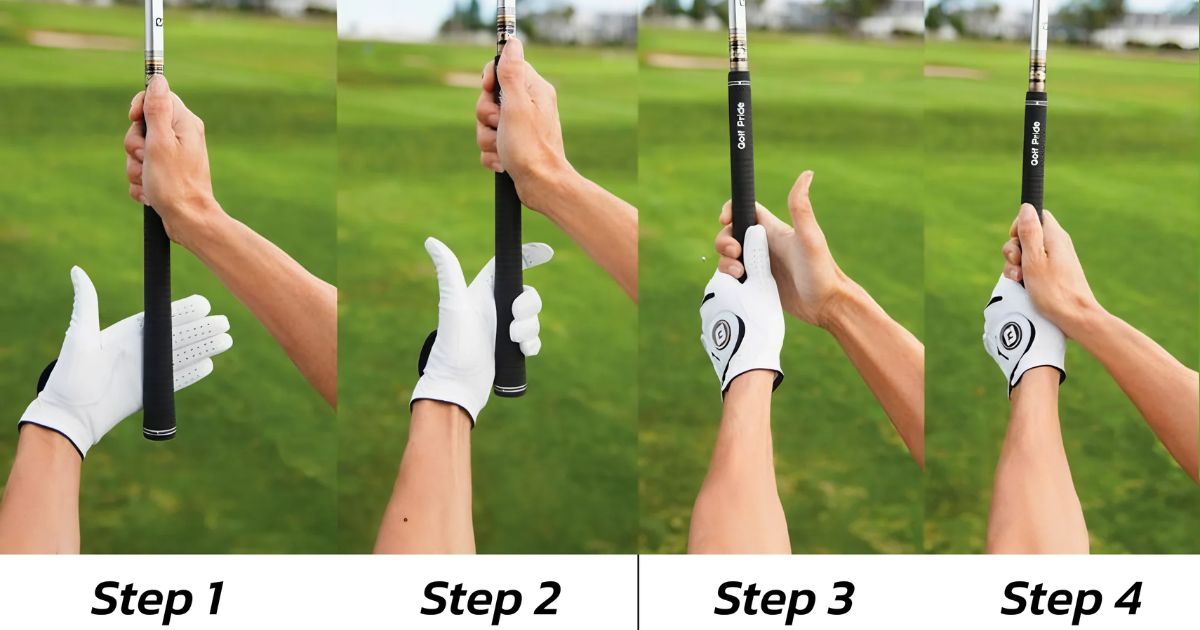
This step-by-step process explains how to hold a golf club in a repeatable way that builds consistency.
- Take your golf posture without the club and allow your arms to hang naturally.
- Place the lead hand diagonally across the fingers, ensuring knuckles are visible.
- Set the clubface square to the target before adding the trail hand.
- Align the trail palm with the shaft and wrap the fingers lightly.
- Allow the hands to touch softly without squeezing.
- Check that pressure feels secure but relaxed.
Repeating this routine before every shot builds trust and consistency.
Grip Pressure and Tension Management
The pressure on the grip must be sufficiently rigid to provide control but not too rigid to enable the wrist to move. A high level of tension has the effect of slowing the swing and decreasing accuracy. The difference in pressure is a natural occurrence based on the shot. Firmness is needed a little bit more when dealing with full swings. Soft hands are required in short shots. In any instance, tension is to be present in the fingers and not the arms or shoulders. Managing pressure is an important part of refining how to hold a golf club for different situations.
Common Grip Styles and When to Use Them?
Golfers attach their hands with various styles of grips which have different advantages. Any style can be good provided that the basics are good. The table below gives a summary of common grip connections and their characteristics before they are reviewed.
| Grip Style | Best For | Key Benefit |
| Interlocking | Smaller hands | Strong hand connection |
| Overlapping | Most players | Balance and control |
| Ten-finger | Beginners | Simplicity and comfort |
Choosing the right style supports long-term success when learning how to hold a golf club.
Grip Orientation and Ball Flight Control
Hand orientation has a bearing on the ball flight. Low grips cause the face to be open. Good grips promote the closeness of the face. The tendencies are neutralized by neutral grips. The table below is an explanation of common outcomes before going through corrections.
| Grip Orientation | Typical Miss | Adjustment Needed |
| Weak | Slice | Slightly stronger lead hand |
| Neutral | Straight | Maintain consistency |
| Strong | Hook | Neutralize trail hand |
Understanding this relationship allows golfers to fine-tune how to hold a golf club without rebuilding their swing.
Fixing Ball Flight Issues Through the Grip
Slices can be as a result of poor lead-hand positioning and too high tension. Tightening the squeeze a notch and de-escalating the pressure usually solves the problem. Hooks are normally brought about by a trail hand that is excessively strong. Peaceful palm position and light grip pressure cures the balance. Minimal grip adjustments have huge effects hence being able to know how to hold a golf club the right way is more important than changing the swing all the time.
Conclusion
Learning how to hold a golf club does not involve imitating one textbook pose. Also, It is concerning the development of a grip that enables the natural movement, constant clubface control, and contact. Moreover, the proper grip ensures that no compensation is required and the body is free to swing.
When golfers are determined to learn how to hold a golf club, it automatically improves. Also, the swing becomes simpler. Ball striking is made more dependable. Pressure enhances confidence. Moreover, the grip gives the base of each successful shot.
Also Read About: Golf Practice Net Guide for Safe and Consistent Home Training