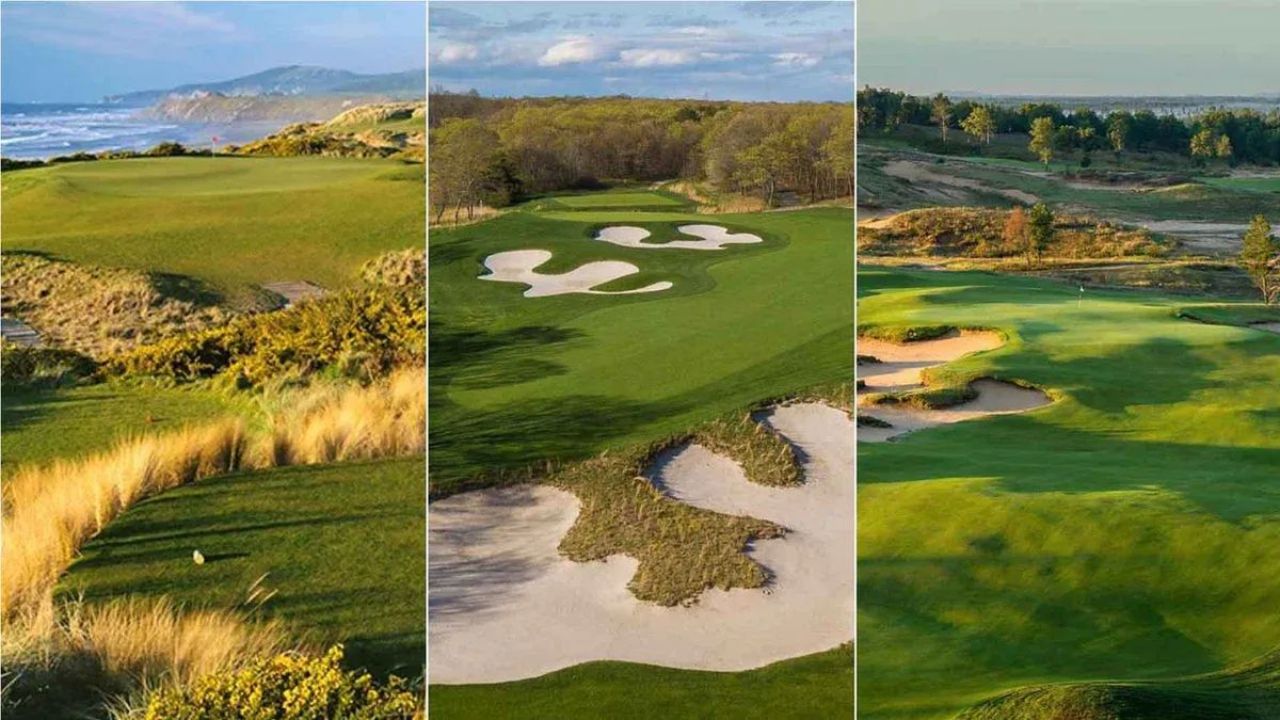
The top golf courses in the US stand as benchmarks for excellence in golf course design, maintenance, and long-term relevance. Golfers searching for the top golf courses in the US are usually not looking for quick lists or surface-level descriptions. They want meaningful explanations that help them understand why certain courses continue to dominate conversations year after year.
Golf in the United States has developed through generations of thoughtful design, experimentation, and refinement. Early architects focused on routing holes naturally through the land, while later designers introduced championship-level challenges that tested elite players. The top golf courses in the US successfully blend these philosophies. They are challenging without being unfair, strategic without being restrictive, and memorable without relying on artificial difficulty.
About Top Golf Courses in US
The top golf courses in the US are courses that have proven their quality over time rather than through temporary popularity. These courses consistently deliver exceptional playing experiences across decades, different weather conditions, and evolving equipment technology. Their reputation is built slowly through repeated evaluation and sustained performance.
A defining feature of the top golf courses in the US is their ability to challenge golfers mentally rather than physically alone. These courses reward thoughtful shot selection, disciplined positioning, and awareness of course conditions. Players often leave feeling tested but respected, which is a key indicator of great design.
Longevity also plays a crucial role. Many of the top golf courses in the US were built more than a century ago, yet they remain relevant today. Their continued success highlights the strength of classic design principles that prioritize strategy, balance, and adaptability.
List of Top 50 Golf Courses in the US (Rank Wise)
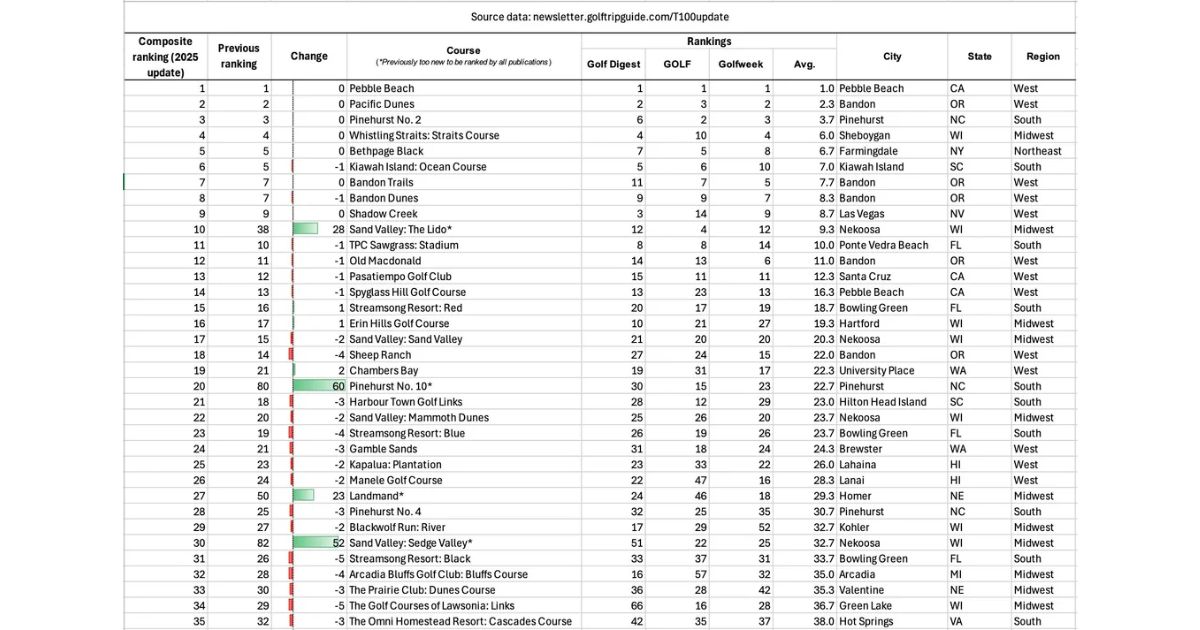
The following table presents a structured overview of the top golf courses in the US, focusing on ranking position, course name, location, and establishment year. This format helps golfers compare history and geographic distribution clearly.
| Rank | Course Name | Location | Established |
| 1 | Pine Valley | New Jersey | 1918 |
| 2 | Cypress Point | California | 1928 |
| 3 | Shinnecock Hills | New York | 1931 |
| 4 | National Golf Links of America | New York | 1911 |
| 5 | Oakmont | Pennsylvania | 1903 |
| 6 | Augusta National | Georgia | 1933 |
| 7 | Sand Hills | Nebraska | 1995 |
| 8 | Merion (East) | Pennsylvania | 1912 |
| 9 | Pebble Beach | California | 1919 |
| 10 | Los Angeles (North) | California | 1927 |
| 11 | Fishers Island | New York | 1926 |
| 12 | Chicago Golf Club | Illinois | 1895 |
| 13 | Pinehurst No. 2 | North Carolina | 1907 |
| 14 | Riviera | California | 1927 |
| 15 | Friar’s Head | New York | 2003 |
| 16 | Prairie Dunes | Kansas | 1937 |
| 17 | Seminole | Florida | 1929 |
| 18 | Winged Foot (West) | New York | 1923 |
| 19 | Pacific Dunes | Oregon | 2001 |
| 20 | Oakland Hills (South) | Michigan | 1917 |
| 21 | The Country Club | Massachusetts | 1899 |
| 22 | San Francisco Golf Club | California | 1918 |
| 23 | Crystal Downs | Michigan | 1932 |
| 24 | Southern Hills | Oklahoma | 1936 |
| 25 | Shoreacres | Illinois | 1921 |
| 26 | California Golf Club | California | 1926 |
| 27 | Somerset Hills | New Jersey | 1918 |
| 28 | Garden City | New York | 1899 |
| 29 | Maidstone | New York | 1922 |
| 30 | Sand Valley (The Lido) | Wisconsin | 2023 |
| 31 | Camargo | Ohio | 1926 |
| 32 | Old Town | North Carolina | 1939 |
| 33 | Peachtree | Georgia | 1947 |
| 34 | Bethpage Black | New York | 1935 |
| 35 | Ballyneal | Colorado | 2006 |
| 36 | Oak Hill (East) | New York | 1921 |
| 37 | Kiawah Island (Ocean) | South Carolina | 1991 |
| 38 | Rock Creek Cattle Company | Montana | 2008 |
| 39 | Bandon Trails | Oregon | 2005 |
| 40 | Sleepy Hollow | New York | 1913 |
| 41 | Inverness | Ohio | 1919 |
| 42 | Baltusrol (Lower) | New Jersey | 1922 |
| 43 | Myopia Hunt Club | Massachusetts | 1898 |
| 44 | Ohoopee Match Club | Georgia | 2018 |
| 45 | Winged Foot (East) | New York | 1923 |
| 46 | CapRock Ranch | Nebraska | 2021 |
| 47 | Yeamans Hall | South Carolina | 1925 |
| 48 | TPC Sawgrass | Florida | 1981 |
| 49 | Bandon Dunes | Oregon | 1999 |
| 50 | Eastward Ho! | Massachusetts | 1922 |
Why the Top Golf Courses in the US Matter to Golfers?
The top golf courses in the US matter because they define what quality looks like at the highest level of the game. Golfers use these courses as reference points when evaluating their own playing experiences and expectations.
These courses influence how golfers plan travel, invest in memberships, and choose destinations. Many players organize entire trips around visiting the top golf courses in the US, often traveling internationally to experience layouts they have admired for years.
Beyond personal play, these courses shape the future of golf architecture. Designers study them closely, learning how subtle features like bunker placement, green contours, and routing decisions affect play. In this way, the top golf courses in the US continue to shape the game long after their original construction.
How the Top Golf Courses in the US Are Evaluated?
Evaluation of the top golf courses in the US is based on repeated observation rather than single impressions. Courses are assessed over time by experienced golfers who play them in varying conditions and seasons.
Rather than focusing on one standout hole, evaluators look at the overall balance of the course. They consider how holes connect, how strategy evolves across a round, and how the course responds to different styles of play.
Key factors considered during evaluation include:
- Strategic variety from tee to green
- Fairness of challenge across skill levels
- Consistency of design quality across all holes
- Ability to remain relevant as equipment evolves
This multi-layered approach ensures that courses earn their ranking through sustained excellence.
Design Philosophy Behind Elite American Golf Courses
The top golf courses in the US are guided by clear and disciplined design philosophies. They emphasize decision-making over brute force and creativity over conformity.
Elite designs rarely dictate a single correct strategy. Instead, they present golfers with options. Players can choose aggressive lines for potential reward or safer routes that require precision later in the hole.
Common design philosophies include:
- Multiple strategic lines of play off the tee
- Greens positioned to reward correct angles
- Hazards that influence decisions rather than impose penalties
This philosophy keeps rounds engaging for both first-time visitors and repeat players.
The Role of Natural Terrain in Course Excellence
Natural terrain is one of the most important elements shaping the top golf courses in the US. Courses built on sand-based soil, coastal landscapes, or rolling inland terrain gain inherent strategic advantages.
Designers who allow the land to guide routing create courses that feel natural and cohesive. Holes flow smoothly from one to the next, and elevation changes feel purposeful rather than forced.
Advantages of strong terrain integration include:
- Improved drainage and firmer playing conditions
- Natural visual framing of holes
- Reduced need for excessive earthmoving
These benefits contribute to long-term sustainability and strategic depth.
Historical Influence on the Top Golf Courses in the US
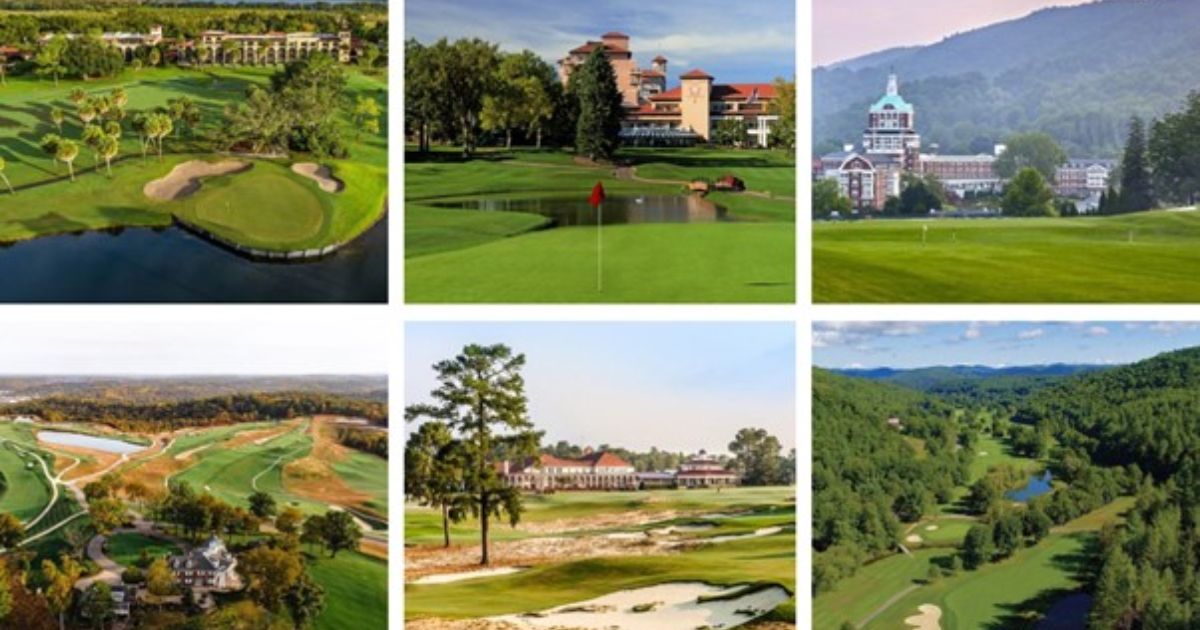
A large portion of the top golf courses in the US were built during the early twentieth century, a time when design creativity outweighed mechanical capability. Architects relied on routing intelligence and subtle shaping rather than heavy construction.
These historic courses prioritized walkability, rhythm, and strategic bunkering. Their designs encouraged players to think through each shot rather than overpower the course.
Today, their influence remains visible in:
- Compact but demanding green complexes
- Bunkers positioned to challenge angles
- Hole sequencing that maintains flow and pacing
Their continued relevance proves the durability of thoughtful design.
Public and Private Access to Elite Golf Courses
The top golf courses in the US include both private clubs and publicly accessible layouts. While private courses benefit from controlled access and consistent maintenance, public and resort courses demonstrate that elite design can be accessible.
Public access courses often serve as flagship destinations for their regions. They attract traveling golfers and introduce new audiences to high-quality architecture.
| Access Type | Characteristics |
| Private Courses | Limited play, stable conditions |
| Public Courses | High demand, wider accessibility |
| Resort Courses | Structured access, premium services |
Each access model can support excellence when aligned with strong design and maintenance.
Tournament Legacy and Championship Testing
Tournament history adds significant credibility to the top golf courses in the US. Professional competition places extreme pressure on design integrity and fairness. Courses that repeatedly host major events demonstrate their ability to challenge elite players without sacrificing playability. Adjustments are made carefully to maintain original intent while accommodating modern standards.
Tournament-tested qualities include:
- Strategic flexibility under pressure
- Fair challenge across skill levels
- Strong routing for spectators and competitors
This validation reinforces a course’s standing over time.
Strategic Thinking and Mental Challenge
Mental challenge is a defining characteristic of the top golf courses in the US. These courses demand concentration, patience, and adaptability throughout the round. Players must evaluate wind conditions, pin placements, and future shot positions before committing to a strategy. Mistakes are punished more for poor decisions than imperfect execution. This emphasis on thinking golf creates deeper engagement and leaves lasting impressions on players.
Maintenance Standards and Playing Conditions
Maintenance practices at the top golf courses in the US are designed to support architectural intent rather than overshadow it. Firm fairways, consistent greens, and predictable lies are prioritized. Soft conditions reduce strategic value by eliminating the importance of positioning. Firm surfaces reward correct shot selection and enhance variety.
Maintenance priorities typically include:
- Firm, fast fairways
- Consistent and true greens
- Bunker presentation aligned with original design
This approach preserves long-term playability.
Common Characteristics of the Top Golf Courses in the US
Before reviewing the table below, it is important to note that elite courses succeed by combining several strengths rather than excelling in only one area.
| Characteristic | Why It Matters? |
| Strategic Routing | Encourages planning on every hole |
| Natural Integration | Enhances authenticity |
| Balanced Difficulty | Welcomes all skill levels |
| Timeless Design | Maintains relevance |
| Strong Identity | Creates memorable experiences |
These shared traits explain why certain courses consistently earn recognition.
Why the Top Golf Courses in the US Remain Timeless?
The top golf courses in the US remain timeless because they evolve carefully rather than chasing trends. Also, Restoration is favored over redesign. Moreover, Strategy is preserved over raw length. These courses continue to influence modern architecture while maintaining their original character. Also, Their ability to adapt without losing identity ensures long-term relevance.
Conclusion
The top golf courses in the US represent the highest standard of golf course design, strategy, and experience. They combine history, natural beauty, and thoughtful architecture in a way that continues to inspire golfers across generations. Understanding why these courses matter provides deeper appreciation for the game itself. The top golf courses in the US are not simply ranked layouts. They are enduring examples of how intelligent design creates lasting greatness.
Also Read About: Hirono Golf Club: Course Design, History & Membership