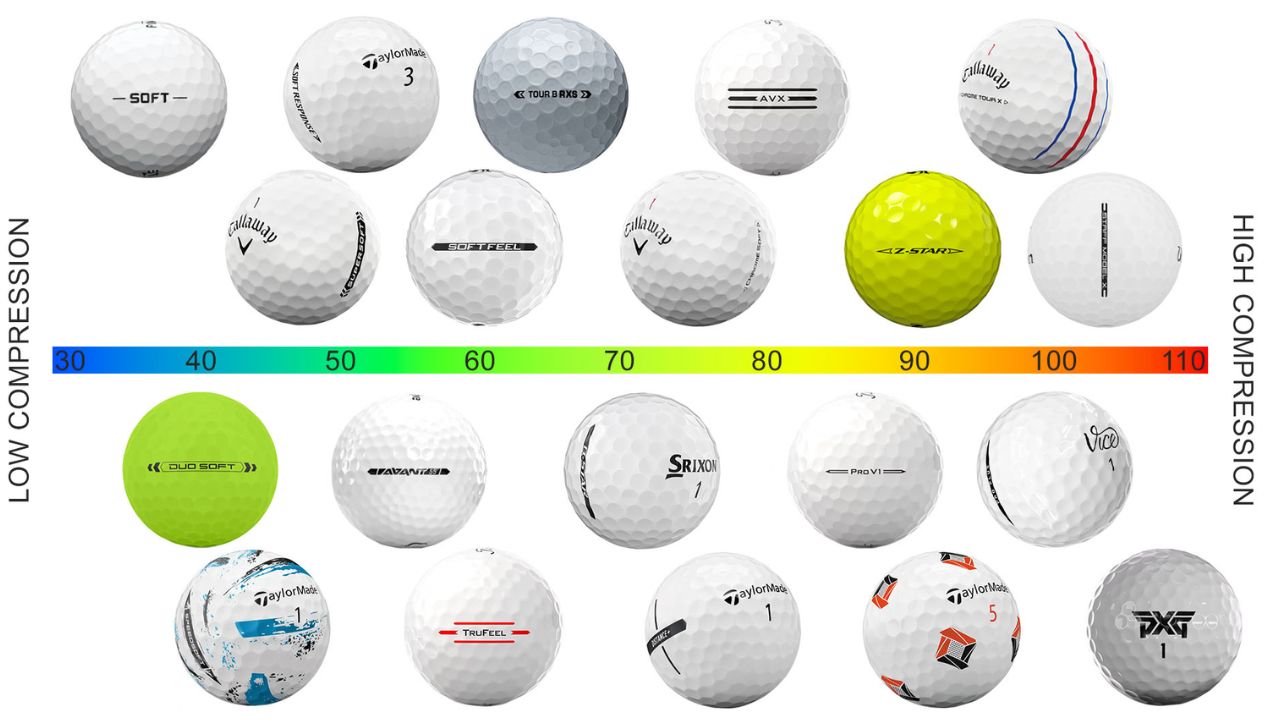
The selection of the ball is one of the least considered decisions in golf despite its effects on almost every shot that you make. Most golfers spend a lot of money acquiring drivers and irons and yet they stick with the same ball that is not in line with their playing style. In the long run, this disproportion may influence distance control, confidence and scoring consistency. This decision can be explained by knowing the mechanics of compression. A golf ball compression chart assists the golfers to compare the golf balls in terms of their reaction to pressure. It is not a message of miracles and immediate betterment. Rather it gives form and vision. This guide will go into detail on compression, elaborate on the way that charts should be understood, and demonstrate how the golfers can use this within the actual playing conditions. The objective is applied knowledge that will aid in making improved judgments in the course.
What Is a Golf Ball Compression Chart?
A compression chart of golf balls is a comparative chart that places golf balls with their compression ratings. These ratings explain the degree of deformation of the ball on the application of pressure. The chart enables golfers to observe the relative firmness or softness of a brand and model by positioning several balls on the same scale.
A golf ball compression chart is useful in that it eases the heavy information. Golfers are able to see patterns and ranges instead of having to read separate descriptions of the products. This enables the determination of which balls belong to the same performance category. The chart is not an alternative to testing, but it minimizes the guessing at the start of the testing.
Why Compression Matters in Real Golf Performance?
The compression influences the efficiency of the movement of energy into the golf ball. As it is hit the ball briefly deforms and then goes back to the front. The goodness of this recovery determines the speed of the ball, stability of the launch and predictability as a whole.
In addition to distance, compression influences the feeling and behavior of shots. Golfers with a concept of compression tend to have a better confidence level since the ball will respond more in harmony. That consistency can help to enhance decision-making, particularly at a time of pressure, over a complete round. That is why a lot of experienced players use the help of a golf ball compression chart in the process of correcting their equipment choices.
How Golf Ball Compression Is Measured?
Controlled mechanical testing is used to measure the compression of golf balls instead of swings. When testing the ball, it is put between two flat surfaces and a given load is exerted on it. The extent to which the ball yields to this pressure is measured and transformed into a numerical rating.
The compression values have a range in the modern sense of 30-120. These tests are standardized but they fail to represent the actual impact of a golf swing which can be many thousands of pounds of pressure. This is the reason why compression numbers are to be taken in as relative comparisons and not as precise predictors of performance.
Understanding Compression Ranges on a Chart
Compression charts tend to lump the values into tight intervals to simplify their interpretation. These scales give an approximate idea of what to expect in terms of feel and response, but experience can be different. It is important to keep in mind that ranges are trends, but not certainties before examining the table.
| Compression Range | General Feel | Typical Playing Traits |
| Low (80 and below) | Softer | More deformation, muted impact |
| Medium (81–94) | Balanced | Stable response, broad appeal |
| High (95 and above) | Firmer | Efficient rebound, solid contact |
A golf ball compression chart uses these ranges to help golfers visualize differences quickly without overcomplicating the decision.
Low Compression Golf Balls Explained Clearly
Golf balls which are of low compression compress easily when struck. This feature regularly brings about a lighter feel of impact that a few players relate with comfort and less intensity. Off center hits with these balls may seem particularly forgiving.
Low compression balls can offer a little bit of increase in launch with irons to some players in terms of performance. They are also capable of providing a reactive sense around the greens, which favors touch-based shots. The difference in distance in relation to the other compression levels is not usually very high and thus feel and confidence are the primary factors influencing their use by golfers.
Medium Compression Golf Balls and Versatility
The most flexible types of compression balls are medium compression balls. They are made to be firm enough and soft enough such that they play well at many different swing speeds with different playing styles.
These balls are typically more reliable to golfers since they provide predictable flight, stable spin and reliable distance gapping. When analyzing a chart of golf ball compression many of the most popular all-round models will fall within this range, which is often a starting point when a player narrows down their search.
High Compression Golf Balls and Firm Response
The low compression golf balls do not compress at impact and therefore have a firm feel. This design is done to many premium models to allow the consistency in transferring energy, particularly with those players who have repeatable swings.
Such balls tend to offer consistent ball velocities and trajectories in drivers. Performance around the greens relies upon more than compression on construction and cover material. A golf ball compression chart assists in determining these harder alternate choices to the players, who desire a solid and responsive feel.
Compression and Swing Speed: Clearing the Confusion
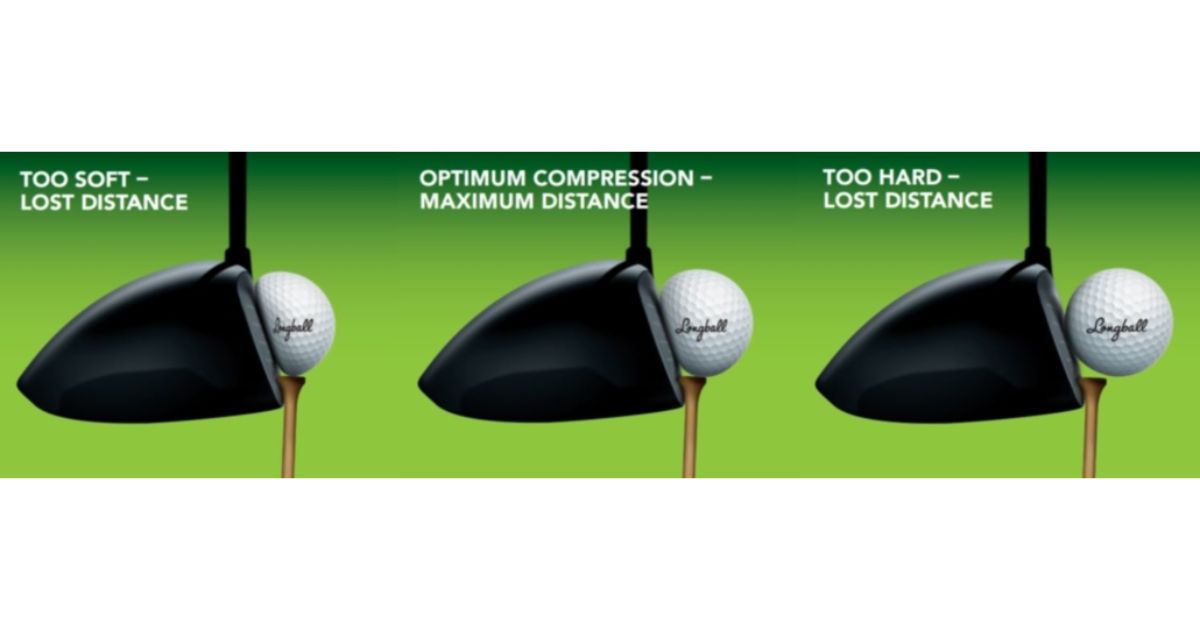
Swing speed has become a widely used parameter in determining compression choice which is not a real life situation. Lower swing speeds can also compress stiffer balls in an effective manner and faster swings are not necessarily better off with the highest compression ratings.
Experiments have indicated that the variation in ball speed in different levels of compression is typically insignificant. More frequently it is launch angle, spin control and quality of strike. The Golf ball compression chart must be exploratory instead of being restrictive on the basis of the speed of a swing.
Effects of Compression on Ball speed and range
The efficiency of energy transfer at impact is a factor which affects ball speed. Harder balls have less likely deformation and they provide a consistent returning energy that may sustain a steady ball speed with a wide range of swing profiles.
Nevertheless, greater rigidity does not ensure greater distance. Equally important are conditions of launches and spin rates. The compression charts only bring out trends and the performance of a distance should never be assumed on assumptions, but on actual play.
Compression Behavior With Irons and Wedges
Irons and wedges are also used, requiring less force than the drivers, although more precise. Compression affects the feel and the responsiveness of the ball on these shots, especially with regards to being able to feel the ball and distance control.
Others like softer compression balls when shooting approach shots whereas others like the predictability of firmer balls. Compression is not always the determinant of success but short-game confidence. A golf ball compression chart helps narrow choices, but touch and familiarity finalize them.
Brand-Based Golf Ball Compression Chart Comparisons
The product lines produced by manufacturers are configured to different compression values to cater to different preferences of the players. This would give golfers a chance to stay under a brand that they have trusted and modify performance features. Note that these values depict variation not ranking before looking at the table.
| Brand | Model | Compression |
| Titleist | Pro V1 | 87 |
| Titleist | Pro V1X | 96 |
| Bridgestone | Tour B RX | 79 |
| Callaway | Chrome Soft X | 95 |
| TaylorMade | TP5 | 88 |
A golf ball compression chart makes these comparisons clearer and more accessible.
Common Mistakes Golfers Make With Compression Charts
Many golfers misinterpret compression charts by focusing on extremes rather than overall fit. Others switch balls too often, preventing consistent learning. Common mistakes include:
- Choosing based on a single number rather than overall performance
- Ignoring short-game feel and confidence
- Changing balls frequently instead of committing
Using a golf ball compression chart correctly supports consistency rather than confusion.
Practical Steps to Use a Golf Ball Compression Chart Effectively
Instead of running out and buying a particular model, start by finding a range of compression that is comfortable. Select a few balls in that range and practice with them in the rounds. Listen to carry distances, trajectory stability and control in short games. Assess your confidence levels whenever you have to stand over a shot. Compression charts are used to select, but experience proves its aptness.
Conclusion
A golf ball compression chart could prove useful when it is utilized in the correct state of mind. It also systematises information, brings out patterns, and minimises guesswork, nevertheless, it does not substitute on-course testing. Compression is not the best ball but it offers a crucial starting point to smarter decisions.
The ideal golf ball is the one giving one a good performance, predictable feel and long term confidence. Narrow your options with a golf ball compression chart and then use an experience and familiarity to hone your options.
Also Read About: Titleist Brand Ambassador: Anders Albertson & Titleist Legacy