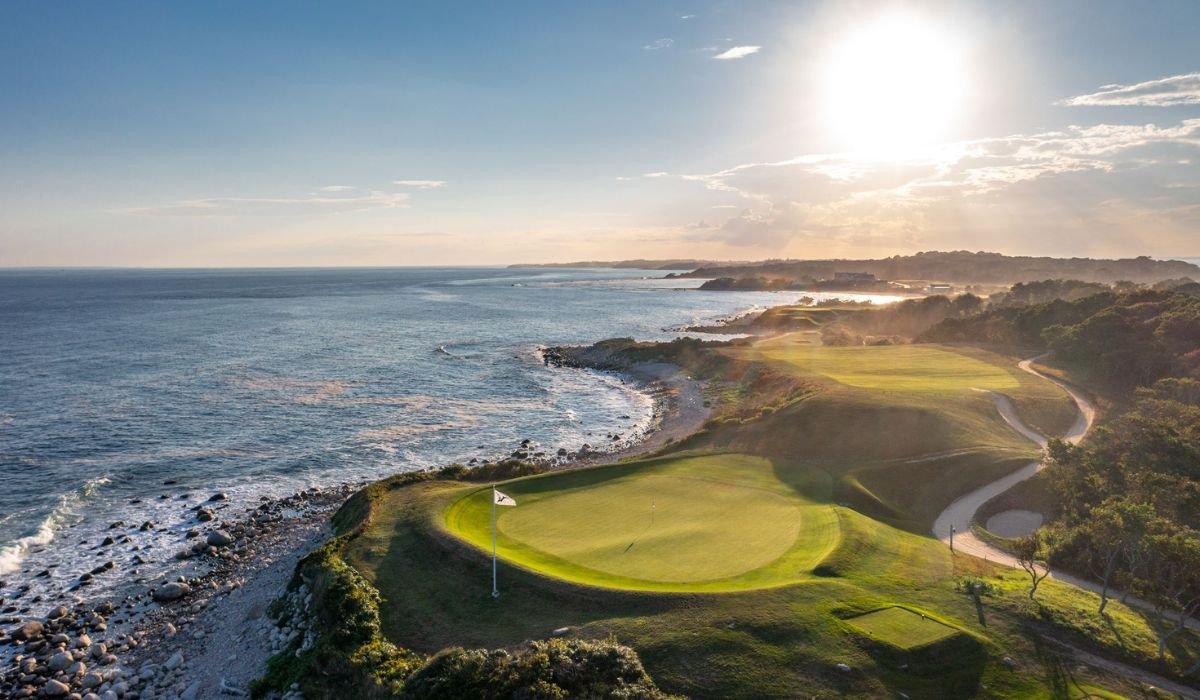
Fishers Island Club exists in a rare geographic and emotional space. Set on a narrow island between Long Island Sound and the Atlantic Ocean, the course feels detached from modern urgency. Reaching the island requires planning, patience, and intent. That journey immediately resets expectations and places the golfer in a slower, more deliberate frame of mind.
Nothing about the club seeks attention. There is no visual excess, no sense of arrival spectacle. Instead, the experience unfolds gradually as the land reveals itself through movement, wind, and subtle elevation. Golf here feels reflective rather than reactive. This quiet confidence is the reason Fishers Island Club continues to be spoken about with deep respect among architects, elite players, and traditionalists.
This detailed guide explores the club’s full identity, from its structural foundation and architectural philosophy to its playing rhythm, membership model, and long-term environmental care.
Highlight Overview: Key Facts About Fishers Island Club
Fishers Island Club is built on balance rather than bravado. Players often note how calm the experience feels, even as every shot demands thought. Water frames the course without overpowering it. Wind influences play without ever feeling unfair. The land guides decisions quietly instead of forcing them.
The course does not show all of its difficulty at first glance. Familiarity deepens the challenge rather than diminishing it. Greens become more exacting over time. Angles reveal importance gradually. Distance plays a secondary role to placement and restraint. This understated depth explains why Fishers Island Club has maintained elite status for decades without chasing trends.
Fishers Island Structural Identity Snapshot
To fully understand the club, it helps to look at its foundational characteristics. These details explain how the course plays, why it has aged so well, and how its identity has remained intact across generations. Each element reflects intention and continuity rather than expansion or reinvention.
| Feature | Detail |
| Founding Era | Opened in 1926 |
| Championship Course | 18 holes |
| Approximate Length | ~6,560 yards |
| Architect | Seth Raynor |
| Landscape Type | Coastal island terrain with dunes and shoreline |
| Playing Style | Classic American links |
| Access Model | Fully private, invitation-based |
| Signature Traits | Template greens, ocean exposure, firm turf |
| National Standing | Regularly ranked among the top courses in the U.S. |
This structural stability is one of the club’s greatest strengths.
About Fishers Island Club
The course occupies a private island off the coast of New York where land width is limited but movement is constant. The terrain shifts gently rather than dramatically. Fairways follow corridors shaped naturally by the island’s spine. Greens rise from elevated ground that feels sculpted by time instead of machinery.
Playing conditions change throughout the day. Morning rounds feel quiet and introspective, with softer light and muted contrast. Midday brings clarity and firmer turf. Afternoon winds reshape strategy hole by hole. These shifts ensure that the course never feels static, even to frequent players.
The clubhouse remains intentionally understated. Attention stays on the walk, the wind, and the next decision. This simplicity reinforces why Fishers Island Club has remained timeless instead of fashionable.
How Island Landforms Shape Playing Rhythm?
Island geography plays a decisive role in how a round progresses. The narrow landmass creates alternating feelings of openness and compression. Elevation rises unexpectedly. Water presence alters visual depth and alignment.
Players gradually adjust to this rhythm as the round develops. The land encourages observation before execution. Decisions become calmer and more measured as golfers accept variability rather than resist it.
- Coastal corridors influence alignment and perception
- Subtle elevation shifts affect club selection
- Firm turf increases reliance on ground play
- Persistent breeze alters tempo and confidence
This constant adjustment defines the emotional core of the Fishers Island experience.
Routing Philosophy: Strategy Through Coastal Movement
The routing follows the natural length of the island instead of imposing artificial turns. Holes rotate gently with the shoreline, creating variety without disorientation. There is a sense of progression rather than interruption.
Landform Visibility
Visibility changes continuously. Some greens remain hidden until the final steps of approach. Others open suddenly to expansive water views. Fairways curve with natural edges, requiring trust in angles and depth rather than straight targets. Players learn to read the land itself.
Green Behavior
Raynor’s greens form the strategic heart of the course. Their elevation and firmness reward precision rather than safety. They encourage:
- Exact approach placement
- Creative use of slopes
- Thoughtful recovery shots
- Strategic misses instead of defensive play
Difficulty comes from design clarity, not exaggeration.
Wind Logic
Wind is present on nearly every hole. Its influence changes constantly.
- Headwinds reduce effective distance
- Crosswinds reshape landing zones
- Tailwinds exaggerate rollout
The wind works with the terrain, shaping decisions organically.
Architectural Legacy & Design Intent
Raynor’s Philosophy
Seth Raynor believed in clarity, geometry, and strategic choice. At Fishers Island, his template holes appear as adaptations rather than repetitions. Each one responds to its surroundings, creating familiarity without monotony.
Minimal Alteration
The course remains remarkably close to its original form. Fairway widths, green shapes, and bunker geometry have been preserved. This restraint allows the design to speak clearly without interference.
Modern Stewardship
Care over recent decades has focused on preservation rather than modernization. Efforts include:
- Maintaining firm playing surfaces
- Refining green edges
- Protecting drainage integrity
- Preserving coastal landforms
Every adjustment respects original intent.
Competitive Reputation & Strategic Depth
Fishers Island Club challenges strong players without relying on length. The course demands discipline, patience, and thoughtful placement. Players frequently highlight:
- Greens that punish small errors
- Wind masking true yardage
- Elevation disguising depth perception
- Angles mattering more than power
Success depends on understanding rather than aggression.
Membership Structure & Access Model
Membership at Fishers Island Club is intentionally limited to preserve the course and culture. Generational continuity plays a central role. The club values stability over expansion and privacy over exposure. Before reviewing estimated costs, it is important to note that official figures are not publicly disclosed. The following tables reflect widely referenced industry estimates based on comparable private island clubs.
First, the general access structure outlines how play is organized and protected.
| Category | Access | Core Features |
| Full Membership | Year-round | Priority tee times, island privileges |
| Family Access | Shared | Long-term continuity |
| Guest Access | Invitation-only | Limited annual rounds |
| Seasonal Use | Member-defined | Controlled play volume |
Financial expectations align with the club’s exclusivity and preservation goals.
| Fee Type | Estimated Range |
| Initiation Fee | $250,000 – $350,000 |
| Annual Dues | $18,000 – $25,000 |
| Food & Beverage Minimum | $5,000 – $7,500 |
| Assessments | Occasional, project-based |
This model supports long-term sustainability without excess commercialization.
Environmental Character of the Island Setting
The island environment shapes mood and movement throughout the day. Water proximity creates openness and mental clarity. Light changes constantly, altering perception.
- Morning: calm air, muted contrast, reflective pace
- Afternoon: firmer turf, stronger winds
- Evening: warm light, elongated shadows
These shifts ensure that the course remains dynamic and engaging.
Shot-Making Approach & Tactical Adaptation
Success at Fishers Island Club favors intelligence over strength. Shot selection must account for wind, firmness, and elevation.
Trajectory Awareness
Lower flights handle wind more effectively. Higher shots demand precision and trust. Trajectory choice often determines success.
Ground Response
Firm fairways reward controlled landings. Using natural slopes becomes essential rather than optional.
Decision Shifts
Strategy evolves due to:
- Changing wind direction
- Variable lies on sloped terrain
- Visual deception created by elevation
Observation becomes a decisive advantage.
Layout Summary & Routing Distribution
Understanding the distribution of holes helps explain the course’s balance. The routing mixes challenge types without repetition, creating steady rhythm rather than dramatic swings.
| Element | Par | Yardage Range | Character |
| Full Course | 70 | ~6,560 yards | Coastal links |
| Short Par 4s | — | 300–360 yards | Position-focused |
| Mid Par 3s | — | 160–210 yards | Wind and height control |
| Par 5s | — | 520–580 yards | Strategic progression |
Each hole contributes to flow rather than isolated difficulty.
Operational Structure & Sustainability Approach
Operating a private island course requires restraint and planning. Fishers Island Club prioritizes long-term protection of both turf and landscape. Before reviewing operational practices, it is important to understand that capacity is intentionally limited to protect playing conditions.
| Area | Approach |
| Maintenance | Light shaping, natural firmness |
| Staffing | Skilled greens and turf specialists |
| Capacity | Limited daily tee times |
| Sustainability | Coastal protection, efficient water use |
These practices ensure continuity for future generations.
Conclusion
Fishers Island Club stands as one of golf’s clearest expressions of restraint and intelligence. The island guides movement. The greens demand clarity. Wind shapes every decision. Tradition remains untouched by trend. Golfers leave with a sense of completion rather than fatigue. The experience reflects a lasting harmony between land, architecture, and the pure essence of the game.
Also Read About :- Hirono Golf Club: Course Design